 Pin it
 My neighbor Maria used to make these every Sunday, and the smell would drift through the courtyard and pull everyone toward her kitchen window. I finally knocked on her door one afternoon with a bottle of wine and asked if I could watch. She laughed and handed me a wooden mallet, telling me the secret was in the rolling, not the pounding. That day I learned braciole isn't just about the beef, it's about the ritual of tucking sweetness and salt into something tender, then letting time do the rest.
I made this for my in-laws the first time they visited, and my father-in-law, who never says much at the table, asked for seconds before anyone else had finished their first plate. My mother-in-law later told me he doesn't do that unless something reminds him of his childhood. I didn't tell her I had no idea what I was doing and nearly forgot to tie the rolls shut. Sometimes a little luck and a lot of love is all a dish needs.
Ingredients
- Beef top round or flank steak: You want thin slices that can be pounded gently without tearing, and flank steak holds up beautifully during the long simmer without getting tough.
- Pecorino cheese: This brings the sharp, salty backbone to the filling, if you only have Parmesan, use it, but pecorino is the traditional choice and worth seeking out.
- Pine nuts: Lightly toasting them in a dry pan for a few minutes wakes up their buttery flavor, don't skip this step or they'll taste flat.
- Raisins: They add little pockets of sweetness that surprise you mid-bite, golden raisins work too if that's what you have on hand.
- Fresh parsley and basil: Fresh herbs make all the difference here, dried just won't give you that bright, grassy note that cuts through the richness.
- Garlic: Minced fine so it melts into the filling and doesn't overpower the delicate balance of flavors.
- Breadcrumbs: They help bind everything together and soak up the juices as the rolls cook, turning soft and flavorful inside.
- Crushed tomatoes: Use good quality canned tomatoes, San Marzano if you can, because they become the soul of the sauce.
- Dry red wine: Optional but wonderful, it adds depth and a little acidity that brightens the whole dish.
- Kitchen twine or toothpicks: You need something to hold the rolls closed, I prefer twine because it's easier to remove and looks more elegant on the plate.
Tired of Takeout? 🥡
Get 10 meals you can make faster than delivery arrives. Seriously.
One email. No spam. Unsubscribe anytime.
Instructions
- Prepare the beef:
- Lay each slice flat on a cutting board and use a meat mallet to gently pound it to about a quarter inch thick, working from the center outward so it stays even. Season both sides with salt and pepper, don't be shy, this is where the flavor starts.
- Make the filling:
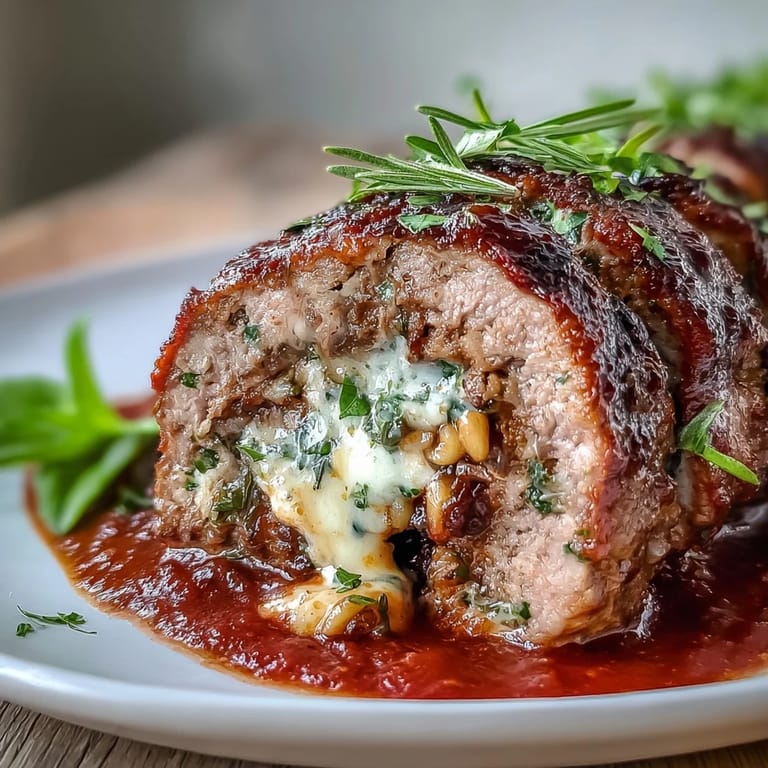
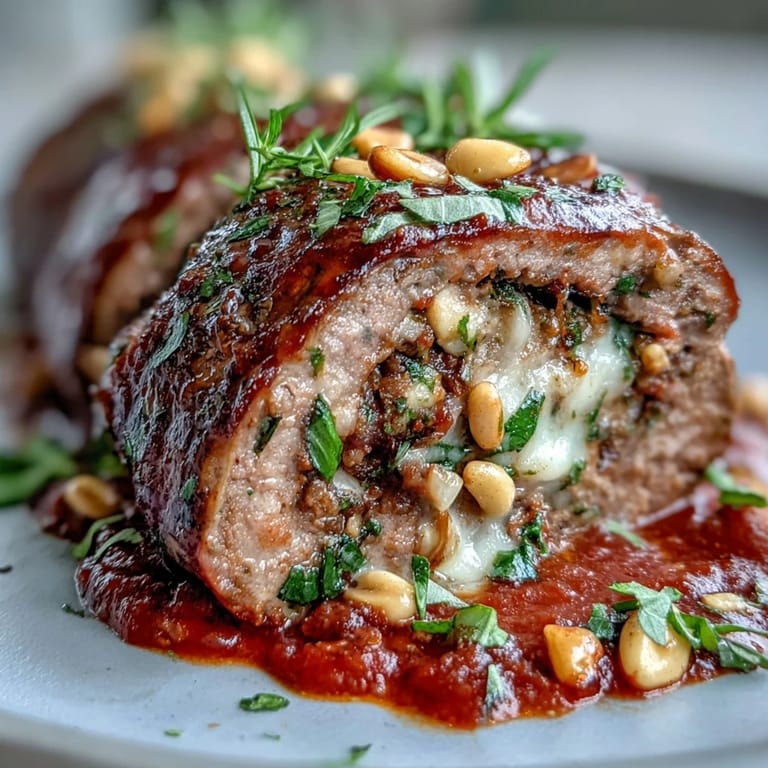
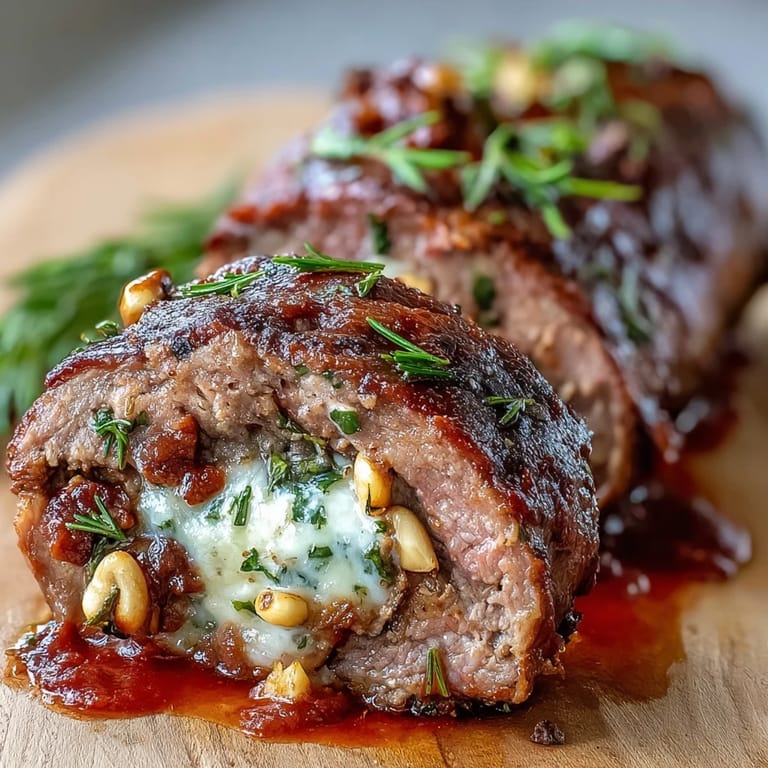
- In a medium bowl, mix together the pecorino, toasted pine nuts, raisins, parsley, basil, minced garlic, and breadcrumbs until everything is evenly distributed. It should look like a chunky, fragrant mixture that smells like a Sicilian pantry.
- Roll the braciole:
- Spoon an equal amount of filling onto each beef slice, leaving about half an inch around the edges so it doesn't spill out when you roll. Roll each one up tightly, tucking in the sides as you go, then tie with kitchen twine or secure with toothpicks so they hold their shape.
- Sear the rolls:
- Heat two tablespoons of olive oil in a large skillet over medium-high heat until it shimmers, then add the braciole and sear on all sides until deeply browned, about six to eight minutes total. This step builds flavor you can't get any other way, so don't rush it.
- Start the sauce:
- In the same skillet, add another two tablespoons of olive oil and sauté the chopped onion until soft and translucent, about three minutes, then add the garlic and cook for one more minute until fragrant. If you're using red wine, pour it in now and let it bubble and reduce by half, scraping up all the browned bits stuck to the pan.
- Simmer everything together:
- Add the crushed tomatoes, oregano, salt, pepper, and a pinch of sugar if your tomatoes taste too acidic, then bring the sauce to a gentle simmer. Nestle the seared braciole back into the sauce, cover the skillet, and let everything cook low and slow for about an hour and fifteen minutes, turning the rolls occasionally so they cook evenly and stay tender.
- Finish and serve:
- Once the beef is fork-tender and the sauce has thickened, carefully remove the braciole and snip off the twine or pull out the toothpicks. Slice each roll into thick rounds and arrange them on a platter, then spoon the rich tomato sauce generously over the top.
 Pin it
 The first time I served this at a dinner party, one of my friends sat back after her second helping and said it tasted like a hug from someone's nonna. I'd never met my own Sicilian relatives, but in that moment I felt like I'd honored something bigger than a recipe. Food has a way of connecting you to people and places you've never known, and braciole does that better than almost anything I've ever made.
Serving Suggestions
I love serving braciole over a pile of rigatoni or penne so the pasta catches all that beautiful sauce, but polenta is just as good if you want something creamy and comforting underneath. A simple arugula salad with lemon and olive oil on the side cuts through the richness, and don't forget crusty bread to mop up every last bit of sauce on your plate. If you're feeling fancy, a sprinkle of fresh basil and extra pecorino on top makes it look like you spent all day in the kitchen, even though most of that time was hands-off simmering.
Make-Ahead and Storage
You can assemble the braciole in the morning, keep them covered in the fridge, and sear them right before you start the sauce, which makes weeknight cooking so much easier. Leftovers keep beautifully in an airtight container in the fridge for up to three days, and they reheat gently on the stove with a splash of water or broth to loosen the sauce. I've even frozen them after cooking, and they come back to life surprisingly well, just thaw overnight in the fridge and warm them slowly so the beef stays tender.
Variations and Substitutions
Maria used to tuck a wedge of hard-boiled egg into the center of each roll, which adds a creamy richness that's completely traditional and totally delicious. If you can't find pine nuts or they're too expensive, chopped walnuts or even omitting them entirely still gives you a wonderful dish. For a gluten-free version, swap regular breadcrumbs for gluten-free ones or use finely ground almonds, and if you're avoiding dairy, a hard aged cheese alternative or nutritional yeast can stand in for the pecorino.
- Add a thin slice of prosciutto to the filling for extra depth and a hint of smokiness.
- Use chicken or turkey cutlets instead of beef for a lighter version that cooks a bit faster.
- Stir a handful of fresh spinach into the filling for a pop of color and a little extra nutrition.
 Pin it
 Every time I make braciole, I think about Maria and that first afternoon in her kitchen, the way she moved without measuring anything and how the whole process felt less like cooking and more like storytelling. I hope this recipe becomes a story in your kitchen too, one that gets passed along with a little wine and a lot of love.
Recipe FAQs
- → What cut of beef works best for braciole?
Thin slices of beef top round or flank steak work best. They should be pounded to about 1/4-inch thickness for easy rolling and tender results.
- → Can I make braciole ahead of time?
Yes, you can prepare the rolls up to a day ahead. Keep them refrigerated, then sear and simmer in sauce when ready to serve. The flavors actually develop beautifully overnight.
- → What can I substitute for pine nuts?
Chopped walnuts or almonds make excellent substitutes for pine nuts. Toast them lightly beforehand to enhance their flavor and texture in the filling.
- → How do I prevent the rolls from falling apart?
Secure them tightly with kitchen twine or toothpicks after rolling. Don't overfill, and leave a small border around the edges to help seal the filling inside during cooking.
- → What should I serve with braciole?
Braciole pairs beautifully with pasta, creamy polenta, or crusty Italian bread to soak up the rich tomato sauce. A side of sautéed greens complements the dish perfectly.
- → Can I freeze cooked braciole?
Yes, braciole freezes well. Cool completely, then store in airtight containers with sauce for up to 3 months. Thaw in the refrigerator and reheat gently on the stovetop.