 Pin it
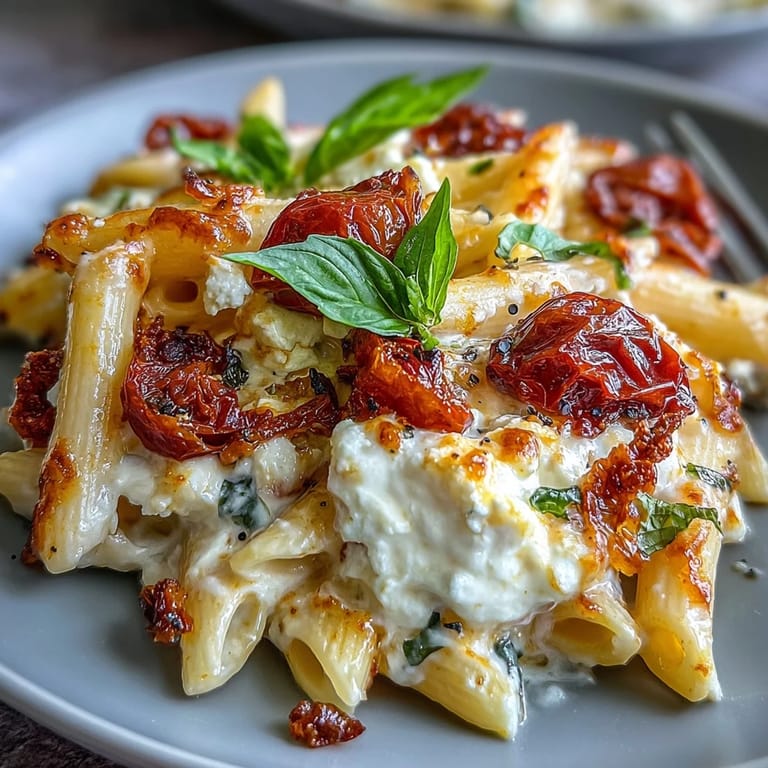
 The aroma of roasting tomatoes and melting feta draws everyone to the kitchen before dinner's even on the table. One evening, sunlight streaming in and music playing, I tossed this dish together with half the pantry and zero expectation. I remember being startled at how effortlessly the humble feta transformed into a savory, velvety sauce—no whisking required. The sizzle as everything hit the oven felt oddly satisfying, promising a meal that would linger in memory. There’s something energizing about dinner that bursts with color and flavor, especially when you’re short on time.
I first served this after a group bike ride, sweat still drying and everyone hungry. We crowded around while the tomatoes split and simmered, muttering disbelief that something so simple could smell so good. Passing the platters around felt communal, the basil sticking to fingers and thin slices of lemon zest curling prettily on top. By the time forks clinked, we’d agreed this would be a repeat performance. Even our pickiest eater went back for seconds.
Ingredients
- Pasta: I’ve learned that short pasta like fusilli soaks up the sauce beautifully, but spaghetti makes every bite luxuriously slurp-worthy.
- Feta cheese (block): Always use a solid block—pre-crumbled feta doesn’t melt the same, and the golden crust is worth it.
- Cherry tomatoes: Pick small, ripe tomatoes with tight skins—they’ll burst and sweeten the sauce in the oven.
- Olive oil: Don’t be shy with this; a generous glug helps everything roast and brings the sauce together silkily.
- Garlic cloves: Smash them to release the oils; whole cloves turn mellow and buttery after roasting.
- Freshly ground black pepper: Coarse grind adds warmth—taste as you go, since feta is already salty.
- Red pepper flakes: Add only if you love a bit of tingle; a pinch goes a long way.
- Sea salt: Taste before adding—feta can be quite salty on its own.
- Fresh basil leaves: Tear right before serving for a rush of herbal perfume—don’t swap for dried basil here.
- Lemon zest: The zest is bright and sharp, waking up the whole dish—you can skip it, but I find it irresistible.
Tired of Takeout? 🥡
Get 10 meals you can make faster than delivery arrives. Seriously.
One email. No spam. Unsubscribe anytime.
Instructions
- Heat the oven:
- Crank it up to 200°C (400°F) and let the kitchen begin to warm with anticipation.
- Arrange the dish:
- Nestle the feta block in the middle of your baking dish, then scatter tomatoes and smashed garlic artfully around.
- Add flavor:
- Generously drizzle the olive oil and sprinkle the black pepper, sea salt, and red pepper flakes on top—toss tomatoes so everything glistens.
- Roast:
- Pop it all in the oven for 25–30 minutes, until tomatoes are blistered and the feta sports a golden-tan top.
- Cook pasta:
- Meanwhile, boil pasta in a deep pot of salted water, stirring occasionally, and reserve half a cup of the pasta water before draining.
- Make the creamy sauce:
- Once roasted, use a wooden spoon to swirl together the bubbling tomatoes and soft feta into a rich, pink sauce right in the baking dish.
- Toss it all together:
- Add the hot drained pasta directly to the pan, tossing well—use reserved pasta water to reach the silkiness you love.
- Basil and zest finish:
- Off the heat, shower with torn basil leaves and a zest of lemon for brightness—taste and tweak the seasoning if you wish.
- Serve and enjoy:
- Spoon into bowls and garnish with a bit more basil if you’re feeling fancy—serve while piping hot.
 Pin it
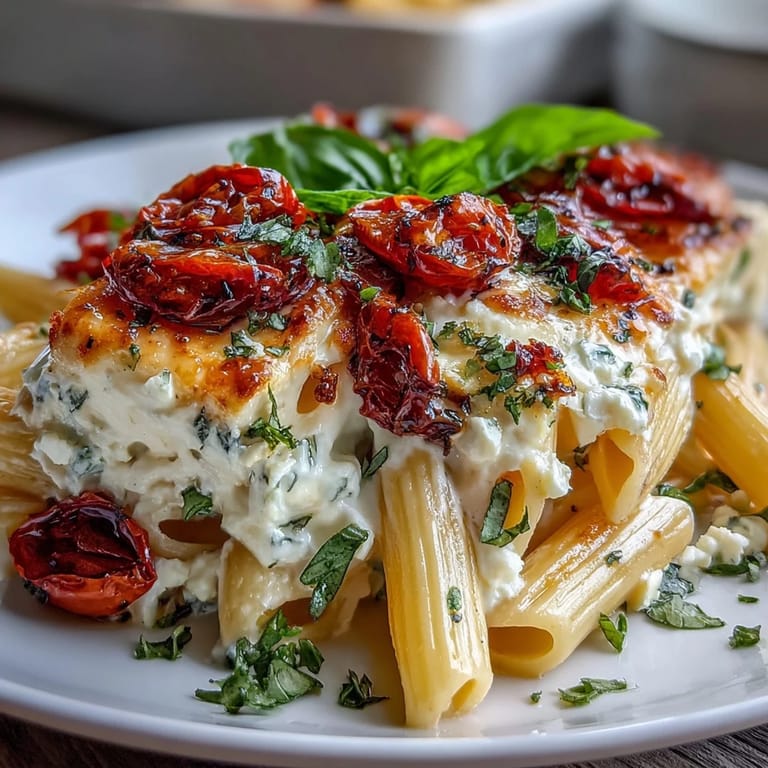
 One night, the power flickered just as I was stirring everything together—but we finished by candlelight, and the colors and fragrance felt even more special. Ever since, this pasta has been my comfort ritual, especially after stressful days when hands-on cooking sounds exhausting but flavor is non-negotiable.
Choosing the Best Feta Makes a Difference
I experimented with different fetas and noticed that a full-fat, brined Greek block makes the most satiny sauce. A soft Danish version works too, but stay away from low-fat—you’ll miss out on the lush result.
Simple Twists to Make It Your Own
Adding baby spinach or arugula gives a subtle peppery bite and a touch more color. When I want a change, swapping in goat cheese adds a delightful tang, just be sure to reduce the salt. Chopped walnuts sprinkled on top are unexpectedly tasty for crunch.
Make-Ahead and Leftover Magic
This reheats surprisingly well—just add a spoonful of water before microwaving to loosen it back up. If you have leftovers, use them cold as a pasta salad base, toss with extra fresh herbs, or spoon over grilled veggies for a fast lunch. When making ahead for a crowd, I keep the basil separate until serving so it stays bright.
- If your pasta sits, add an extra drizzle of olive oil to revive its shine.
- Always adjust lemon and basil amounts to taste, since some days beg for more zing.
- Don’t skip tasting before serving—a final stir makes all the difference.
 Pin it
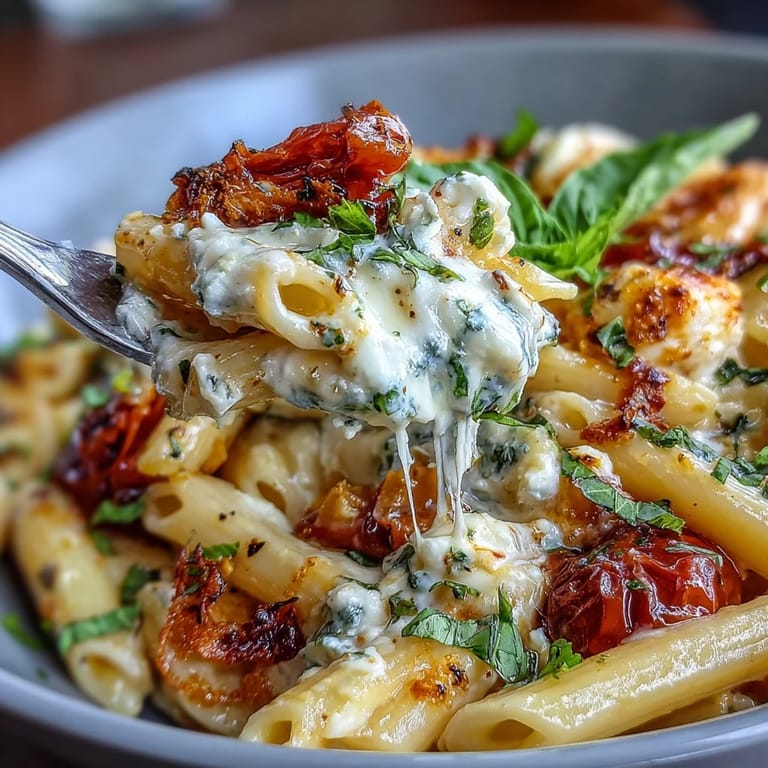
 There’s something quietly joyful about a meal this easy turning out so vivid and flavorful. I hope your kitchen fills with the same sense of relaxed abundance the next time you bake up this feta pasta.
Recipe FAQs
- → How long should I bake the feta and tomatoes?
Bake at 200°C (400°F) for 25–30 minutes, or until the cherry tomatoes burst and the feta turns soft and slightly golden.
- → Which pasta shape works best?
Short shapes like penne or fusilli trap the sauce well, while spaghetti or linguine create a nice coating if you prefer long strands.
- → How do I get a silky, emulsified sauce?
Reserve about ½ cup of the starchy pasta cooking water. Add it gradually while tossing the pasta with the mashed feta and tomatoes to create a smooth, creamy coating.
- → Can I make substitutions or add greens?
Yes—swap feta for goat cheese for extra tang, use gluten-free pasta if needed, or stir in baby spinach or arugula just before serving for extra greens.
- → How should leftovers be stored and reheated?
Cool and refrigerate in an airtight container for up to 3 days. Reheat gently on the stove or in the oven, adding a splash of water to loosen the sauce if needed.
- → How do I avoid a watery sauce?
Drain excess tomato juices before mashing and add reserved pasta water slowly—stop when you reach the desired creaminess to prevent thinning the sauce too much.