 Pin it
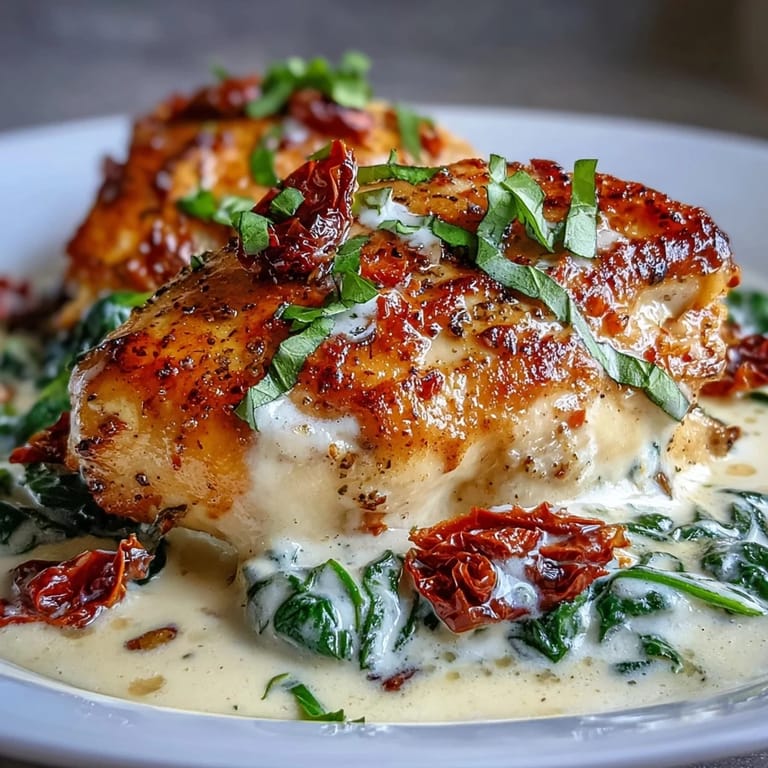
 There's something about the aroma of sun-dried tomatoes hitting a hot pan that makes you stop mid-thought and just breathe it in. My neighbor came over one rainy Tuesday asking what smelled so incredible, and I realized I'd been so absorbed in building this sauce that I'd forgotten to check the time. That's when I knew this Tuscan chicken had become one of those dishes that cooks itself into your kitchen routine, the kind that feels fancy enough for guests but honest enough for a solo Tuesday night.
I made this for my sister's surprise dinner after she'd spent weeks eating sandwich wraps from her desk, and watching her face when she tasted it made me understand why people bother with cooking at all. She asked if I'd gone to culinary school, which I hadn't, but somehow that made the moment better—proof that good technique and patience matter more than credentials.
Ingredients
- Boneless, skinless chicken breasts (4 pieces, about 600–700 g): Pat them completely dry before seasoning—I learned this the painful way after steaming my chicken into submission instead of getting that golden sear.
- Kosher salt (1 tsp) and freshly ground black pepper (½ tsp): Season generously; the sauce won't save you if the chicken itself is bland.
- Olive oil (1 tbsp) and unsalted butter (1 tbsp): The combination gives you a higher smoke point than butter alone while keeping that rich, golden crust you're after.
- Garlic (3 cloves, minced): Fresh garlic transforms into something honeyed and mellow when it hits the warm oil—timing is everything, so don't let it brown.
- Sun-dried tomatoes in oil (½ cup, drained and sliced): These are concentrated flavor bombs; the oil they come in is liquid gold for your skillet, though draining them prevents the sauce from becoming too thick.
- Heavy cream (1 cup): This is what makes the sauce feel indulgent, but you can absolutely swap in half-and-half if you want something lighter without losing the velvety texture.
- Low-sodium chicken broth (½ cup): It balances the richness and keeps the sauce from cloying, plus any broth you use should be good enough to taste on its own.
- Grated Parmesan cheese (⅓ cup): Use freshly grated if you can—the pre-shredded stuff has anti-caking agents that prevent it from melting as smoothly.
- Italian seasoning (1 tsp) and crushed red pepper flakes (¼ tsp, optional): The basil already handles the herbaceous notes, so the seasoning here stays subtle, while the heat is entirely optional depending on your mood.
- Baby spinach (2 cups, roughly chopped): It wilts down to almost nothing, so don't be shy about the amount—this is your chance to sneak in something green without anyone noticing.
- Fresh basil (2 tbsp chopped, plus extra for garnish): Add it at the very end so the bright flavor doesn't get buried under the cream.
Tired of Takeout? 🥡
Get 10 meals you can make faster than delivery arrives. Seriously.
One email. No spam. Unsubscribe anytime.
Instructions
- Prepare your chicken:
- Pat those breasts dry with paper towels and season both sides evenly with salt and pepper. This simple step is what separates a golden crust from a pale, steamed situation.
- Get that perfect golden sear:
- Heat your skillet over medium-high until a drop of water sizzles and dances away, then add the oil and butter together. Once they're foaming, lay the chicken away from you to avoid splashing, and don't touch it for 5–6 minutes—that's when the magic happens underneath.
- Build your flavor base:
- Once the chicken is golden and cooked through (165°F internally), set it aside on a plate loosely covered with foil. Lower the heat to medium and add your minced garlic and sun-dried tomatoes right into the flavorful browned bits stuck to the pan, which is where all the taste actually lives.
- Create the cream sauce:
- Pour in the heavy cream and chicken broth together, then scatter in the Parmesan, Italian seasoning, and red pepper flakes if you're using them. Stir constantly for a minute or two until everything dissolves into a cohesive, glossy sauce that coats the back of a spoon.
- Finish with greens and herbs:
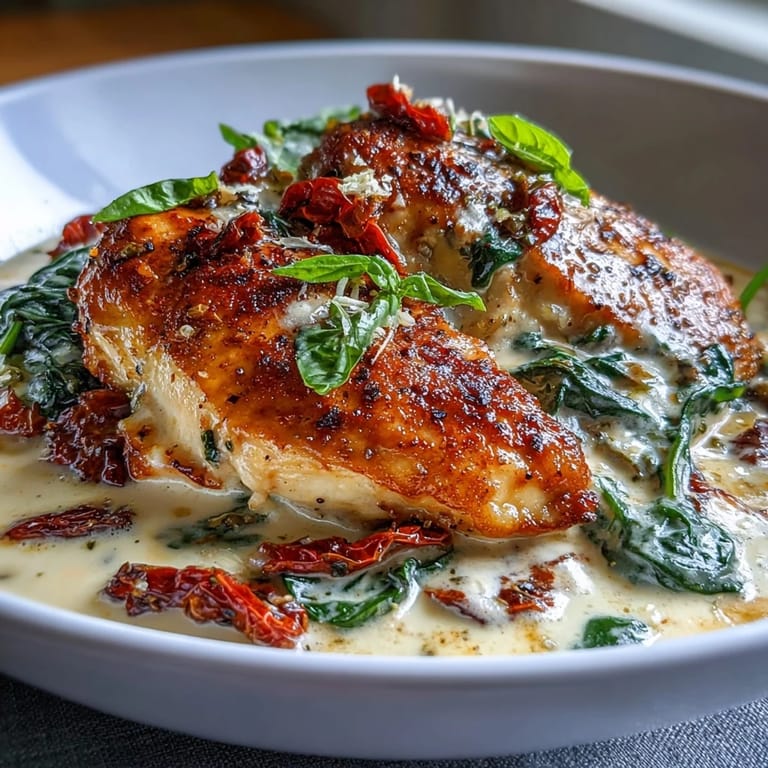
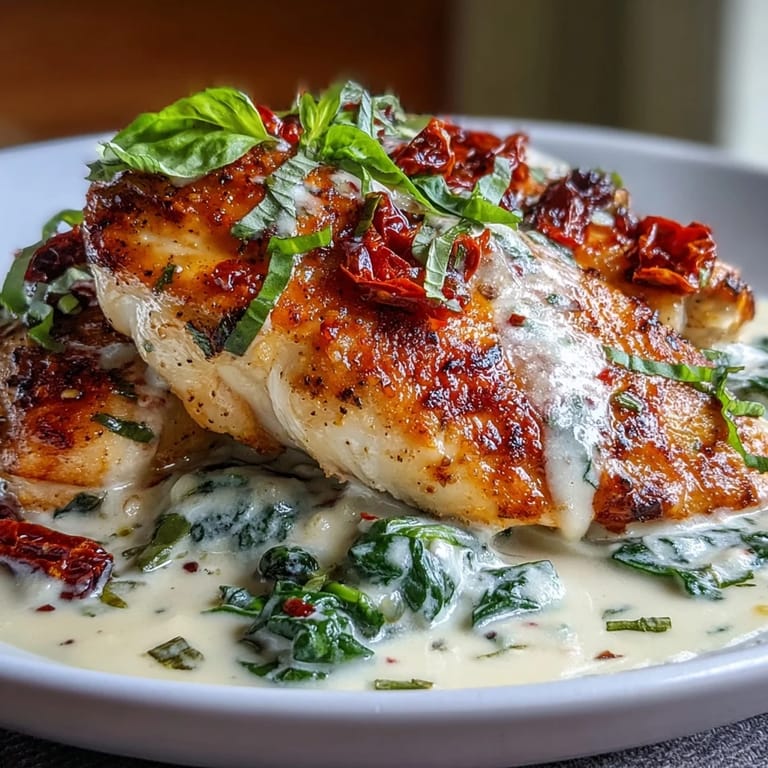
- Add the spinach by the handful and watch it collapse down to almost nothing, then stir in your fresh basil right at the end so it stays bright and aromatic. Return the chicken to the skillet with any juices that collected on the plate, spoon the sauce over everything, and let it all warm through for just a few minutes.
 Pin it
 My brother came home from a terrible day at work, sat down at my table, and didn't say a word until he'd finished half the plate—then he just quietly asked if I'd make it again next week. That's when food stops being about technique and nutrition and becomes about one person saying to another, through a shared meal, that things will be okay.
Pairing and Serving
This sauce is too good to eat with just chicken and air—let it cascade over something that can actually catch all those creamy, herbaceous drops. A bed of buttered pasta, fluffy rice, or creamy mashed potatoes will turn four chicken breasts into an entire story on the plate.
Storage and Reheating
The sauce keeps beautifully in the refrigerator for three days and actually tastes better the next day when all those flavors have settled into each other. Reheat gently over medium-low heat with a splash of broth or cream to bring back the silkiness, and add fresh basil again right before serving so it doesn't turn dark and bitter.
Adaptations That Actually Work
Once you understand how this dish works—seared protein, aromatic sauce, finishing vegetable—you can bend it in any direction your pantry suggests. Prosciutto instead of chicken, kale instead of spinach, or a splash of white wine in place of some broth all feel natural here because the structure is solid enough to hold them.
- If dairy isn't in your plan, coconut cream swaps in without apology, though you'll want to reduce the red pepper slightly since coconut's natural sweetness amplifies heat.
- Half-and-half creates a lighter version that still feels indulgent, and honestly, most people can't taste the difference in the final dish.
- Cook your chicken to exactly 165°F and no further—a meat thermometer is the closest thing to a time machine in your kitchen.
 Pin it
 This dish whispers rather than shouts, which is exactly what makes it feel like something you'd eat in a quiet corner of a Tuscan countryside restaurant. Make it once and it becomes the thing you reach for when you want to feel capable and generous in your own kitchen.
Recipe FAQs
- → What type of chicken is best for this dish?
Boneless, skinless chicken breasts work best as they cook evenly and absorb the creamy sauce well.
- → Can I substitute spinach with other greens?
Yes, kale or Swiss chard are good alternatives that add a wonderful texture and flavor variation.
- → How do sun-dried tomatoes enhance the dish?
They contribute a concentrated, tangy sweetness that balances the richness of the cream sauce perfectly.
- → Is it necessary to simmer the sauce after adding the chicken back?
Yes, simmering allows the chicken to soak up the flavors and heats the dish through for a harmonious taste.
- → What can be served alongside this dish?
It pairs beautifully with pasta, rice, or creamy mashed potatoes to complement its rich sauce.
- → How can the dish be made dairy-free?
Use coconut cream instead of heavy cream and vegan Parmesan alternatives to keep the creamy texture without dairy.