 Pin it
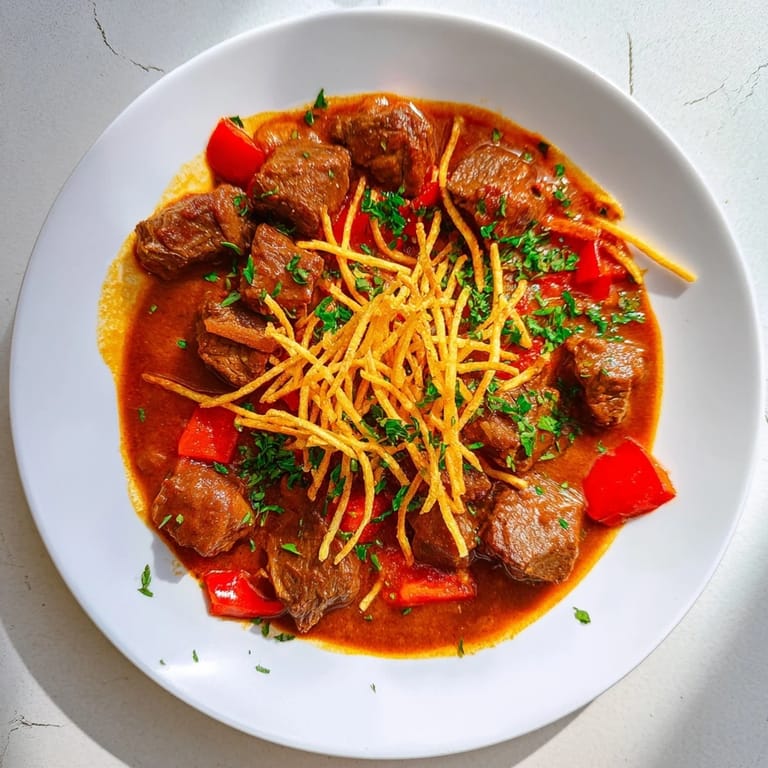
 My neighbor Petra brought a pot of goulash to our door one November evening, steam rising from under the lid, and I remember the paprika hitting my nose before I even opened the container. She'd made it exactly how her grandmother taught her, she said, with that particular kind of patience that turns cheap beef into silk. I've chased that feeling ever since, and somewhere along the way, those crispy potato strips became non-negotiable—they're what make people sit up straighter at the table.
I made this for the first time when my partner's Czech coworkers were coming over, and I was genuinely nervous about getting it right. But somewhere between the second hour of simmering and the moment the potatoes came out of the oil golden and crisp, I stopped worrying and started smiling. There's something about feeding people food that matters to them that changes how you cook it.
Ingredients
- Beef chuck, 800g, cut into 2.5 cm cubes: Chuck has enough marbling to turn tender rather than stringy after long cooking, and the fat keeps everything tasting rich even if you don't add cream.
- Vegetable oil, 2 tbsp: Something neutral that won't fight with the paprika and won't smoke at the temperature you need for browning meat.
- Large onions, 2, finely chopped: They disappear into the sauce and create the base, so don't skip them or rush them through their golden phase.
- Garlic, 3 cloves, minced: Add it after the paprika, never before, or it'll burn and taste bitter in a way that haunts the whole pot.
- Sweet Hungarian paprika, 2 tbsp: This is the soul of it all—genuine Hungarian paprika, not the dusty stuff in the back of your spice cabinet that's been there for three years.
- Caraway seeds, 1 tsp: They're what makes people say 'what is that?' and then want another bowl; they're herbaceous and slightly peppery and distinctly Czech.
- Marjoram, 1 tsp: Earthier than oregano, quieter, like it's been in the pot for hours already by the time you add it.
- Salt and black pepper: You'll taste and adjust at the end anyway, so don't be stingy here at the start.
- Tomato paste, 2 tbsp: It adds depth without making the sauce taste tomato-y; it's a secret that works.
- Beef broth, 750 ml: Use something you'd actually drink if it came to it, not the oversalted boxes lurking at the back of the shelf.
- Bell pepper, 1, diced: It softens into the sauce and adds sweetness without announcing itself.
- All-purpose flour, 1 tbsp: This thickens everything gently; sprinkle it over the meat so it distributes evenly and doesn't clump.
- Bay leaf, 1: Don't forget to fish this out before serving, even though it looks harmless—I've done this wrong and it's embarrassing.
- Potatoes, 4 large, peeled: Waxy potatoes are better than floury ones here; they hold their shape and don't break apart into the oil.
- Vegetable oil for frying, 500 ml: You need enough to actually submerge the potatoes, and it needs to be fresh and neutral.
Tired of Takeout? 🥡
Get 10 meals you can make faster than delivery arrives. Seriously.
One email. No spam. Unsubscribe anytime.
Instructions
- Get your mise en place ready:
- Chop everything before you start cooking because once the onions hit the oil, you won't have time to find your knife. Cube the beef, mince the garlic, measure the spices into a small bowl.
- Start the aromatics:
- Heat the oil in your heaviest pot over medium heat and add the onions. You want them golden and soft, not brown and bitter—this takes about 8 minutes and you should stir them a few times. They're the foundation, so be patient.
- Toast the spices:
- Add the garlic, caraway, and paprika all at once and stir constantly for just about 1 minute. You'll smell it before you need to count, and that's your sign to stop—burnt paprika tastes like ash and there's no saving it.
- Brown the beef:
- Push the aromatics to the side and let the meat hit the hot surface. Don't move it for the first couple of minutes; you want a crust, not a grey boil. Turn the pieces and let them brown on another side, about 5 minutes total.
- Build the sauce:
- Stir in the tomato paste, marjoram, salt, pepper, and bay leaf, then sprinkle the flour over everything and stir until you don't see any white streaks. It'll look thick and concentrated, which is exactly right.
- Add the broth and simmer:
- Pour in the beef broth and add the bell pepper, bring everything to a boil, then drop the heat to low, cover, and let it go for 1.5 to 2 hours. Stir it every 20 minutes or so and you'll see the sauce darken and thicken and the beef soften until it falls apart if you look at it too hard.
- Prepare the potato strips:
- While the goulash does its long, slow thing, peel the potatoes and cut them into thin matchsticks. A mandoline is faster, but a sharp knife and patience work just fine. The thinner and more uniform they are, the more evenly they'll cook.
- Dry the potatoes thoroughly:
- Rinse them in cold water to remove starch, then pat them completely dry with a clean towel. Any water means splattering oil and soggy potatoes, so don't skip this.
- Heat the oil and fry:
- Get your oil to 180°C (350°F)—use a thermometer if you have one, or test with a single strip and watch for immediate, vigorous sizzling. Fry the potatoes in batches so they're not crowded; you want about 3 to 4 minutes per batch until they're golden and crispy. Drain them on paper towels and salt them right away.
- Finish and serve:
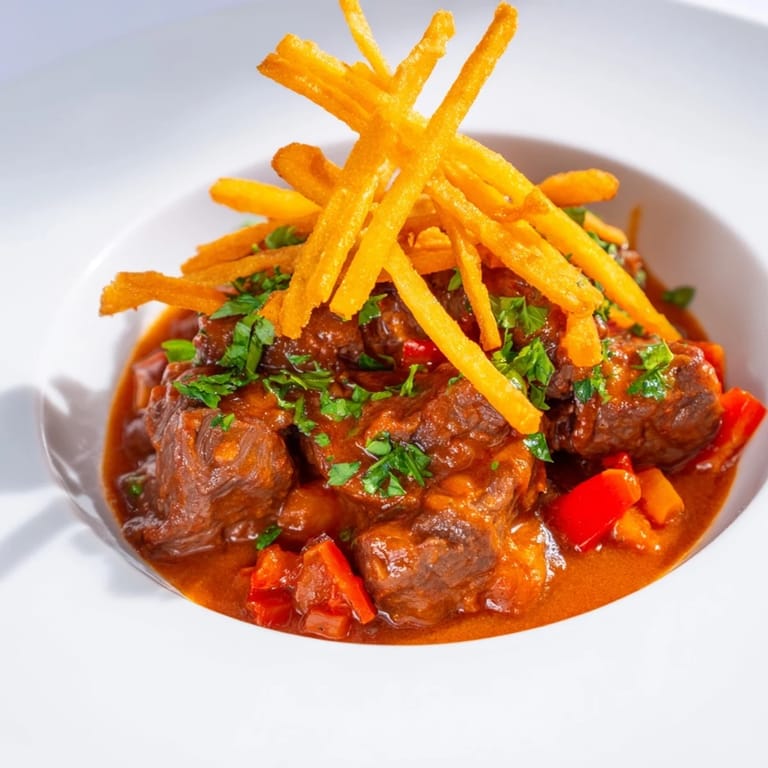
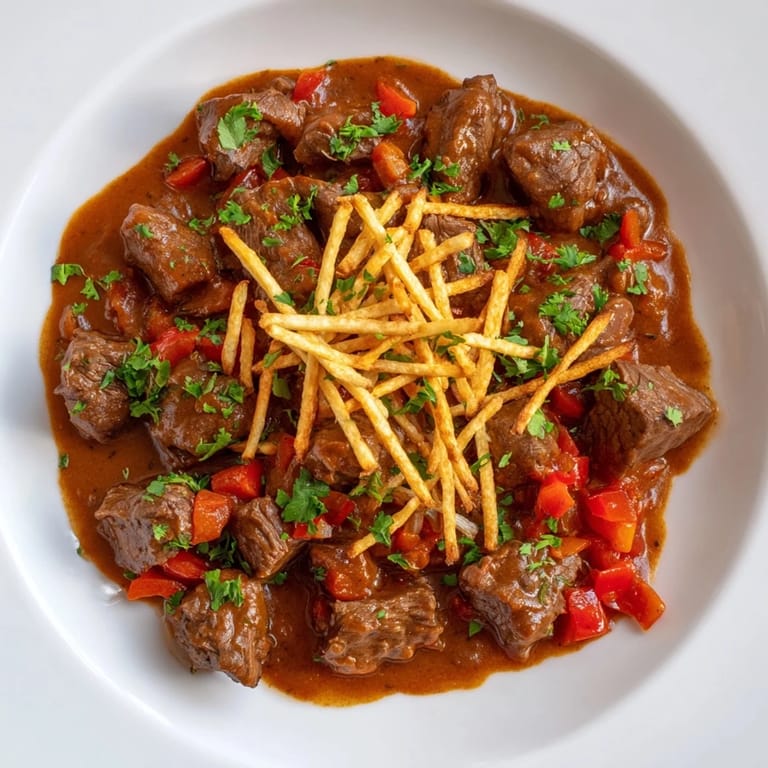
- Fish out the bay leaf, taste the goulash, and adjust the seasoning. You might want a bit more salt or a pinch of caraway or even a tiny bit more paprika. Serve the hot goulash in bowls and crown each one with a generous handful of those crispy potato strips.
 Pin it
 My kid asked for thirds the first time I made this, and my partner, who's not usually effusive about food, went quiet for a moment and then said it tasted like home. That's when I understood that this isn't complicated food trying to impress you; it's honest food that feeds people in a way that matters.
On Building Depth Without Fuss
The genius of goulash is that it asks you to do almost nothing but wait. You brown the meat, you simmer, you stir occasionally, and the alchemy happens all by itself. I used to think long cooking meant hard cooking, but this taught me otherwise—patience and low heat do the heavy lifting. The longer the beef sits in that paprika-spiced liquid, the more the flavors knit together until you can't separate them anymore.
The Secret of Crispy Potato Strips
Those potato strips are what transform this from a stew into something special, so don't treat them like an afterthought. The oil temperature matters more than you'd think—too cool and they're greasy sponges, too hot and they brown before they're cooked through. I learned this by making them wrong twice, and now I always use a thermometer. The moment you pull them out golden and drain them on paper towels, you can taste why people love them—they're fried potatoes at their best, crispy outside and still fluffy within.
Serving and Customizing
This dish is forgiving in the best way. Some people want a dollop of sour cream stirred in, others want it served alongside, and some want nothing but the goulash and potatoes. I've had it with fresh parsley scattered on top, and I've had it with a tiny pinch of hot paprika for people who like their food with an edge. The goulash itself stays mellow and approachable, so it's easy to let people adjust it to their taste.
- A cold Czech Pilsner or a light red wine is the natural drink here—something that won't overpower the paprika.
- Leftovers reheat beautifully on the stovetop, though the potato strips are always better fresh.
- If you're cooking for more people, double the goulash but don't double the paprika—taste as you go and add more if it needs it.
 Pin it
 This is the kind of food that makes people want to linger at the table, and that's really all cooking is supposed to do. Serve it with confidence and watch what happens.
Recipe FAQs
- → What cut of beef works best for this dish?
Beef chuck is ideal due to its marbling and tenderness when slow-cooked, resulting in a flavorful, soft texture.
- → How should the paprika be handled to avoid bitterness?
Cook the paprika briefly over medium heat with onions and garlic, stirring constantly to prevent burning and maintain its rich flavor.
- → What is the best way to prepare crispy potato strips?
Slice potatoes into thin matchsticks, rinse and dry thoroughly, then deep-fry in hot oil until golden to achieve maximum crunch.
- → Can this dish accommodate dietary restrictions?
Using gluten-free flour instead of all-purpose flour keeps it suitable for gluten-sensitive diets without compromising texture.
- → Are there recommended beverage pairings?
Traditional Czech Pilsners or light red wines complement the rich and spicy flavors harmoniously.