 Pin it
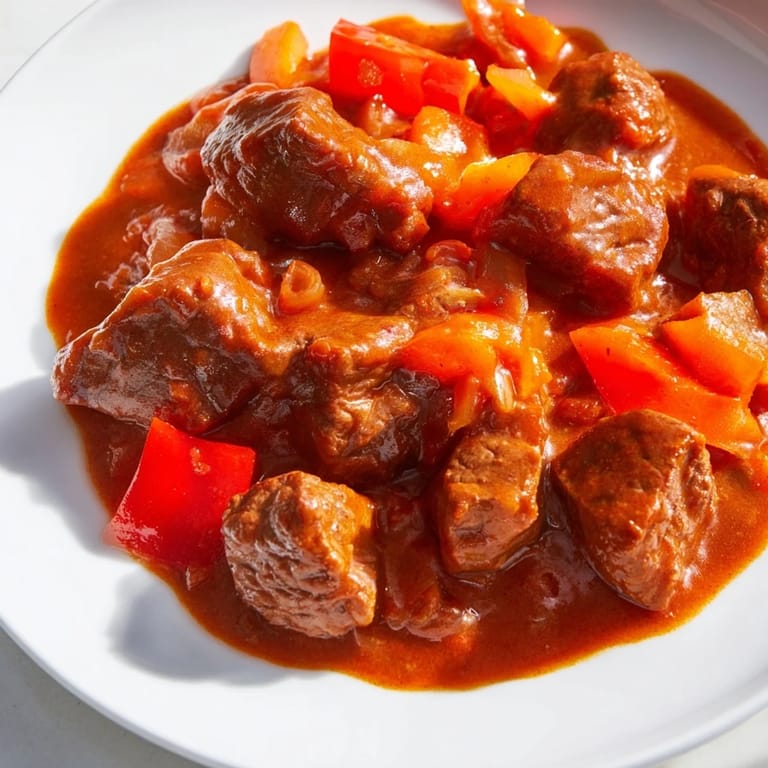
 My first real goulash happened by accident during a winter when I was trying to impress someone with Eastern European cooking. I'd grabbed Hungarian paprika at the market without really understanding what made it different, then watched in mild panic as the spice bloomed and filled my kitchen with this deep, complex aroma that smelled nothing like the generic paprika I'd used before. That moment taught me that some dishes aren't just recipes, they're lessons in letting good ingredients do their work. This goulash became the dish I return to when I want something honest and warming, the kind of stew that tastes better as it sits and thinks about itself overnight.
I made this for a potluck once and watched people come back for thirds, which never happens with stew. Someone asked for the recipe, then admitted they were intimidated by the paprika amount, but when they tasted it they understood immediately that Hungarian paprika isn't like other paprikas, it's sweeter and deeper. That's when I realized this dish is as much about showing people that good cooking isn't complicated, it's just about not being afraid of bold flavors.
Ingredients
- Beef chuck (2 lbs, cut into 1-inch cubes): Chuck is the correct cut here because it has enough fat and connective tissue to become tender and silky rather than dry, which cheaper or leaner cuts won't do, no matter how long you cook them.
- Hungarian sweet paprika (3 tbsp): This is non-negotiable for authentic goulash, use actual Hungarian paprika not the generic kind, the flavor difference is immediate and shocking.
- Onions (2 large, finely chopped): These break down into the broth and become almost invisible, providing the sweetness and body that makes goulash taste complex and developed.
- Carrots (2 medium, sliced): They add a gentle sweetness and soften into the stew, becoming part of the texture rather than staying distinct.
- Red bell pepper (1 large, diced): The pepper brightens everything and adds a mild sweetness that balances the paprika's depth.
- Garlic (2 cloves, minced): Just enough to whisper in the background without overpowering the paprika.
- Potatoes (2 medium, optional but recommended): If you add them, they absorb the broth and become creamy at the edges, making the whole thing more substantial.
- Beef broth (4 cups): Use real broth, not bouillon, the difference in final flavor is considerable.
- Tomato paste (2 tbsp): A small amount adds depth and slight acidity without making this taste tomatoey.
- Caraway seeds (1 tsp): These give goulash its recognizable Hungarian character, a slightly nutty note that feels warm and comforting.
- Dried marjoram (1 tsp): Marjoram is traditional and herbaceous without being aggressive like oregano would be.
- Black pepper, salt, and bay leaf: Bay leaf should come out before serving, it flavors the broth but doesn't belong in anyone's bowl.
- Vegetable oil or lard (2 tbsp): Oil works fine, but lard gives goulash a richness that feels historically correct.
Tired of Takeout? 🥡
Get 10 meals you can make faster than delivery arrives. Seriously.
One email. No spam. Unsubscribe anytime.
Instructions
- Heat and sweeten the onions:
- Get your pot medium-hot with oil or lard, then add the finely chopped onions and let them go golden and soft, about 8 minutes, you're building the flavor foundation here and this step shouldn't be rushed.
- Wake up the garlic:
- Add minced garlic and let it toast for just 1 minute, you'll smell when it's right and that's when you move forward.
- Brown the beef:
- Add your beef cubes and let them sit and develop color on all sides, this takes about 5 minutes and you're not cooking it through, just getting a golden crust that brings richness to the broth.
- Bloom the paprika:
- Sprinkle paprika directly over the beef and onions, stir quickly for maybe a minute, this releases the paprika's full flavor and prevents it from burning which would make it bitter.
- Build the base:
- Stir in tomato paste, caraway seeds, marjoram, pepper, and salt, let it toast for a moment so all the spices are waking up and talking to each other.
- Add vegetables and broth:
- Toss in carrots, bell pepper, and bay leaf, then pour in the beef broth while scraping up all the brown crusty bits from the bottom because those are pure flavor, bring everything to a gentle simmer.
- Long, slow cook:
- Cover and cook on low for 1 hour, stirring occasionally, the beef is softening and the broth is becoming something deeper and more complex than it was.
- Finish with potatoes:
- Add potatoes now if you're using them and cook uncovered for another 45 to 60 minutes until the beef is falling-apart tender and the potatoes are creamy, the stew should have thickened slightly and smell incredible.
- Final taste:
- Remove the bay leaf, taste, adjust salt and pepper as needed, then serve it hot with bread or noodles or dumplings.
 Pin it
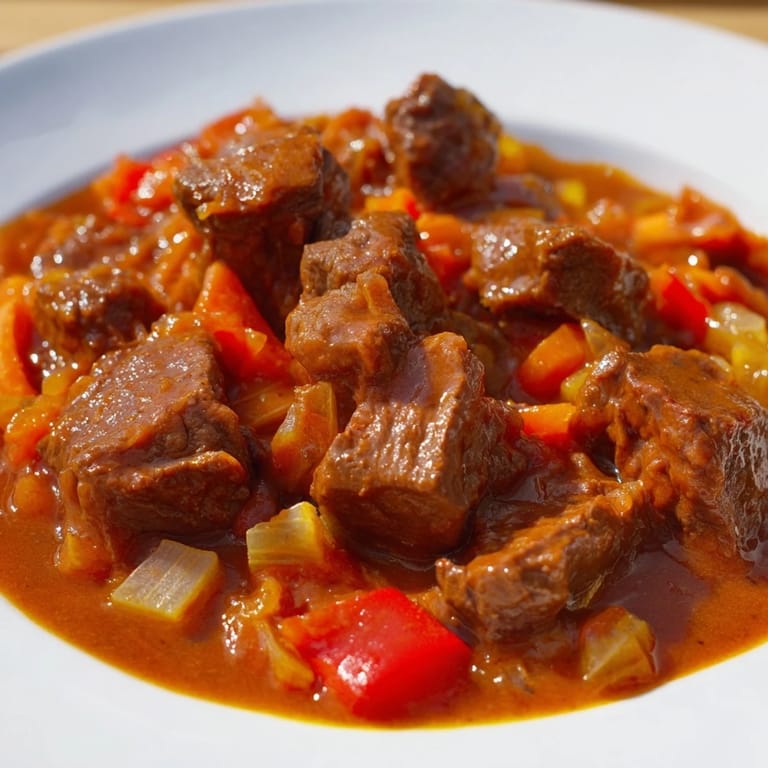
 There's something about goulash that makes people slow down and actually eat, not scroll, not rush, just eat and enjoy and maybe ask for the recipe again. I've found that serving it with thick bread and letting people soak up the broth is the moment when food becomes hospitality.
Spice Notes and Variations
Hungarian sweet paprika is the soul of this dish, but if you like heat, add a pinch of hot paprika or a chopped fresh chili toward the end of cooking. Caraway and marjoram are traditional, but I've made versions with just paprika and salt when I didn't have everything on hand and it was still deeply satisfying. The spice balance here is intentionally warm and comforting rather than aggressive, which is why goulash works for feeding people on cold nights without overwhelming their palates.
What to Serve With It
I've served this with crusty bread, egg noodles, creamy mashed potatoes, and traditional Hungarian csipetke dumplings, all of them work because they're all vehicles for the broth which is honestly the best part. Some people swear by sour cream on top, which adds a cool contrast to the warm spice, others prefer it naked and pure. There's no wrong answer here, just feed people what they like alongside it.
Storage and Reheating
Goulash genuinely tastes better the next day when the flavors have had time to settle and marry together, I've rehated this for up to four days after making it and it's been wonderful. You can also freeze it for a month or more, which means you can make a big batch when you're in the mood and then have comfort food ready whenever a cold week appears.
- Reheat gently on the stovetop with a splash of broth so nothing dries out or scorches.
- If the broth has thickened too much overnight, add more beef broth or even water to loosen it back to the consistency you want.
- Always taste before serving to check seasoning because flavors can shift as it sits.
 Pin it
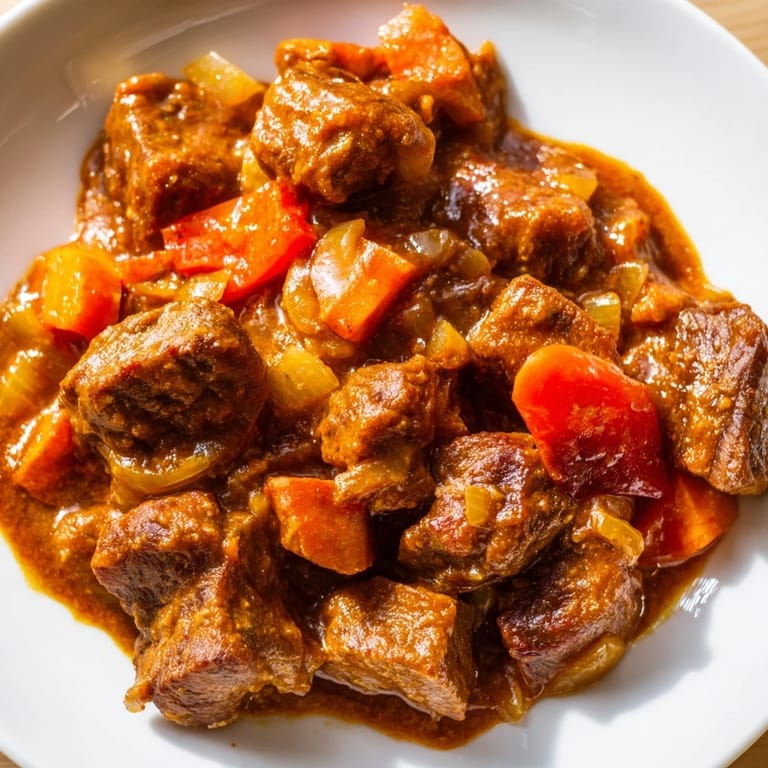
 This goulash is the kind of dish that sticks with you long after dinner ends, warming you from the inside and reminding you why cooking for people matters. Make it for someone you care about.
Recipe FAQs
- → What cut of beef works best for this stew?
Beef chuck is ideal as it becomes tender and flavorful after slow simmering.
- → Can I add potatoes to the dish?
Yes, cubed potatoes can be added for extra heartiness during the last simmering stage.
- → How do I achieve authentic paprika flavor?
Use good-quality Hungarian sweet paprika and add it early for a rich, smoky depth.
- → What sides complement this hearty stew?
Rustic bread, egg noodles, or traditional Hungarian csipetke dumplings pair beautifully.
- → Is this dish suitable for gluten- or dairy-sensitive diets?
Yes, it contains no gluten or dairy when using appropriate broth and ingredients.