 Pin it
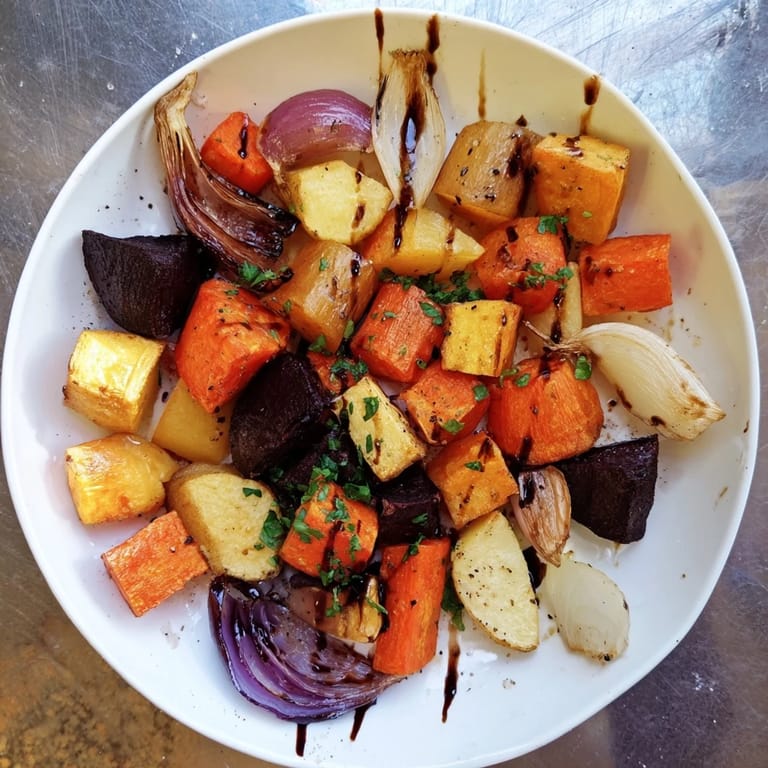
 I discovered the magic of roasted root vegetables quite by accident one autumn evening when my farmer's market haul seemed overwhelming. I had more carrots, beets, and parsnips than I knew what to do with, so I tossed them all onto a sheet pan with olive oil and whatever herbs I had on hand. When they emerged from the oven caramelized and golden, with edges crispy enough to shatter between your teeth, I realized I'd stumbled onto something special. That tangy-sweet balsamic glaze I drizzled over them transformed them from simple roasted vegetables into something that felt intentional, restaurant-worthy, and absolutely irresistible.
I'll never forget the first time I made this for Thanksgiving dinner. My family expected me to be stressed, juggling multiple dishes, but instead I simply slid this pan into the oven and poured myself a glass of wine. When I brought it to the table, glossy with that beautiful balsamic reduction, my mother asked for the recipe before she'd even tasted it. It became the dish people requested every holiday after that, proof that sometimes the simplest approach is the most memorable.
Ingredients
- Carrots: Medium carrots cut into 1-inch pieces work best because they stay tender without falling apart, and they caramelize beautifully at the edges
- Parsnips: These add an earthy sweetness that deepens as they roast, creating complexity you wouldn't expect from such a humble vegetable
- Sweet potato: One medium sweet potato, peeled and cubed, brings natural sweetness that balances the earthiness of the other roots
- Red onion: Cut into wedges so the layers stay intact during roasting, creating tender pieces with just enough structure
- Golden beets: Two medium beets, peeled and cubed, add earthy depth and a jewel-like color that makes the dish beautiful
- Olive oil: Three tablespoons is enough to coat everything evenly and help the vegetables brown and caramelize
- Sea salt and black pepper: One teaspoon salt and half a teaspoon pepper, the baseline that lets the vegetables speak for themselves
- Dried thyme and rosemary: Half a teaspoon each brings warmth and an herbaceous undertone that feels like home
- Balsamic vinegar: One-third cup creates the glaze that ties everything together with tangy sweetness
- Honey or maple syrup: One tablespoon sweetens the glaze just enough to balance the vinegar's bite
- Fresh parsley: Two tablespoons chopped for garnish, though optional, adds a fresh brightness that cuts through the richness
Tired of Takeout? 🥡
Get 10 meals you can make faster than delivery arrives. Seriously.
One email. No spam. Unsubscribe anytime.
Instructions
- Heat your oven and prepare:
- Preheat to 425°F and line a baking sheet with parchment paper. This high heat is your secret weapon for caramelization, and parchment means no sticking, no scrubbing.
- Coat the vegetables:
- In a large bowl, toss all your cut vegetables with the olive oil, salt, pepper, thyme, and rosemary until every piece glistens with oil and spice. Take a moment to smell this, because that's the promise of what's coming.
- Spread them out:
- Pour the vegetables onto your prepared sheet in a single layer, making sure nothing is crowded or overlapping. They need room to breathe and brown.
- Roast until golden:
- Slide into the oven for 30 to 35 minutes, stirring halfway through. You'll know they're ready when the edges are deeply caramelized and the pieces yield easily to a fork.
- Make the glaze while they roast:
- In a small saucepan, combine the balsamic vinegar and honey over medium heat. Watch it simmer and reduce, about 5 to 7 minutes, until it's syrupy and coats the back of a spoon. This is where the magic happens.
- Finish and serve:
- Transfer your roasted vegetables to a serving platter, drizzle generously with the warm balsamic glaze, scatter with fresh parsley if you'd like, and serve while everything is still warm enough to steam slightly.
 Pin it
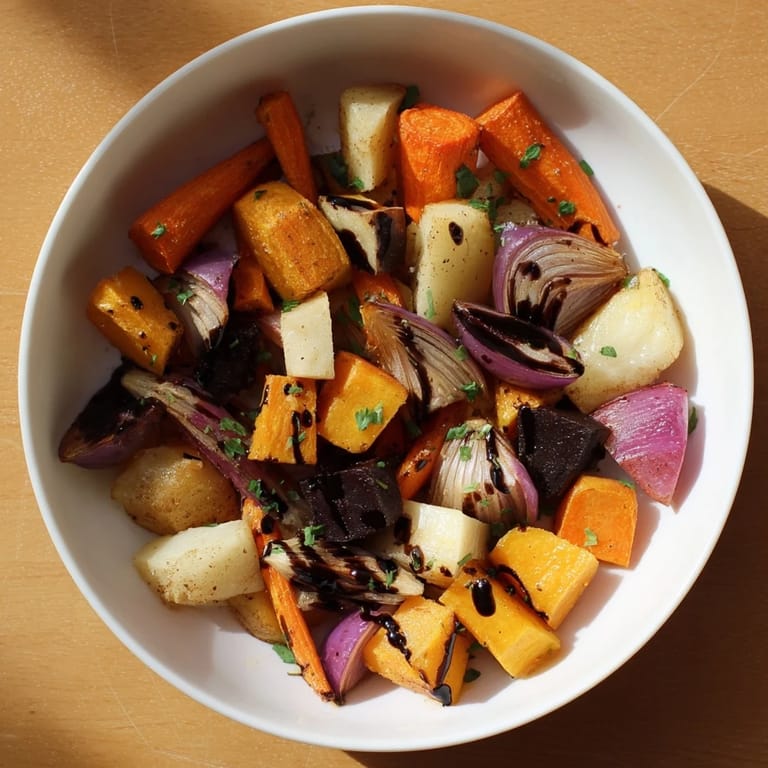
 I learned the importance of that halfway stir the hard way, when I got caught up in conversation and forgot to check on the pan. Half the vegetables were nearly burnt while the others were barely tender. But that mistake taught me something valuable about paying attention, about the small gestures that separate good cooking from great cooking. Now, stirring halfway is my moment to pause, to check in with the dish, to make sure everything is heading where I want it to go.
Why This Recipe Works Every Time
There's a reason roasted vegetables have become a cornerstone of how I cook. They're infinitely forgiving, deeply satisfying, and they reward attention without demanding it. High heat concentrates the natural sugars in the roots, creating caramelization that tastes like caramel itself. The herbs add complexity without pretension, and that balsamic glaze? It's the bridge between simple and sophisticated, between weeknight dinner and company-worthy side. You're not fighting the ingredients, you're just creating the conditions for them to become their best selves.
Making It Your Own
This recipe is genuinely flexible, and I've learned that flexibility is where creativity lives. Turnips, rutabagas, Brussels sprouts, even cauliflower florets can join the party. Some evenings I toss in whole garlic cloves that become sweet and mellow in the heat. Other times I'll add a pinch of cayenne or smoked paprika if I'm feeling adventurous. The structure stays the same, but the personality changes with whatever you're in the mood for.
Serving and Pairing
This medley sits beautifully beside roasted chicken or grilled fish, bringing color and substance to the plate. It's hearty enough to be a vegetarian main course with crusty bread and creamy cheese. I've served it cold the next day atop fresh greens as a salad, brought it to potlucks where it disappeared first, and built holiday dinners around it. It's the kind of dish that works in almost any context, adapting itself to whatever meal you're creating.
- Let the vegetables cool slightly before drizzling the warm glaze so it clings better and creates a beautiful sheen
- Make extra balsamic glaze if you love it as much as I do, because you'll want more than you think
- Serve this warm for the best texture and flavor, though it's genuinely delicious at room temperature too
 Pin it
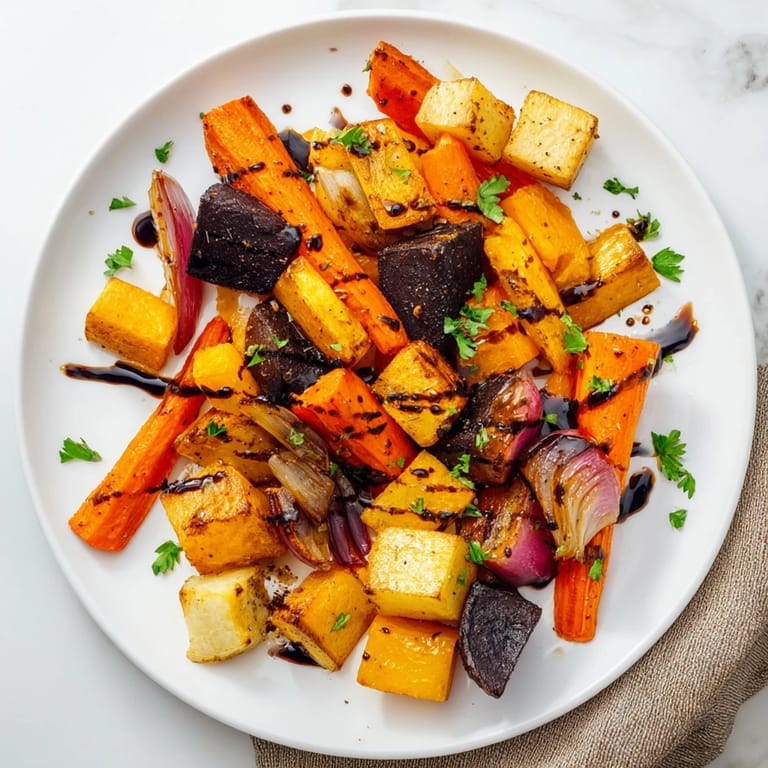
 This recipe taught me that sometimes the most beautiful food comes from the simplest choices, from listening to what the ingredients want to become. I hope it brings as much joy to your table as it has to mine.
Recipe FAQs
- → What root vegetables work best for roasting?
Carrots, parsnips, sweet potatoes, red onions, and golden beets roast beautifully, developing a sweet, caramelized exterior and tender texture.
- → How do I make the balsamic glaze?
Simmer balsamic vinegar with honey or maple syrup until reduced by half, resulting in a syrupy, tangy glaze that complements the roasted vegetables.
- → Can I prepare the vegetables in advance?
Yes, chop and toss your vegetables ahead of time, then roast just before serving to maintain freshness and texture.
- → What herbs enhance the roasted flavors?
Dried thyme and rosemary are great for an earthy aroma, while fresh parsley adds a bright finish after roasting.
- → How can I customize this dish?
Try including root veggies like turnips or rutabaga, or add whole garlic cloves before roasting to boost the savory depth.