 Pin it
 My first lahmacun came from a small Istanbul kitchen where the baker's hands moved so fast I could barely follow—dough stretched paper-thin, meat mixture spread with the back of a spoon, into the oven for what felt like seconds. Years later, I finally understood the magic: it's not about perfection, it's about that moment when thin, crispy edges meet warm, spiced meat. Now whenever I make these at home, my kitchen fills with that same smoky aroma, and I'm back in that Istanbul alley, except this time I'm the one creating that moment for others.
I once made a batch for a dinner party where someone hesitantly asked if I'd made them from scratch—the look on their face when I said yes was exactly why I keep coming back to this recipe. What started as an intimidating technique became my go-to for feeding a crowd without spending hours in the kitchen or losing the kitchen-table feeling that makes food meaningful.
Ingredients
- All-purpose flour (300 g): The base that becomes impossibly thin and crispy; don't skip the kneading step or your dough will tear when stretched.
- Warm water (180 ml): Lukewarm is key—too hot kills the yeast, too cold and nothing rises.
- Instant yeast (1 tsp): This small amount is all you need; fresh yeast loses its power quickly once opened.
- Ground lamb or beef (300 g): Lamb gives earthier depth, but beef is brighter and leaner—use what feels right for your mood.
- Onion, garlic, tomato, bell pepper: These form the flavor foundation; finely chop them so they cook evenly and don't overwhelm the thin dough.
- Tomato paste (2 tbsp): Don't dilute it; its concentrated sweetness balances the spices beautifully.
- Cumin and paprika (1 tsp each): These two create the recognizable warmth that makes lahmacun feel like lahmacun.
- Fresh parsley (2 tbsp): Added before cooking, it stays bright and herbaceous instead of turning dark and muted.
- Olive oil (2 tbsp in topping): This keeps the meat mixture moist as it cooks on the thin dough.
- Lemon wedges and fresh herbs to serve: The squeeze of lemon is non-negotiable; it brings everything into focus.
Tired of Takeout? 🥡
Get 10 meals you can make faster than delivery arrives. Seriously.
One email. No spam. Unsubscribe anytime.
Instructions
- Mix the dough and let it breathe:
- Combine flour, sugar, and salt, then add the yeast dissolved in warm water along with olive oil. Mix until shaggy, then knead for 5–7 minutes—you're looking for a soft, slightly tacky dough that springs back when you poke it. Cover and watch it grow for 30 minutes; doubled in size is perfect.
- Build your meat mixture:
- In a separate bowl, combine all topping ingredients: ground meat, finely chopped vegetables, tomato paste, herbs, and spices. The key is thorough mixing so every spoonful tastes balanced; don't be shy about using your hands here.
- Heat your oven aggressively:
- Turn it to its highest setting (around 250°C or 480°F) and get your baking tray or pizza stone inside to preheat. This matters—the heat creates that crispy bottom.
- Divide and stretch the dough:
- Portion the risen dough into 8 balls and let them rest for a few minutes. On a floured surface, gently stretch each one into a thin oval about 20 cm across; if it resists, let it relax for a minute before trying again.
- Spread the meat topping:
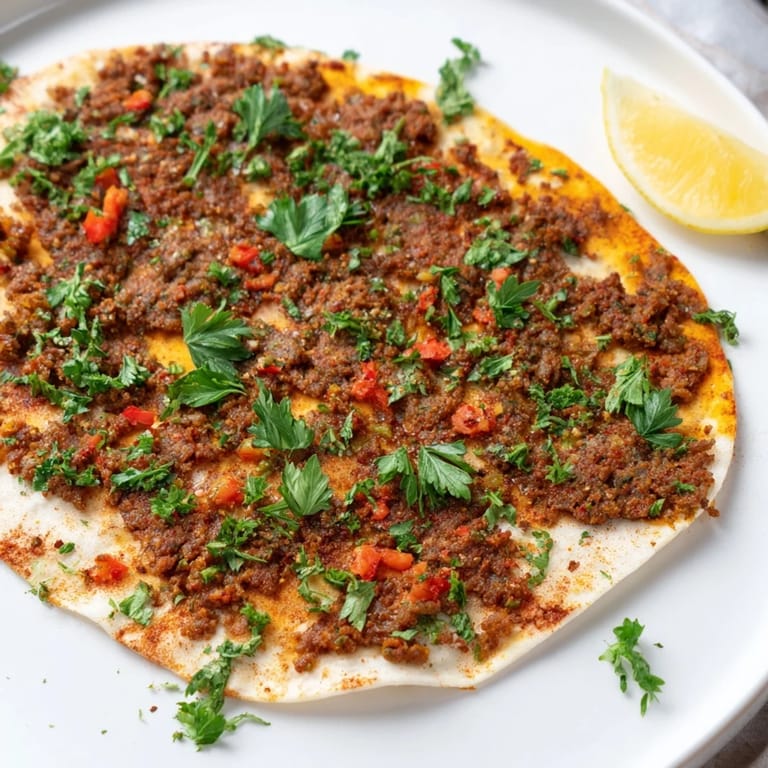
- Use the back of a spoon to spread a thin, even layer across each stretched dough. Thin is the word—the meat cooks fast and too much will make it heavy.
- Bake until the edges snap:
- Transfer to your hot baking tray (work in batches if needed) and bake for 6–8 minutes. You're watching for crisp, slightly browned edges and meat that's cooked through; the bottom should be golden and crackly.
- Finish and serve immediately:
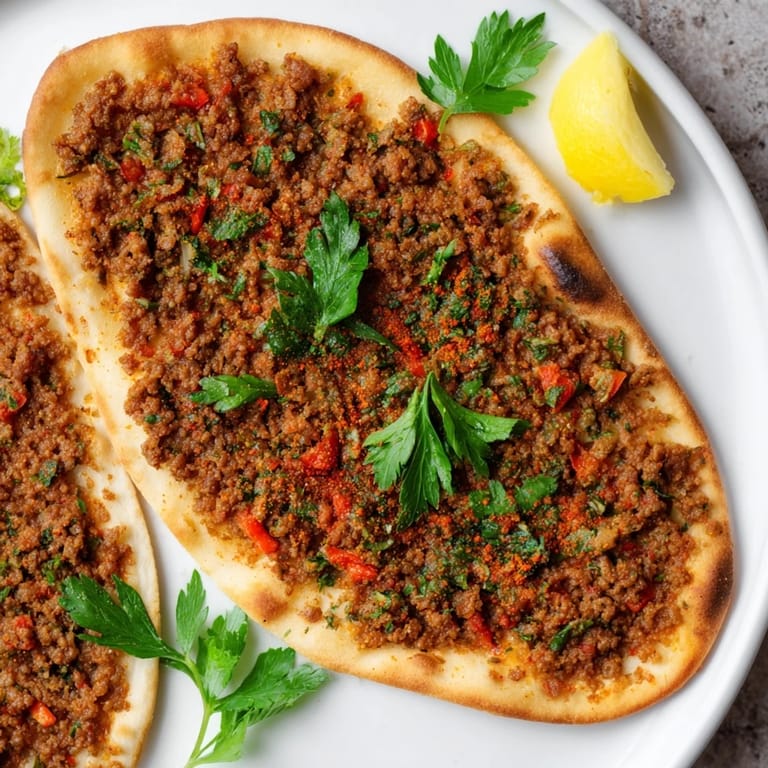
- Pull them from the oven and shower with fresh parsley and a squeeze of lemon. Some people add sliced onions and sumac here; it's a nice touch if you have it on hand.
 Pin it
 There's a moment right after they come out of the oven when the whole lahmacun is still flexible, still steaming, and for just a few seconds you can either eat it flat or roll it up with fresh herbs and greens. That choice—flat or rolled, a snack or a meal, served alone or with others—is when it feels less like cooking and more like creating a small moment of possibility.
The Art of Stretching Dough
Stretching dough thin enough for lahmacun feels scary the first time, but the dough is far more forgiving than your hands believe. If it tears, just pinch it back together—those little repairs disappear once it bakes. If it keeps snapping back, you haven't let it rest enough between stretches. The rhythm becomes meditative: stretch a little, let it rest, stretch again, until it's nearly transparent. By your fourth or fifth lahmacun, your hands remember the feeling.
Timing and Temperature Matter
The entire bake is over in minutes, which is part of the appeal but also requires attention. At 6 minutes you're checking for color; at 8 minutes it should be done. If your oven runs cool, tack on another minute. The edges should crackle between your fingers and the meat should have lost any raw smell. Once you nail the timing in your own oven, the whole process becomes almost relaxing because you know exactly what to expect.
Serving and Variation Ideas
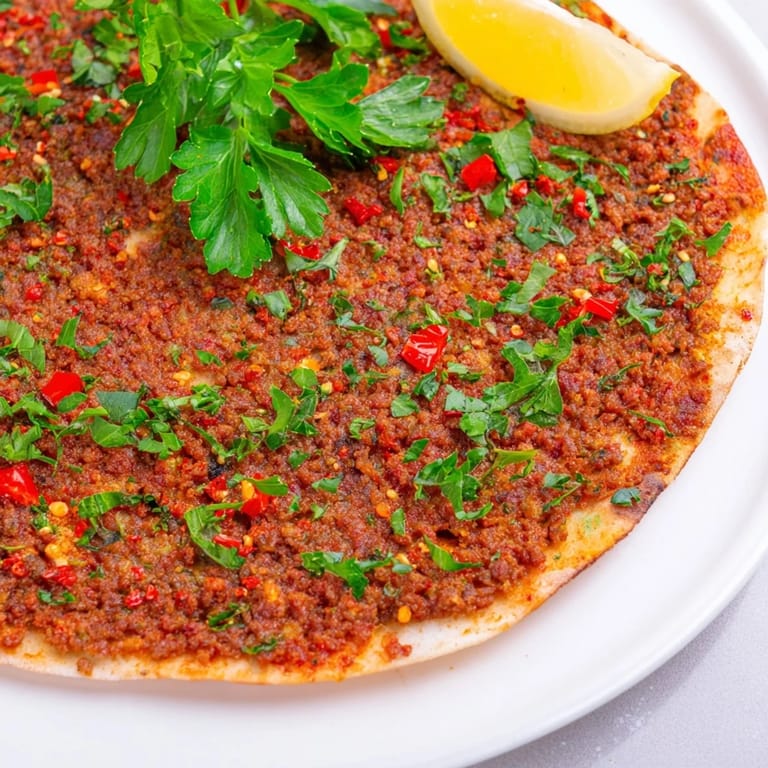
Lahmacun is best eaten fresh and warm, but it's also wonderful at room temperature if you're meal-prepping. The beauty of this recipe is how it adapts: omit the meat and use finely minced mushrooms and walnuts for vegetarians, add more chili flakes if you like heat, or reduce the herbs if someone at your table prefers simplicity. Serve with lemon, fresh parsley or mint, sliced onions, and sumac if you have it, but honestly, a squeeze of lemon and maybe a handful of arugula is all you truly need.
- Pair them with ayran (Turkish yogurt drink) or a light red wine for an authentic touch.
- If you're making these ahead, they freeze beautifully before baking—just extend the bake time by a minute or two straight from frozen.
- Leftover cooked lahmacun reheats gently in a warm oven, though they're honestly just as good cold the next day.
 Pin it
 Lahmacun taught me that some of the most satisfying food comes from thin, crispy shells and bold, simple flavors. Make these for people you want to impress without actually trying too hard.
Recipe FAQs
- → What type of meat is best for Lahmacun?
Ground lamb or beef works best, offering a rich and savory flavor that complements the spices well.
- → How thin should the dough be rolled?
Roll the dough very thin, about 20 cm (8 inches) in diameter, to achieve the characteristic crisp texture.
- → Can Lahmacun be made vegetarian?
Yes, substituting meat with a mixture of minced mushrooms and walnuts provides a flavorful vegetarian alternative.
- → What spices are commonly used in the topping?
Ground cumin, paprika, black pepper, and optionally chili flakes create a warm, aromatic spice blend.
- → How should Lahmacun be served?
Serve hot, garnished with fresh parsley or mint and a squeeze of lemon. It can also be rolled with fresh vegetables for added texture.
- → What oven temperature is ideal for baking?
Bake at a high temperature, around 250°C (480°F), to get a crisp dough and well-cooked topping in about 6-8 minutes.