 Pin it
 There's something about the deep crimson color of borscht that makes you want to slow down and pay attention. My grandmother kept a handwritten recipe card stained with beet juice, and I remember watching her grate beets with such deliberate care, as if the soup wouldn't turn out right if she rushed. Years later, I realized she wasn't just making soup—she was teaching me that some dishes demand presence.
I made this for friends on a gray November evening, and someone asked why their store-bought version never tasted like this. The answer was in the kitchen—the smell of caramelized beets and tomato paste, the sound of the broth simmering softly, the way everyone paused before tasting because they could tell something real was happening in that pot.
Ingredients
- Beef chuck or brisket (400g): Use larger pieces rather than cubes so the meat stays tender and doesn't fall apart; you'll shred it later anyway.
- Water (1.5 liters): This becomes your foundation, so start with cold water and let it come to a proper boil.
- Bay leaves and black peppercorns: These are your quieter flavors, building depth while the beef does the heavy lifting.
- Beets (3 medium): Fresh beets make all the difference; their natural sweetness balances the vinegar perfectly.
- Carrots (2 medium) and onion (1 medium): Grate them to release their sugars faster and let them caramelize in the skillet.
- Potatoes (2 medium) and cabbage (1/4 small head): The potatoes thicken the broth subtly, while cabbage adds texture and a gentle sweetness.
- Tomato paste (2 tablespoons): This concentrates the flavor; don't skip it or dilute it with water.
- Sunflower oil (2 tablespoons): It won't compete with the beet flavors the way some oils might.
- Sugar (1 tablespoon) and white vinegar (2 tablespoons): These two work as a team—sugar rounds out the beets while vinegar keeps everything bright and prevents the soup from tasting one-dimensional.
- Sour cream (150g): The finishing touch that transforms hot borscht into something almost luxurious.
- Fresh dill or parsley: Use fresh if you can; it adds a final note of life to the finished bowl.
Tired of Takeout? 🥡
Get 10 meals you can make faster than delivery arrives. Seriously.
One email. No spam. Unsubscribe anytime.
Instructions
- Start the broth right:
- Place beef, water, bay leaves, peppercorns, and salt into a large pot and bring everything to a rolling boil. You'll see foam rise to the surface—skim it away gently because it keeps the broth clear and clean tasting. Reduce the heat to a gentle simmer and let it cook undisturbed for 45 minutes while you handle the vegetables.
- Build flavor in the skillet:
- While beef simmers, warm oil in a skillet over medium heat and add chopped onions, letting them turn translucent and soft, about 3 minutes. Add your grated carrots and beets, and let them cook together for 5 minutes so their natural sugars start to caramelize. Stir in tomato paste, sugar, and vinegar, then continue cooking for another 7 to 8 minutes, stirring occasionally.
- Make the transition:
- Remove the beef from the pot with a slotted spoon and set it aside on a cutting board. If you want a clearer broth, you can strain it through a fine sieve, but I usually skip this—the small particles add body. Return the broth to a simmer.
- Layer in the vegetables:
- Add diced potatoes to the simmering broth and cook for 10 minutes until they're just beginning to soften. Then add the cabbage and the sautéed beet mixture from the skillet, stirring gently so everything incorporates evenly. Simmer for another 10 minutes until the cabbage is tender.
- Bring it all together:
- Shred or cube the cooked beef into bite-sized pieces and return it to the pot. Stir in minced garlic, then taste carefully and adjust salt and pepper to your preference. Let everything simmer together for 5 more minutes so the flavors marry. Remove from heat and let the pot rest for 15 to 20 minutes undisturbed—this resting period is when the borscht deepens and becomes something greater than the sum of its parts.
- Serve with presence:
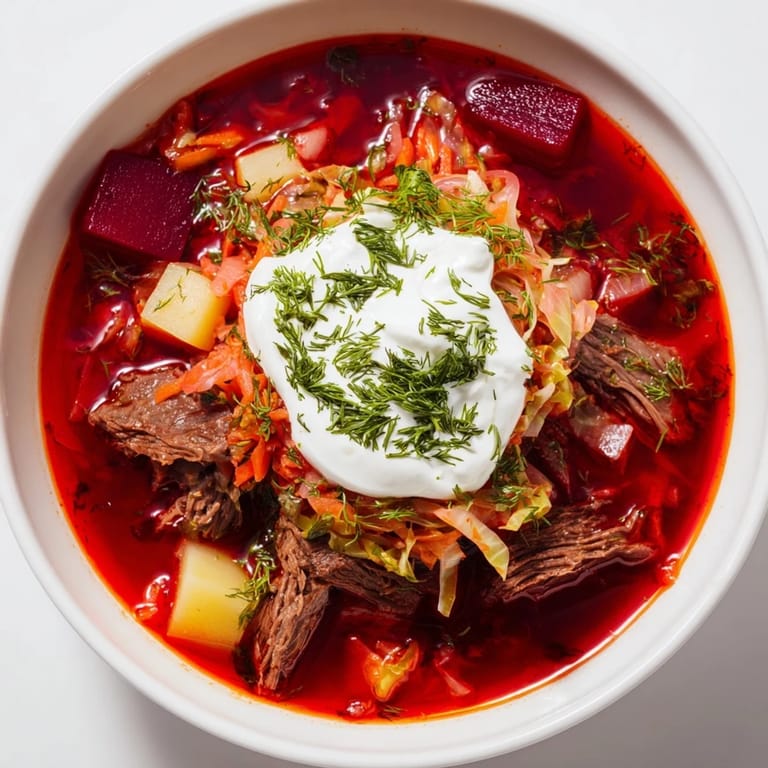
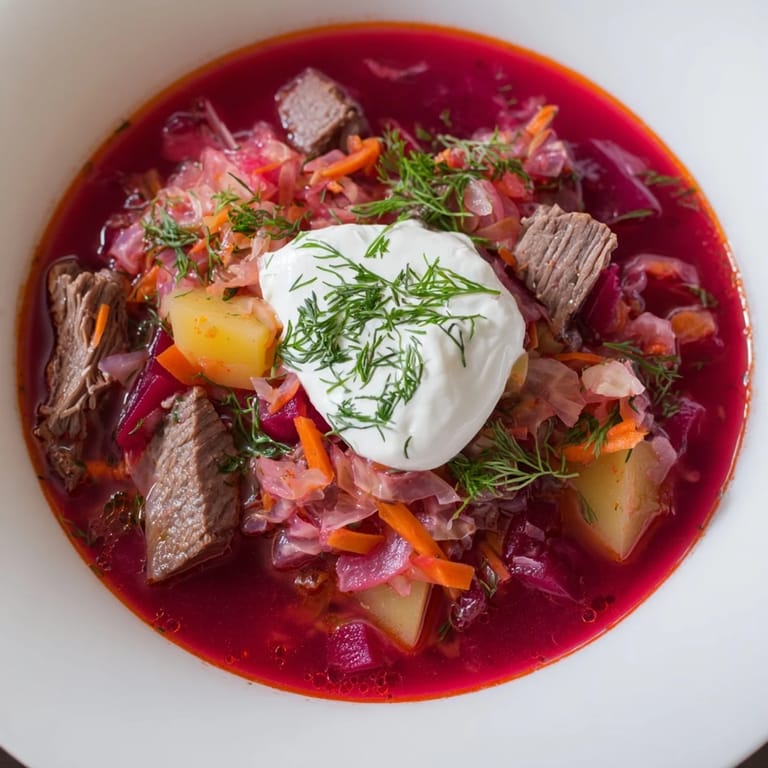
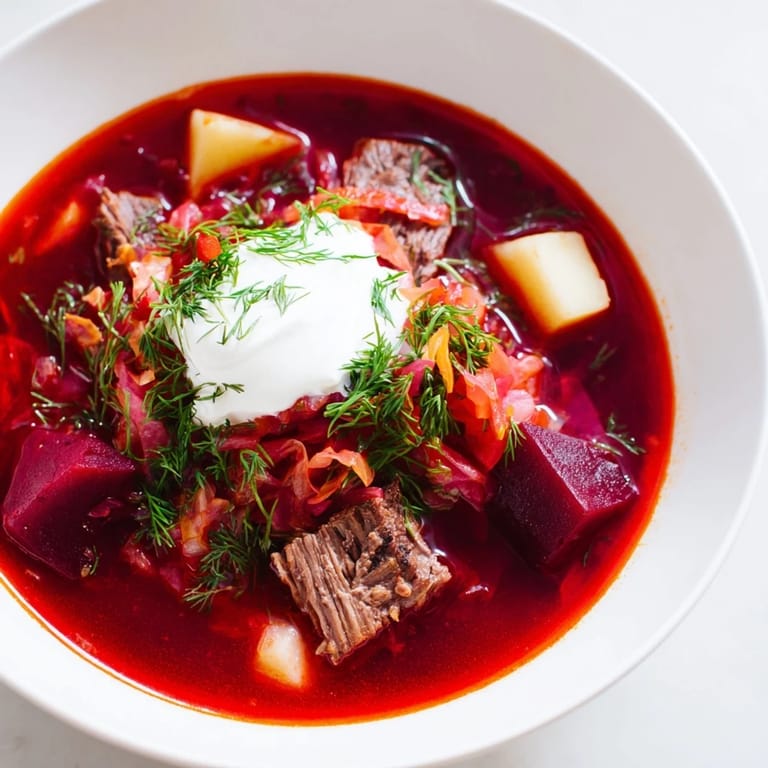
- Ladle the borscht into deep bowls, add a generous spoonful of cold sour cream to the center, and scatter fresh dill or parsley on top. The contrast of temperatures and colors is part of the experience.
 Pin it
 I think borscht is one of those soups that reminds you why people gather around tables in the first place. There's something about a bowl of deep red broth with that cloud of sour cream that makes you want to linger, to talk longer, to have another spoonful before the bowl gets cold.
Why This Recipe Works
The secret is patience and letting each component do its job separately before they meet in the pot. The beef simmers long enough to become tender but not so long it falls apart completely. The vegetables caramelize in the skillet so their sweetness concentrates before they hit the broth. The vinegar stays bright and doesn't get lost in the volume of soup. By the time everything comes together, nothing tastes raw or sharp—it all feels intentional.
Serving and Storage
Borscht is one of those rare dishes that improves overnight as flavors continue to meld in the cold. Store it in an airtight container in the refrigerator for up to four days, and reheat it gently on the stove without letting it boil hard, or it loses some of that delicate balance. You can also freeze it for up to two months, though the texture of the beets becomes slightly softer when thawed.
- Serve alongside crusty rye bread or soft pampushky rolls for soaking up every last drop of broth.
- A small splash of fresh lemon juice added just before serving brightens everything if your beets are particularly earthy.
- If you're making a vegetarian version, use vegetable broth and add a handful of mushrooms to the skillet for umami depth.
Adapting This Recipe
Borscht is forgiving in its own way—if you prefer your soup brothier, add another cup of water; if you like it heartier, dice your vegetables smaller so they break down slightly. Some families add kidney beans or include a raw beet stirred in at the very end for extra brightness. The framework stays the same, but your version can become as personal as your memories of the dish.
 Pin it
 This borscht isn't complicated, but it asks you to show up and pay attention. That's where its real magic lives.
Recipe FAQs
- → What cut of beef works best for this soup?
Beef chuck or brisket cut into large pieces provides rich flavor and tender texture after slow simmering.
- → Can the beet mixture be prepared ahead of time?
Yes, sauté the beets, carrots, and onions with tomato paste in advance and refrigerate; add when assembling the soup.
- → How can I make the soup vegetarian?
Skip the beef and use vegetable broth, enhancing the beet and vegetable flavors for a meatless version.
- → Why add vinegar and sugar to the vegetables?
Vinegar balances the sweetness of beets while sugar rounds out acidity, creating a harmonious flavor.
- → What toppings complement this soup?
A spoonful of sour cream and freshly chopped dill or parsley add creamy texture and fresh herbal notes.