 Pin it
 I discovered this minestrone on a chilly autumn afternoon when I was craving something warm but didn't have much time. What started as a simple weeknight dinner has become my go-to recipe whenever I want to feel like I'm cooking something from a cozy Italian kitchen, all in one pot with minimal fuss.
I still remember making this for my neighbor who had just moved in next door. The aroma drifting through her kitchen window brought her over with a curious smile, and by the end of that evening, she was asking for the recipe. Now whenever we catch up, she tells me how often she makes it for her own family.
Ingredients
- Olive oil: Two tablespoons might seem modest, but it's the foundation that coaxes out the sweetness of your vegetables. Use a good quality oil you'd actually enjoy tasting.
- Onion, celery, and carrots: This trio is the soul of Italian cooking—the soffritto. Dicing them evenly helps them cook at the same pace, creating that silky base.
- Zucchini: One medium zucchini adds a delicate sweetness and keeps the soup light without weighing it down.
- Green beans: Cut into one-inch pieces so they stay tender but keep their shape and color through simmering.
- Garlic: Three cloves, minced fresh, not powdered. This is where the magic happens in that first fragrant minute.
- Diced tomatoes: Keep the juice—it's liquid gold for depth of flavor. One 14-ounce can gives you that perfect tomato presence without overpowering.
- Cannellini beans: These creamy white beans are traditional, but I've learned they add a subtle richness that makes the soup feel more substantial. Always drain and rinse to remove excess sodium.
- Vegetable broth: Six cups is your starting point. I use homemade when I can, but a good quality store-bought broth works beautifully too.
- Small pasta: Ditalini or elbow macaroni work best—they catch the broth and vegetables in every spoonful rather than sinking to the bottom.
- Dried herbs: Oregano, basil, and thyme are the classic Italian trio. Keep them fresh by buying smaller amounts more often.
- Bay leaf: One leaf flavors the entire pot. Don't forget to fish it out before serving, or you'll have an unpleasant surprise.
- Parmesan cheese and parsley: These finishing touches feel like a warm embrace in a bowl. Fresh parsley makes all the difference.
Tired of Takeout? 🥡
Get 10 meals you can make faster than delivery arrives. Seriously.
One email. No spam. Unsubscribe anytime.
Instructions
- Build your base:
- Heat the olive oil in your largest pot over medium heat. When it shimmers slightly, add the diced onion, celery, and carrots. You'll hear them begin to sizzle almost immediately. Stir them around for about five minutes. You're looking for the vegetables to soften and become translucent at the edges—this is when you know they've released their flavors into the oil.
- Wake up the garlic:
- Stir in your minced garlic and let it cook for just one minute. This brief time is crucial—you want the garlic fragrant and golden, not brown. The moment you smell that unmistakable aroma, you're done.
- Add everything green and good:
- Now add the zucchini and green beans, followed by the tomatoes with their juice, the drained cannellini beans, and your vegetable broth. Toss in the oregano, basil, thyme, and bay leaf. Give everything a thorough stir so the seasonings distribute evenly. The pot will look full and alive.
- Bring it to life, then simmer gently:
- Turn up the heat and let the soup come to a rolling boil. You'll see the surface bubbling eagerly. Once it reaches this point, reduce the heat to medium-low and let it simmer uncovered for fifteen minutes. This gentle bubbling is where the vegetables become tender and all the flavors start dancing together.
- Add the pasta:
- After the fifteen-minute simmer, add your small pasta to the pot. Stir it in so it doesn't clump together. It will cook in ten to twelve minutes. You'll know it's ready when you can easily bite through a piece of pasta and the vegetables are completely tender.
- Taste and adjust:
- Remove the bay leaf carefully. Now taste your soup. It's your moment to add salt and freshly ground black pepper until it tastes like comfort to you. Remember that the Parmesan cheese will add saltiness later.
- Serve with love:
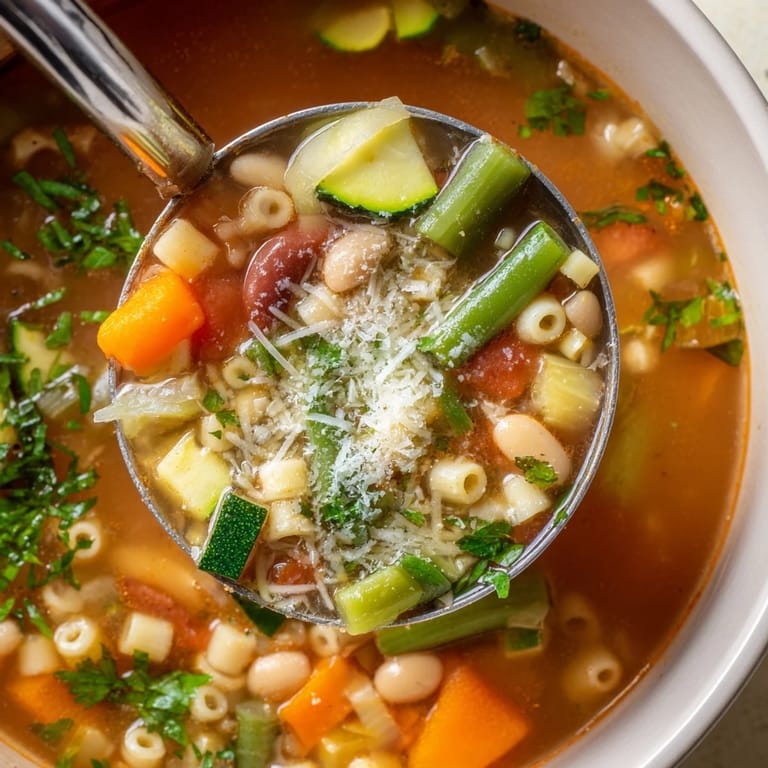
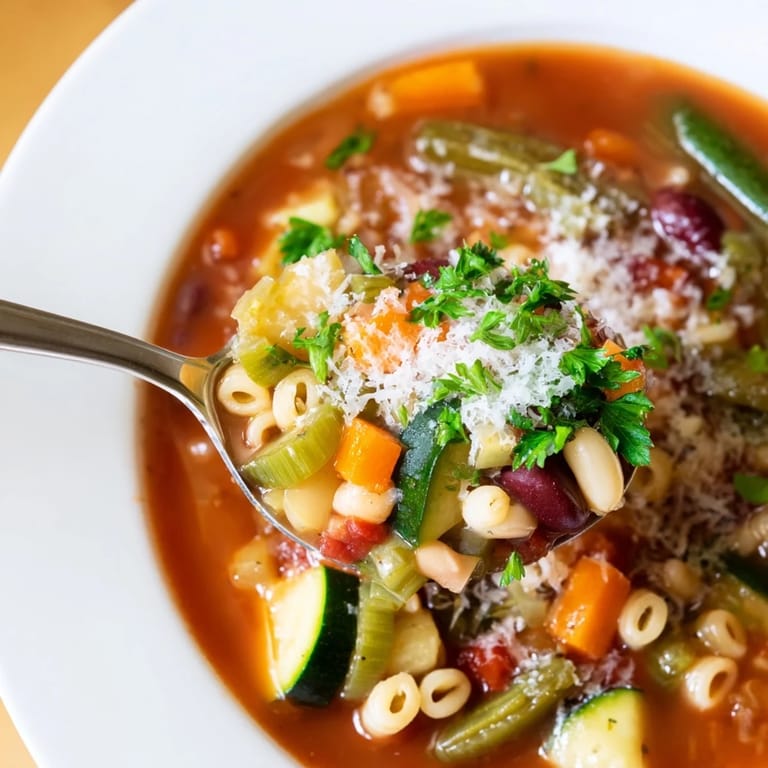
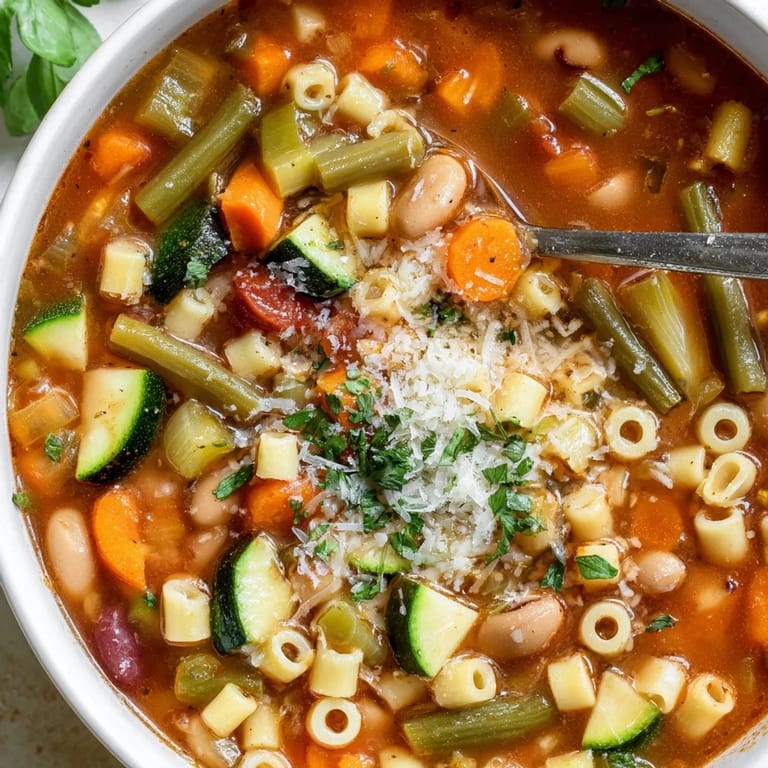
- Ladle the hot soup into bowls. Top each with a generous sprinkle of freshly grated Parmesan cheese and a small handful of fresh parsley. Serve while it's still steaming, ideally with crusty bread nearby for dipping.
 Pin it
 There's something deeply satisfying about setting a steaming bowl of minestrone in front of someone and watching their face light up as they taste it. It tastes like someone who cares took time to cook for them, even though the whole process takes less than an hour.
Simple Swaps and Variations
Over the years, I've played with this recipe based on what's in my garden or what I'm craving. Swap the cannellini beans for kidney beans or navy beans if that's what you have—each brings a slightly different texture. Add a handful of chopped spinach or kale in the last five minutes if you want more greens without changing the soup's essential character. Some days I add a parmesan rind to the broth as it simmers, which adds an incredible umami depth. The beauty of minestrone is that it welcomes variations like an old friend who's happy to see you no matter what you're wearing.
Why Minestrone Matters
Minestrone means big soup in Italian, and it represents something important in that cuisine—resourcefulness, seasonality, and the idea that simple ingredients cooked with attention become something greater than the sum of their parts. This soup has fed Italian families through seasons of abundance and scarcity alike. Making it connects you to that tradition, that lineage of home cooking. When you make minestrone, you're not just making dinner; you're participating in something that has mattered for generations.
Making It Work for Your Life
This soup is wonderfully forgiving and fits into almost any kitchen routine. Make it on a Sunday afternoon when you have a little time, and you'll have easy lunches or quick dinners ready throughout the week. It freezes beautifully for up to three months—just remember to cool it completely before freezing, and leave a little headspace in your container since soup expands slightly as it freezes. For a vegan version, simply omit the Parmesan or use a plant-based alternative, and the soup loses nothing in its warmth or satisfaction. For a gluten-free version, swap the regular pasta for gluten-free—the cooking time might be slightly different, so start checking a couple minutes earlier.
- Make a double batch on Sunday and you'll have homemade soup ready whenever hunger strikes during the week
- Let each person customize their own bowl with cheese, parsley, and crusty bread—it feels special and personal
- Pair it with a light Italian red wine and crusty bread for a complete meal that feels far more elegant than the time you spent cooking
 Pin it
 This minestrone has taught me that the best meals don't require complicated techniques or rare ingredients—just good attention and a willingness to let simple things be themselves. Every time I make it, I'm reminded why cooking matters.
Recipe FAQs
- → Can I substitute the pasta in this soup?
Yes, you can use gluten-free pasta or different small pasta shapes like elbow macaroni or ditalini according to preference or dietary needs.
- → How can I make this soup vegan?
Simply omit the Parmesan cheese or replace it with a plant-based alternative to keep the flavor while making it vegan-friendly.
- → Are there options to add more greens to this soup?
Yes, adding chopped spinach or kale during the last 5 minutes of cooking boosts nutrition and adds fresh green flavor.
- → What is the best way to store leftovers?
Store the soup in an airtight container in the refrigerator for up to 3 days. Reheat gently on the stove or microwave.
- → Can I use different beans instead of cannellini?
Kidney or navy beans can be substituted if preferred, offering similar texture and protein content.