 Pin it
 My coworker brought a teriyaki beef bowl to lunch one Thursday, and I watched her eat it while I picked at my sad desk salad. The way that glossy sauce clung to each piece of beef, how the steam rose off the rice—I decided right then I had to learn how to make it. Turns out, it's one of those dishes that looks fancy but feels completely manageable once you understand the simple rhythm of it. Now I make it when I need something that feels both comforting and special, usually on nights when I want to feel like I actually know what I'm doing in the kitchen.
I made this for my sister when she was stressed about her new job, and watching her face when she took that first bite reminded me why I love cooking for people. She asked for the recipe immediately, and now it's become her go-to when she needs to impress someone or just needs to feel like she's got things under control. That's when I knew this wasn't just a good recipe—it was the kind of dish that becomes part of your life.
Ingredients
- Flank steak or sirloin, thinly sliced (500 g): Flank steak has just enough marbling to stay tender when cooked hot and fast, and slicing it thin against the grain is the secret to that melt-in-your-mouth texture.
- Cornstarch for beef (1 tbsp): This creates a subtle coating that helps the beef brown beautifully and keeps it from sticking to the pan—I learned this trick after too many batches where the meat just released steam instead of searing.
- Vegetable oil (1 tbsp): High heat needs oil with a high smoke point; this is not the time to use olive oil or you'll smoke out your kitchen.
- Soy sauce (80 ml): Use a good quality soy sauce if you can—the difference between cheap and decent is noticeable in the final sauce.
- Mirin (60 ml): This sweet rice wine is what gives teriyaki its signature gloss and slight tang; there's really no good substitute, but a pinch of honey can help if you're in a bind.
- Honey or brown sugar (2 tbsp): Either works depending on what you have; honey dissolves faster but brown sugar gives a slightly deeper flavor.
- Rice vinegar (2 tbsp): This keeps the sauce from being cloyingly sweet and adds brightness—don't skip it or the sauce will taste one-dimensional.
- Garlic and ginger (2 cloves and 1 tsp): Fresh is non-negotiable here; jarred versions lose their punch and the sauce tastes flat by comparison.
- Cornstarch slurry (1 tbsp cornstarch mixed with 2 tbsp water): This is what thickens the sauce into that glossy coating that clings to everything—if you add cornstarch directly it clumps, but dissolved in water first it becomes silky smooth.
- Carrot, bell pepper, broccoli, spring onions (varied amounts): These vegetables should still have a slight snap when you eat them; they're not meant to be soft, so don't get tempted to cook them longer.
- Sesame seeds (1 tbsp): Toast them quickly in a dry pan before using and they'll add a nutty richness that feels like the finishing touch a professional chef would add.
- Cooked rice (2 cups): Make sure it's hot when you serve because cold rice underneath hot beef and sauce is a small disappointment that ruins the whole experience.
Tired of Takeout? 🥡
Get 10 meals you can make faster than delivery arrives. Seriously.
One email. No spam. Unsubscribe anytime.
Instructions
- Build your sauce first:
- In a small saucepan over medium heat, combine soy sauce, mirin, honey, rice vinegar, minced garlic, and grated ginger—you want to see small bubbles breaking the surface but not an aggressive boil. Let it simmer for just a minute so the garlic and ginger infuse into everything, then whisk in your cornstarch slurry and watch the sauce transform from thin and watery into something glossy and coat-able within 2 to 3 minutes; when you drag a spoon through it there should be a brief trail left behind.
- Prep your beef for success:
- Toss your thin-sliced beef with cornstarch in a bowl—use your hands or two forks to make sure every piece gets a light coating, because this is what gives you that restaurant-quality sear later. Don't skip this step or you'll end up with beef that steams instead of browns, which is the difference between meh and magnificent.
- Get your pan smoking hot:
- Place a large skillet or wok over high heat and add vegetable oil—when it's shimmering and just starting to smoke, you know it's ready. Working quickly, add your beef in a single layer and let it sit for about a minute so it gets a dark brown crust, then stir it around for another minute or two until it's cooked through but still slightly pink inside; if you overdo it here the beef will be tough, so trust the timing.
- Cook your vegetables with intention:
- Push the beef to the side of the pan or remove it temporarily, then add carrots, bell pepper, and broccoli to the same skillet with the residual oil and beef drippings—these vegetables need 3 to 4 minutes and you're looking for them to be tender but still crisp, not soft and lifeless. A good way to know they're done is when you can bite through them without effort but they still have some structure.
- Bring everything together:
- Return the beef to the skillet, pour that beautiful teriyaki sauce over everything, and toss it all together so every piece of beef and vegetable gets coated—let it heat through for just one more minute and the sauce will cling to everything like it's supposed to.
- Serve with intention:
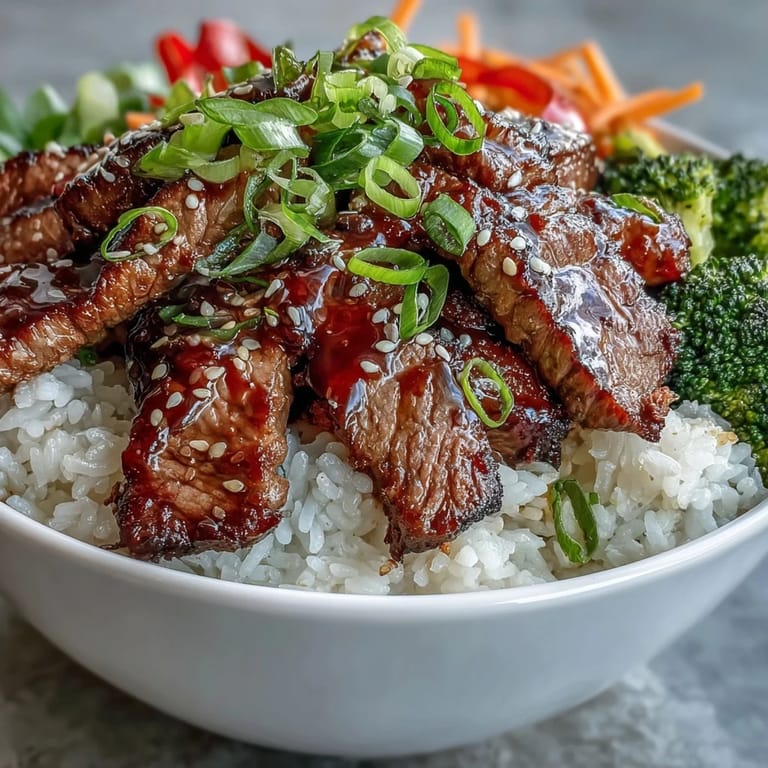
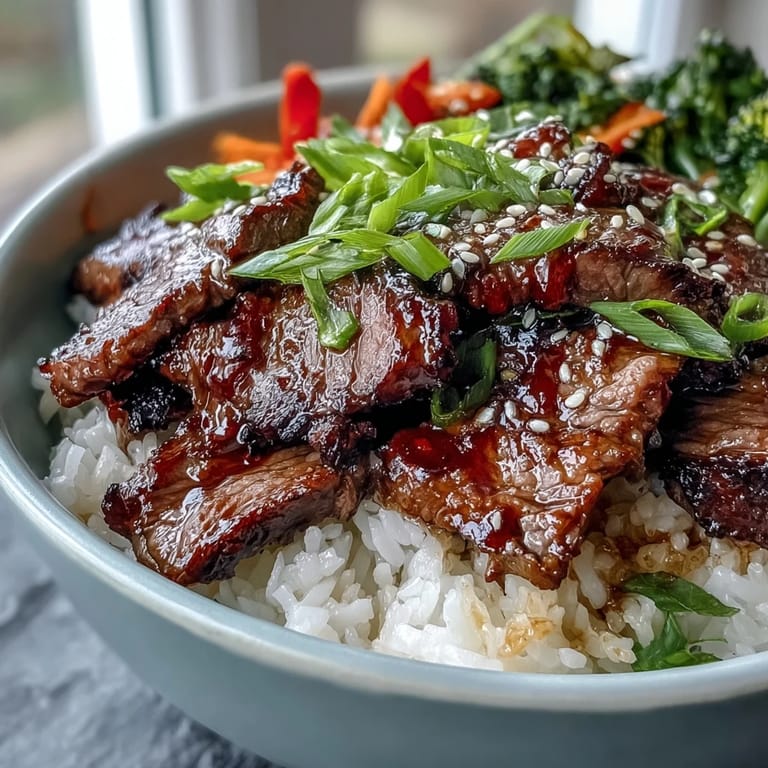
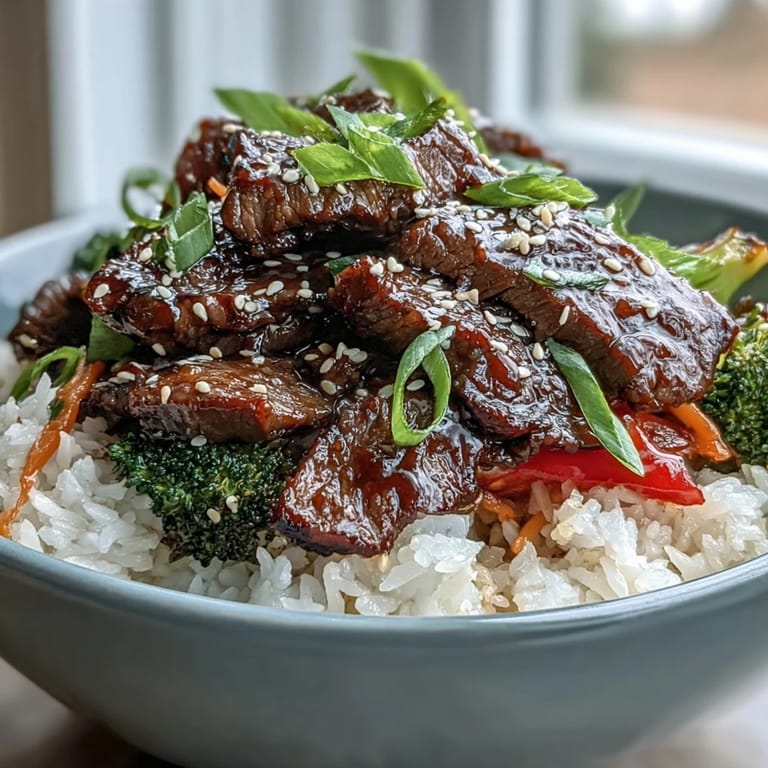
- Divide your hot rice among bowls, pile the beef and vegetables on top, pour extra sauce over everything, then garnish with spring onions and sesame seeds for texture and color. The rice should be hot enough that the sauce releases a little steam when it hits—that's how you know you've done it right.
 Pin it
 There's something deeply satisfying about watching someone dig into a bowl of this and seeing their eyes light up, especially when they realize you made it yourself. It's one of those dishes that feels like a small act of care, served in a bowl.
The Secret to Perfect Beef
The difference between beef that shatters into stringy pieces and beef that stays tender comes down to three things: slicing it thin against the grain, coating it lightly with cornstarch, and not overcooking it. I used to think I needed expensive cuts of meat to get good results, but the truth is that flank steak or sirloin, treated with respect and high heat, will outperform a fancy cut cooked carelessly. The cornstarch coating is doing something special too—it's not just for appearance, it actually helps the exterior brown faster while the inside stays juicy.
Building Sauce That Actually Sticks
The first time I made teriyaki sauce I didn't use a cornstarch slurry and ended up with something that just pooled at the bottom of the bowl instead of coating the food. Now I know that cornstarch mixed with cold water, whisked into the hot sauce, creates this silky thickening that happens almost instantly and transforms everything from a regular stir-fry sauce into something that feels luxurious. The mirin and honey do their part too—the mirin brings a subtle sweetness that doesn't feel cloying, and the rice vinegar cuts through it all so the sauce has dimension instead of just tasting like sugar.
Making This Meal Your Own
The beauty of a teriyaki bowl is how adaptable it is without losing its character. I've made it with chicken on nights when beef felt too heavy, with tofu for a friend who doesn't eat meat, even with salmon once when I was feeling adventurous. The vegetables can shift with the seasons too—I add edamame in spring, snap peas in summer, mushrooms in fall. The sauce and technique stay the same, so you're learning one skill that opens up dozens of variations.
- Try adding a splash of sriracha or chili oil to the sauce if you like heat, but add it to taste so you don't overwhelm the other flavors.
- Toast your sesame seeds in a dry pan for 30 seconds before garnishing—they go from bland to nutty in that brief moment.
- Make extra sauce because you'll want it, and it keeps in the fridge for a week so it's great on roasted vegetables or as a dipping sauce later.
 Pin it
 This is the kind of recipe that becomes part of your regular rotation because it's reliable, tastes like you spent way more effort than you did, and makes people happy. Once you've made it a couple of times it becomes automatic, and that's when the real magic happens.
Recipe FAQs
- → What cut of beef works best?
Flank steak or sirloin are ideal choices due to their tenderness and ability to cook quickly when sliced thinly against the grain. The cornstarch coating helps keep the meat juicy during high-heat cooking.
- → Can I make the teriyaki sauce ahead?
Absolutely. Prepare the sauce up to a week in advance and store it in an airtight container in the refrigerator. Reheat gently before tossing with the beef and vegetables.
- → How do I get the sauce thick and glossy?
The cornstarch slurry is the key to achieving that restaurant-quality glaze. Whisk it into the simmering sauce and cook for 2-3 minutes until it reaches the desired consistency.
- → What vegetables can I use?
Feel free to customize based on what's in season or in your refrigerator. Edamame, snap peas, mushrooms, bok choy, or zucchini all work beautifully in this bowl.
- → Is this suitable for meal prep?
Yes. Store the components separately in airtight containers for up to 4 days. Reheat the beef and vegetables gently, then serve over freshly warmed rice for best results.