 Pin it
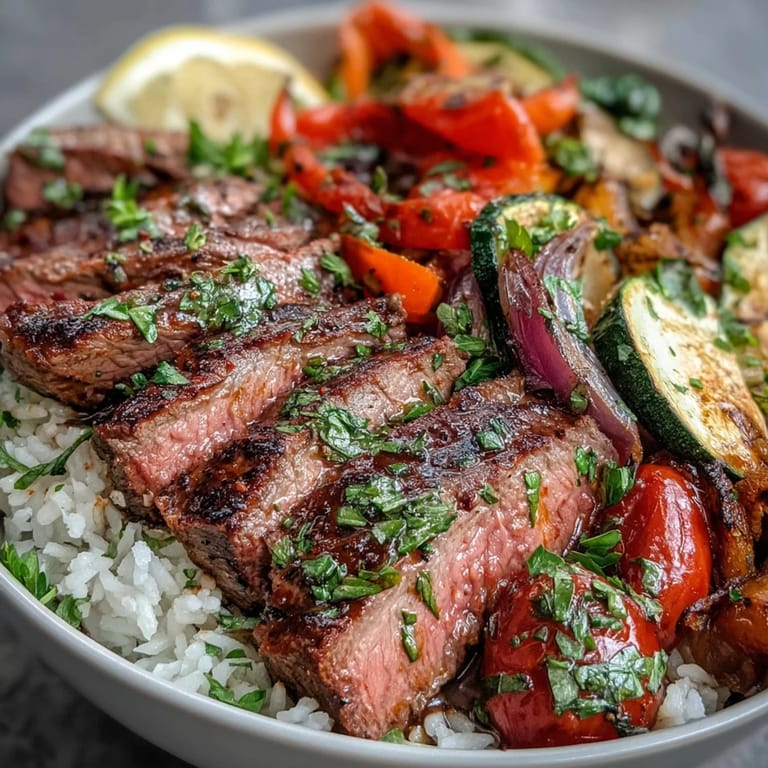
 Last Tuesday, I stood in my kitchen staring at a pile of beautiful produce and a decent cut of steak, thinking there had to be a smarter way to cook dinner than juggling three pans. That's when the sheet pan bowl idea clicked—everything roasting together, each ingredient lending its heat to the others, the steak getting a slight char while the vegetables caramelized underneath. Forty minutes later, four bowls of color and flavor arrived at the table, and nobody asked about leftovers because there weren't any.
My neighbor came over on a random Saturday and caught me halfway through building these bowls. She watched the steak rest on the cutting board while I fluffed the rice, and something about the whole process—the steam rising, the smell of garlic and smoked paprika filling the kitchen—made her stay for dinner. She's made this five times since then, which tells you everything you need to know.
Ingredients
- Sirloin or flank steak (1 lb): Flank tends to be more forgiving and flavorful for this method, but sirloin works beautifully too—just slice it thin against the grain after resting.
- Olive oil: Use about 1 tbsp for the steak and 2 tbsp for vegetables; this ratio keeps everything from drying out without making it greasy.
- Kosher salt and black pepper: Kosher salt's larger crystals let you season more intentionally—I learned this the hard way after oversalting a steak years ago.
- Garlic powder: Fresh garlic burns too easily at high heat, so powder is your friend here.
- Red and yellow bell peppers: The mix gives you sweetness and visual contrast; use whatever colors you find, but avoid green peppers which stay too firm.
- Red onion: It won't turn to mush like yellow onion might, and the color is gorgeous.
- Zucchini: Slice it into half-moons so it cooks evenly and doesn't become waterlogged.
- Cherry tomatoes: Halve them so they roast rather than steam; whole ones tend to burst and make things wet.
- Dried Italian herbs and smoked paprika: These two together create depth—the paprika especially gives you that restaurant-quality flavor.
- Jasmine or basmati rice: Either works, but jasmine has a softer texture that absorbs the flavors around it nicely.
- Water or low-sodium broth: Broth adds another layer of flavor if you have it on hand.
- Fresh parsley or cilantro: This is the final touch that makes people think you tried harder than you actually did.
Tired of Takeout? 🥡
Get 10 meals you can make faster than delivery arrives. Seriously.
One email. No spam. Unsubscribe anytime.
Instructions
- Get everything prepped and your oven ready:
- Preheat to 425°F and line your sheet pan with parchment or foil—this step saves you from scrubbing later. Having all your ingredients measured and cut before you start means you're never scrambling mid-cook.
- Season the steak with intention:
- Toss it in a bowl with olive oil, salt, pepper, and garlic powder, then let it sit for a minute or two. This brief rest lets the seasoning cling to the meat rather than just sliding off.
- Dress your vegetables generously:
- Toss them separately with olive oil, herbs, paprika, and seasoning so every piece gets coated. I learned the hard way that undercoated vegetables just steam instead of roast.
- Arrange on the pan with purpose:
- Spread vegetables in a single layer first, then lay the steak on top where it can actually touch the hot surface. The steak will cook through while the vegetables get tender underneath.
- Roast until everything's ready:
- Aim for 15–18 minutes for medium-rare steak; the vegetables will be caramelized and slightly charred at the edges. If you want extra browning, broil for a final 2–3 minutes but watch it closely.
- Cook rice while everything roasts:
- Rinse the rice, then combine with water or broth and salt in a saucepan. Bring to a boil, reduce heat, cover, and simmer for 12–15 minutes until the liquid absorbs.
- Rest and slice the steak:
- Let it sit for 5 minutes after roasting so the juices redistribute; then slice thin against the grain. This keeps every bite tender instead of chewy.
- Build your bowls:
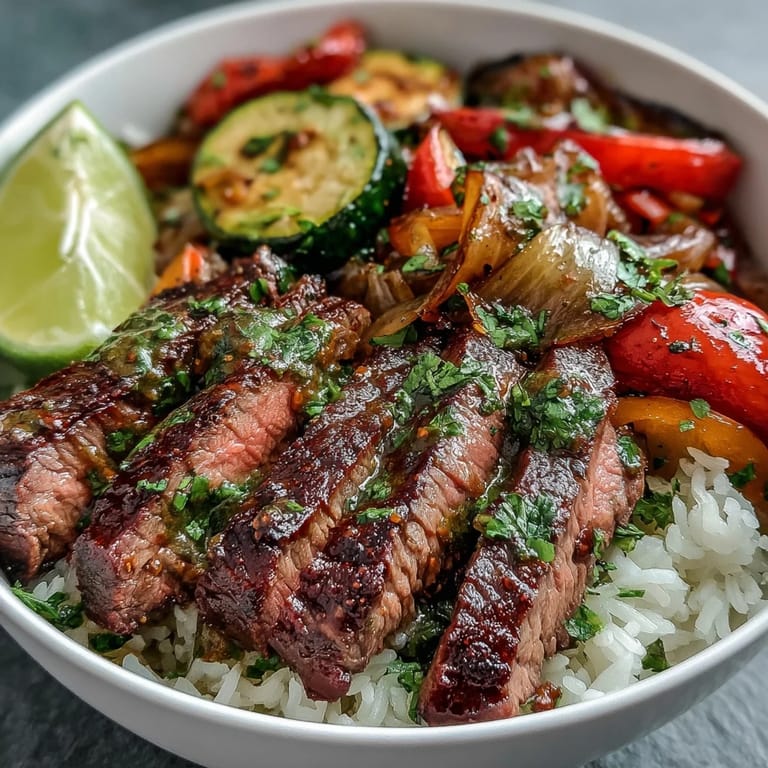
- Start with fluffy rice as your base, top with roasted vegetables and steak, then finish with a drizzle of soy sauce and fresh herbs. Lemon wedges on the side brighten everything up.
 Pin it
 There's something almost meditative about watching a sheet pan come together, how the different elements don't compete but actually make each other better. That moment when you pull it from the oven and the whole kitchen smells like caramelized vegetables and seared meat—that's when you realize you've made something worth repeating.
The Secret Behind Caramelization
The magic happens when you let vegetables sit undisturbed on a hot pan. I used to stir constantly, thinking that would help, but it actually just steams them. Now I arrange everything, set a timer, and resist the urge to fidget. By the time 15 minutes pass, the bottoms have developed this sweet, slightly charred crust that tastes infinitely better than anything I stirred to death.
Why This Bowl Works for Weeknight Reality
The beauty of a sheet pan meal is that you're not bouncing between stovetop and oven, watching five different things at once. Everything cooks together on its own schedule, which means you can actually set a timer and step away instead of hovering. I've started a book, folded laundry, or just sat down with tea while this does its thing, and somehow dinner still arrives hot and delicious.
Making It Your Own
This recipe is less a strict formula and more a template for how to think about sheet pan cooking. You're essentially layering proteins and vegetables on heat and letting them mingle, so once you understand that principle, you can swap almost anything. I've done this with chicken thighs, used Brussels sprouts instead of zucchini, added mushrooms just because they were in the crisper drawer.
- Swap the steak for chicken breasts, salmon, or even pressed tofu if you want to go vegetarian.
- Use whatever vegetables look good at the market or are already in your fridge; just keep them roughly the same size so they cook evenly.
- If you want lower-carb, substitute the rice with cauliflower rice or quinoa and adjust liquid accordingly.
 Pin it
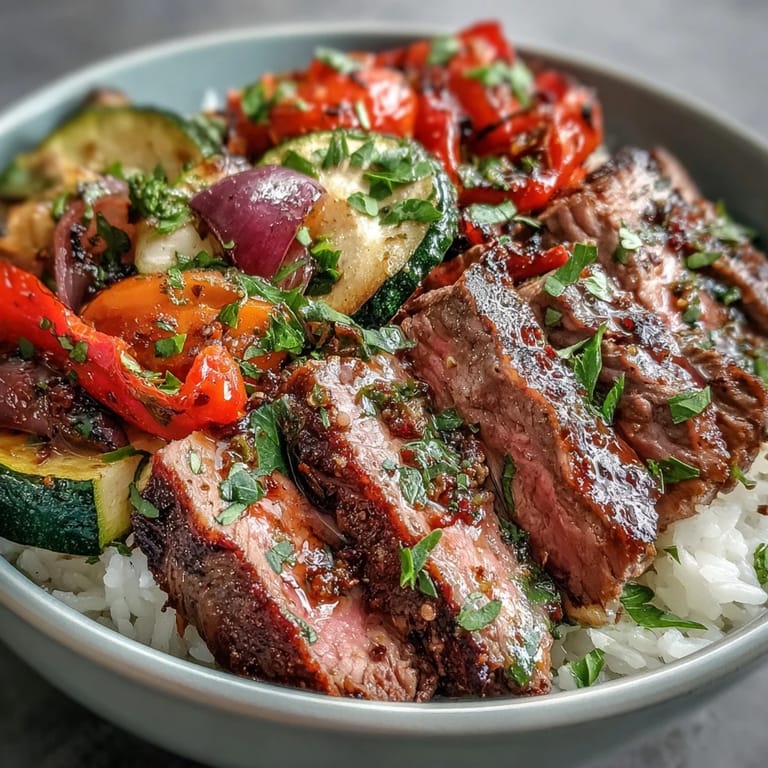
 This bowl has become my go-to when I want to feel like I cooked something impressive without actually spending hours in the kitchen. It's the kind of meal that looks like you tried, tastes like you know what you're doing, and honestly takes less effort than ordering takeout.
Recipe FAQs
- → What cut of steak works best?
Sirloin and flank steak both excel here, offering great flavor and tenderness when sliced thinly against the grain after resting.
- → Can I prepare this ahead?
The vegetables can be sliced and seasoned a day in advance. Store them in the refrigerator until ready to roast.
- → How do I know when the steak is done?
Use an instant-read thermometer: 130-135°F for medium-rare, 140-145°F for medium. Remember the steak continues cooking while resting.
- → What other vegetables can I add?
Broccoli florets, sliced mushrooms, snap peas, or asparagus all roast beautifully alongside the peppers and zucchini.
- → Can I make this grain-free?
Absolutely—serve the steak and vegetables over cauliflower rice, quinoa, or enjoy them on their own for a lighter option.