 Pin it
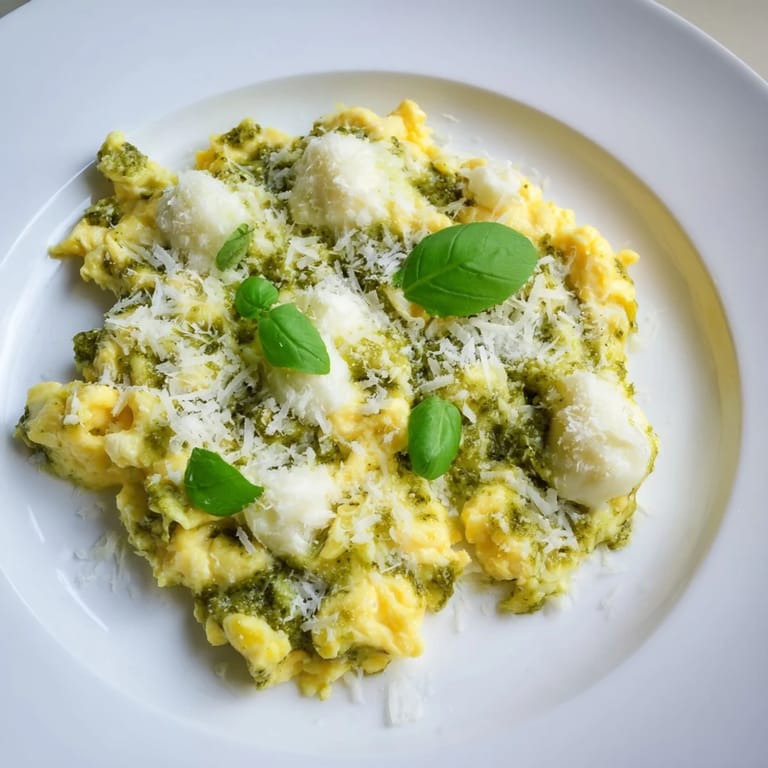
 There's something about the smell of basil hitting a hot pan that just stops you mid-morning. I discovered this combination by accident one Tuesday when I had cottage cheese taking up too much space in my fridge and a half-empty jar of pesto staring at me. The eggs were supposed to be simple scrambled eggs, but then I thought: what if I warmed the pesto first? What if I folded in the cottage cheese at the last second? Ten minutes later, I had something so creamy and bright and completely different from what I usually make for breakfast.
I made this for my sister last spring when she was visiting and determined to eat better. She took one bite and just looked at me like I'd been holding out on her. Now she texts me photos of her versions from her own kitchen, which honestly might be the best compliment I've ever gotten about a recipe.
Ingredients
- Eggs: Four large ones are the base here, and they need to be fresh enough that you can feel the difference in the yolk color and richness.
- Milk or cream: Two tablespoons sounds small, but it's the secret to getting that silky texture instead of rubbery scrambled eggs.
- Cottage cheese: Use half a cup, and honestly, full-fat tastes better than low-fat, though both work—it's the richness that makes the eggs feel luxurious.
- Basil pesto: Two tablespoons, and store-bought is totally fine, though homemade changes everything if you ever have time.
- Salt and pepper: A quarter teaspoon of salt and an eighth teaspoon of freshly ground black pepper—fresh pepper really matters here.
- Garnish: Fresh basil leaves, extra pesto, and Parmesan cheese if you want to push it further, plus crusty bread or toast for serving.
Tired of Takeout? 🥡
Get 10 meals you can make faster than delivery arrives. Seriously.
One email. No spam. Unsubscribe anytime.
Instructions
- Whisk your base:
- Grab a medium bowl and whisk the eggs with milk, salt, and pepper until everything is uniform and loose. This is where you're aerating the eggs, so don't rush it—the whisking is part of what makes them fluffy.
- Warm the pesto:
- Heat a nonstick skillet over medium-low heat and add the pesto, letting it sit for about 30 seconds until you smell that basil come alive. This gentle warming releases all the aromatic oils before the eggs even hit the pan.
- Start the eggs:
- Pour in your whisked mixture and resist every instinct to stir immediately. Let it sit undisturbed for 10 to 15 seconds—this is when the bottom starts to set and creates the foundation for creamy, tender curds.
- Fold and stir gently:
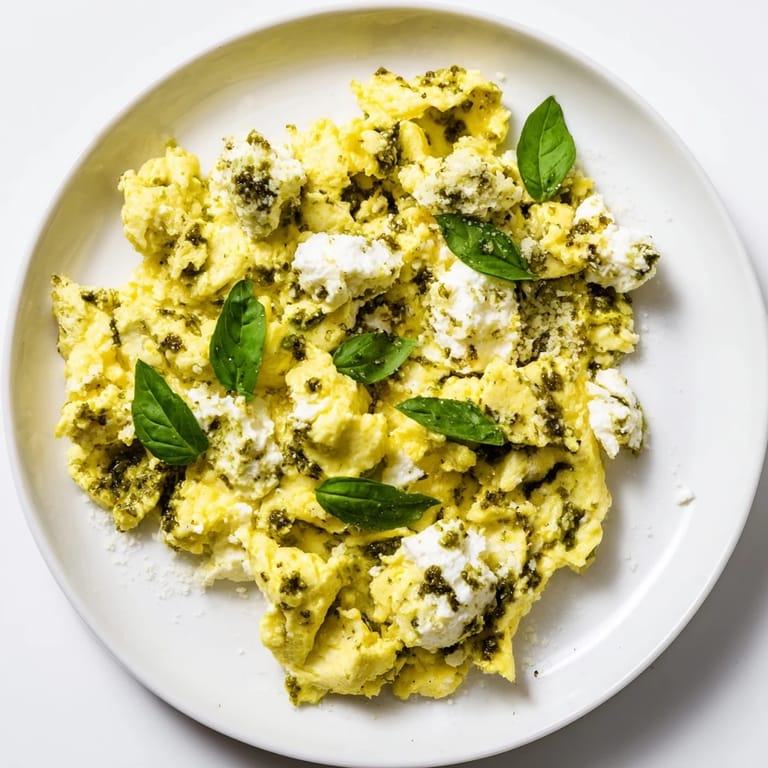
- Now gently push the eggs from the edges toward the center with a spatula, using slow, deliberate strokes. You're looking for softly set curds, not a scrambled mess, which takes about two to three minutes.
- Add the cottage cheese:
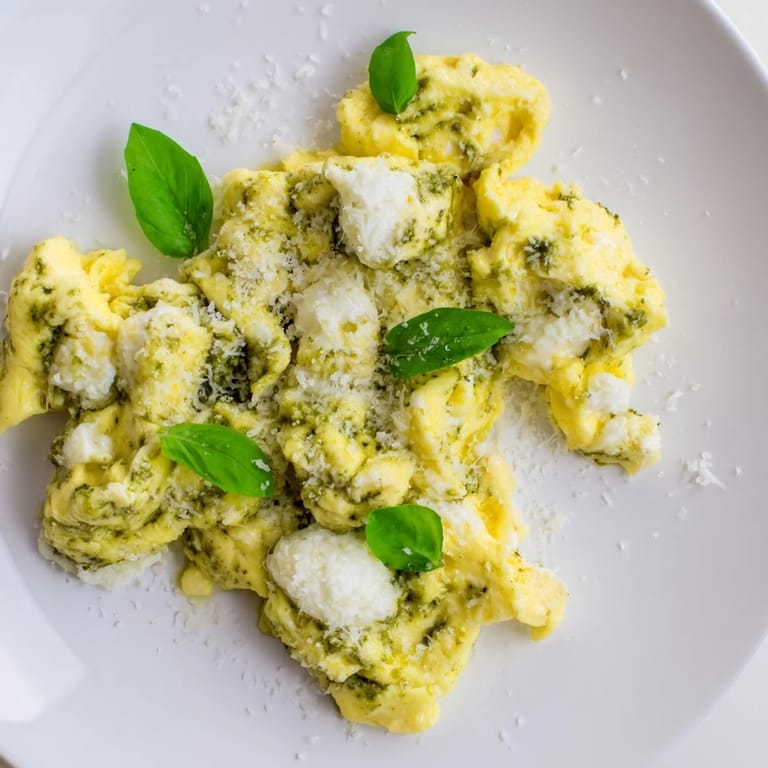
- When the eggs are just beginning to set but still visibly creamy, fold in the cottage cheese with a gentle hand. The residual heat will warm it through in about 30 seconds without cooking it further.
- Plate immediately:
- Remove the skillet from heat the second the cottage cheese is warmed through—this is where the line between creamy and overcooked gets crossed, and you want to stop on the right side of it.
 Pin it
 My neighbor watched me make this one morning on her kitchen counter and asked if I did cooking classes. It's one of those moments that sticks with you—not because the recipe is complicated, but because something humble suddenly felt worth sharing. Now we swap variations constantly.
Why This Works
The contrast between creamy and fresh is what makes this dish feel special. The cottage cheese rounds out the pesto's brightness, and the eggs become this delicate vehicle for both flavors instead of playing a background role. It's a lesson in how three simple things can become something unexpected just by thinking about how they interact with heat and timing.
Ways to Twist It
Once you understand how this comes together, it becomes a playground. I've folded in sautéed spinach for earthiness, swapped in sun-dried tomato pesto for something deeper, and even tried ricotta instead of cottage cheese when cottage cheese wasn't in the house. Each version tells a different story depending on what's available and what mood you're in.
Serving and Pairings
Crusty bread is non-negotiable here—something with enough character to hold up to the pesto and the creamy richness of the eggs. I've served this with everything from a simple green salad to roasted tomatoes, and it adapts beautifully depending on whether you're eating alone or feeding a table of people.
- Toast thick slices of good bread and let the eggs soak into it like they were made for each other.
- A squeeze of fresh lemon on top can cut through the richness if you're feeling it in the afternoon.
- Pair it with chilled white wine if you're being fancy about a weekend breakfast.
 Pin it
 This is the kind of breakfast that reminds you why cooking for yourself matters. It's fast, it's nourishing, and it tastes like someone who understands flavor made it just for you.
Recipe FAQs
- → Can I use homemade pesto for this dish?
Yes, homemade pesto works wonderfully and allows you to adjust flavors to your preference.
- → What texture should the eggs have when cooked?
The eggs should be softly scrambled—creamy and slightly runny to complement the cottage cheese's smoothness.
- → Is it necessary to add milk or cream to the eggs?
Milk or cream is optional but can enhance the creaminess and softness of the scramble.
- → Can I substitute cottage cheese with another dairy product?
Ricotta can be used as a substitute to provide a milder flavor and a different creamy texture.
- → How can I adjust the seasoning to suit my taste?
Salt and freshly ground black pepper are recommended, but you can add herbs or spices like chili flakes for extra kick.
- → Is this dish suitable for special diets?
Yes, it fits vegetarian and gluten-free diets when served without bread or with gluten-free toast.