 Pin it
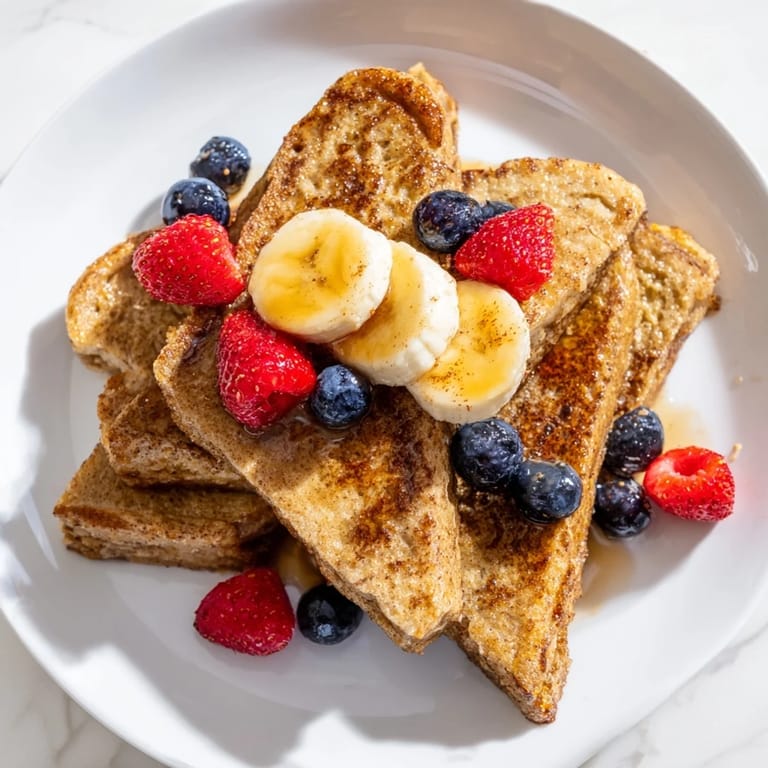
 I discovered protein French toast on a Tuesday morning when I was out of my usual yogurt and had a container of Greek yogurt sitting in the fridge that needed using. What started as a way to avoid waste turned into something I couldn't stop making—that custardy center, the slight sweetness, the way it actually kept me full for hours. Now I make it whenever I want breakfast to feel like both comfort and fuel.
The first time I made this for my sister, she was skeptical about the Greek yogurt in the batter—Greek yogurt in French toast sounded strange to her. But one bite and she was asking for the recipe. Now she makes it every Sunday morning and tells people it's her secret weapon for actually staying satisfied until lunch.
Ingredients
- 8 slices whole grain or brioche bread: Slightly stale bread soaks up the custard without turning to mush—if your bread is too fresh, leave it out overnight or toast it lightly first.
- 4 large eggs: The backbone of your custard, so use room temperature eggs if you can; they whisk in smoother.
- 1 cup milk: Dairy or almond milk both work, but whole milk makes it richer if that's your preference.
- 1/2 cup Greek yogurt or cottage cheese: This is where the protein and creaminess come from—cottage cheese makes it slightly speckled but equally delicious.
- 1 scoop protein powder: Vanilla blends invisibly, but unflavored works too if you want to taste just the bread and custard.
- 1 tbsp maple syrup or honey: A subtle sweetness that rounds everything out without making it cloying.
- 1 tsp vanilla extract: The little detail that makes people ask what's different about your French toast.
- 1/2 tsp cinnamon: Warm and grounding, especially if you're cooking on a cold morning.
- Pinch of salt: Sounds small, but it balances all the sweetness and makes the vanilla pop.
- 1 tbsp butter or coconut oil: Medium heat prevents burning; I usually switch to coconut oil midway for that subtle flavor.
- Fresh berries, bananas, yogurt, maple syrup: Top however you're craving—I'm a berries and a drizzle person, but a friend swears by peanut butter and honey.
Tired of Takeout? 🥡
Get 10 meals you can make faster than delivery arrives. Seriously.
One email. No spam. Unsubscribe anytime.
Instructions
- Whisk the custard:
- In a large bowl, combine eggs, milk, Greek yogurt, protein powder, maple syrup, vanilla, cinnamon, and salt. Whisk until completely smooth—any lumps of protein powder will show up in the final texture, so take a breath and whisk for a solid minute. You want it silky and unified.
- Heat your cooking surface:
- Medium heat is your friend here; too high and the outside burns before the inside cooks through. Add half your butter and let it foam slightly before you start dipping bread.
- Dip and soak:
- This is the most important moment—10 to 15 seconds per side. Your bread should feel heavy and saturated but not falling apart; it's a gentle dance. If it's falling apart, your bread was too fresh or you soaked too long.
- Cook with patience:
- Place your soaked slices on the skillet and cook 2 to 3 minutes per side until golden and set on the outside but still creamy in the very center. You'll see the edges firm up first; that's your signal it's time to flip.
- Serve immediately:
- While it's still warm and the center is custardy, plate it up and top however you like. Letting it sit makes the texture less dramatic.
 Pin it
 There's something about standing at the stove on a Saturday morning, flipping golden slices while someone you love reads you a text message that made them laugh. That's when I realized this recipe wasn't really about the protein or the macros—it was about creating a reason to slow down and eat something real together.
Why Slightly Stale Bread Changes Everything
I used to wonder why my French toast sometimes turned to mush and sometimes turned out perfect, until I realized the bread was the variable I kept overlooking. Fresh bread has too much moisture and structure collapses when it hits the wet custard. Stale bread—bread that's been sitting for a day or two—has already lost some moisture, so it absorbs the egg mixture like a sponge without falling apart. If you only have fresh bread, slice it and toast it lightly for a few minutes before dipping, or leave it uncovered on a cutting board for a few hours. It sounds fussy, but it's the difference between breakfast and a scrambled mess.
The Greek Yogurt Secret
The Greek yogurt isn't just there for protein—it adds a subtle tang and creaminess that plain egg custard doesn't have, and it keeps the inside moist and tender even after it cools. I've tried cottage cheese as a swap when I didn't have yogurt, and it works, but the texture is slightly chunkier and the flavor is more neutral. For maximum creaminess, make sure whatever you're using is at room temperature before whisking; cold yogurt takes longer to blend smoothly and can create small lumps that persist. Some mornings I add an extra tablespoon just because I like how it deepens the custardy texture.
Toppings and Variations
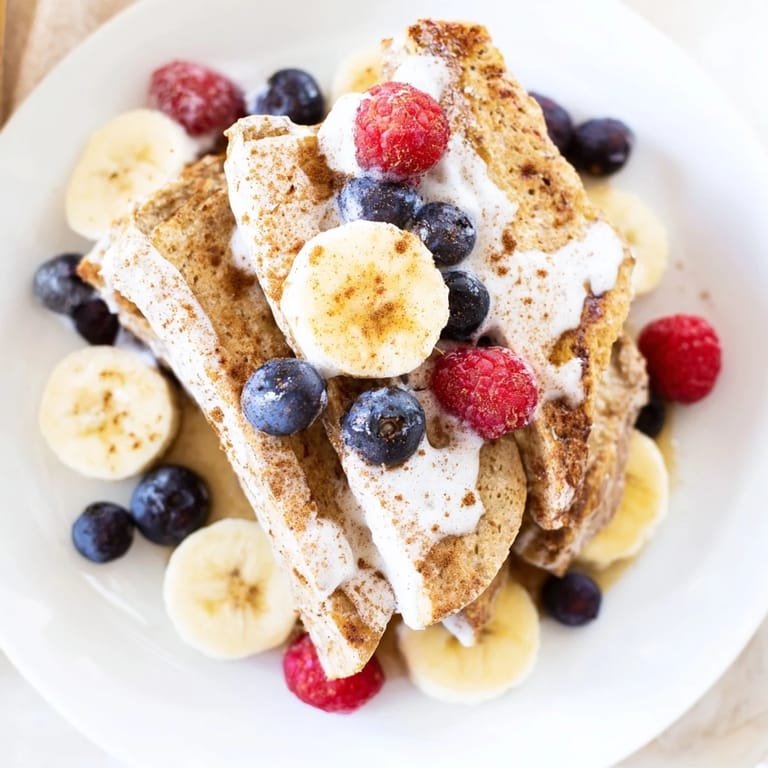
I've learned that the toppings you choose change the entire character of the dish. Fresh berries and a light drizzle of syrup feels bright and spring-like, while peanut butter and honey feels more like a post-workout celebration. One morning I sliced fresh peaches and warmed them in a little cinnamon and butter, and they transformed the whole thing into something that felt almost fancy. The yogurt on top isn't just decorative—it adds a cool, creamy contrast to the warm toast and brings back some of that tanginess from inside the batter.
- Fresh berries (blueberries, raspberries, strawberries) add bright acidity and natural sweetness without overshadowing the custard.
- A dollop of Greek yogurt on top creates temperature contrast and echoes the creaminess in the batter itself.
- Maple syrup, honey, or nut butter drizzled generously ties everything together into one cohesive breakfast.
 Pin it
 This isn't fancy food, but it's the kind of breakfast that makes you feel taken care of—especially by yourself. That matters more than most recipes acknowledge.
Recipe FAQs
- → How can I make this toast dairy-free?
Substitute regular milk with unsweetened almond milk and use dairy-free yogurt alternatives to keep it lactose-free.
- → What bread types work best for soaking?
Whole grain or brioche bread, preferably slightly stale, absorb the mixture well while maintaining structure.
- → Can I add extra protein to this dish?
Yes, using high-protein bread or adding more protein powder enhances the protein content without altering flavor significantly.
- → What toppings pair well with this custardy dish?
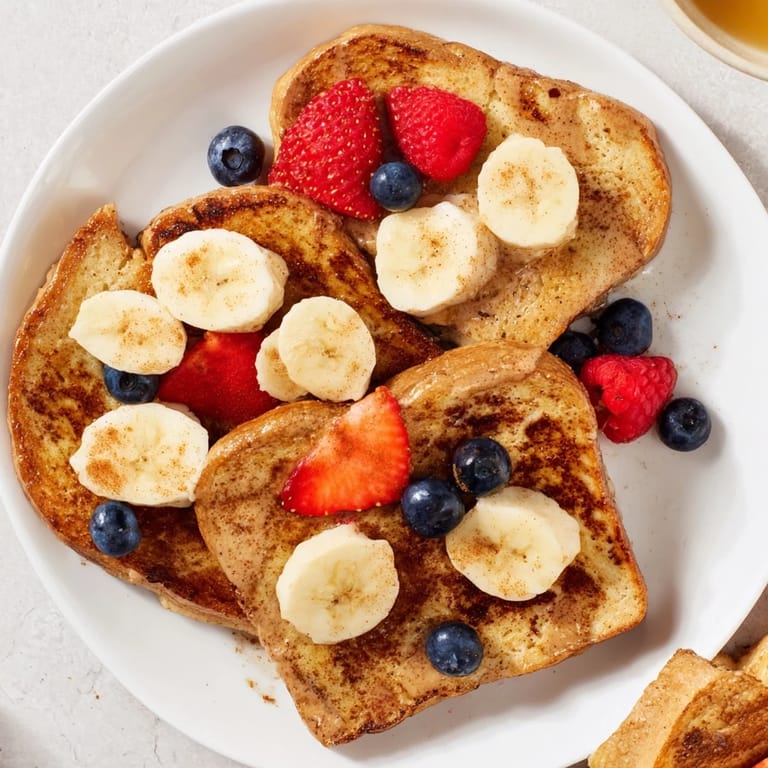
Fresh berries, sliced bananas, extra Greek yogurt, and a drizzle of maple syrup complement the flavors beautifully.
- → How do I avoid the toast becoming soggy?
Soak the bread slices briefly—10 to 15 seconds per side—to keep them moist but firm enough to cook to a golden texture.