 Pin it
 I discovered this sheet pan stir-fry on a Tuesday evening when I was determined to prove that weeknight cooking didn't have to mean ordering takeout. The smell of ginger and garlic roasting in the oven reminded me of walking through the night markets in Taiwan years ago—except this time, everything was happening on a single pan in my own kitchen, with minimal cleanup waiting at the end. That's when it clicked: you don't need a wok or a stove full of pans to capture that vibrant, just-cooked stir-fry magic.
I made this for my sister's family last summer when she asked for something quick but impressive enough for her picky eaters. Watching her kids actually eat the broccoli—and ask for seconds—felt like winning the lottery. That's when I realized this recipe had become my secret weapon for busy nights when you want something that looks and tastes like you spent hours in the kitchen.
Ingredients
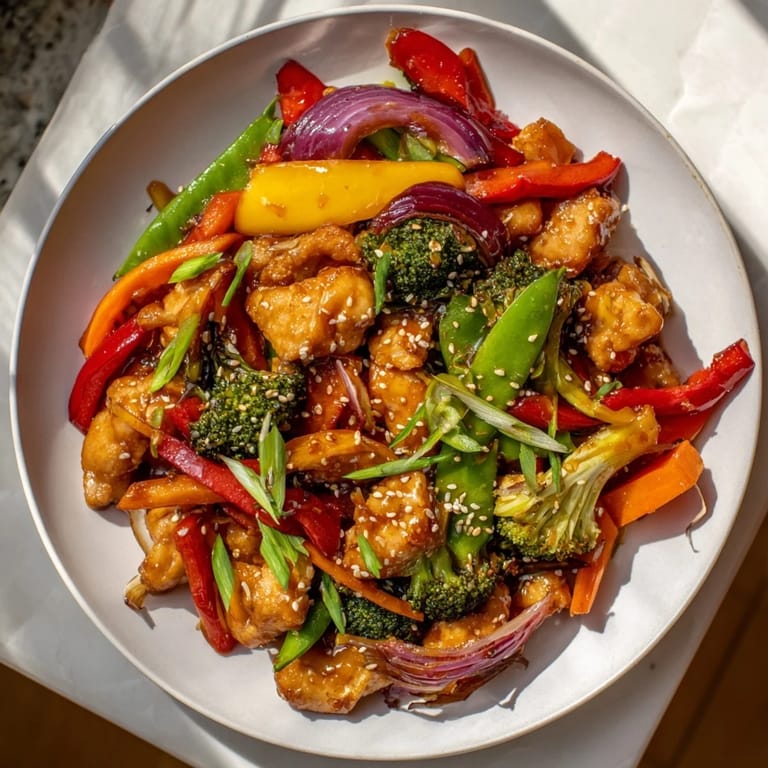
- Chicken breasts or thighs: 1½ lbs, cut into 1-inch pieces. Thighs stay juicier if you have time, but breasts work beautifully too—the key is cutting everything evenly so it cooks at the same pace.
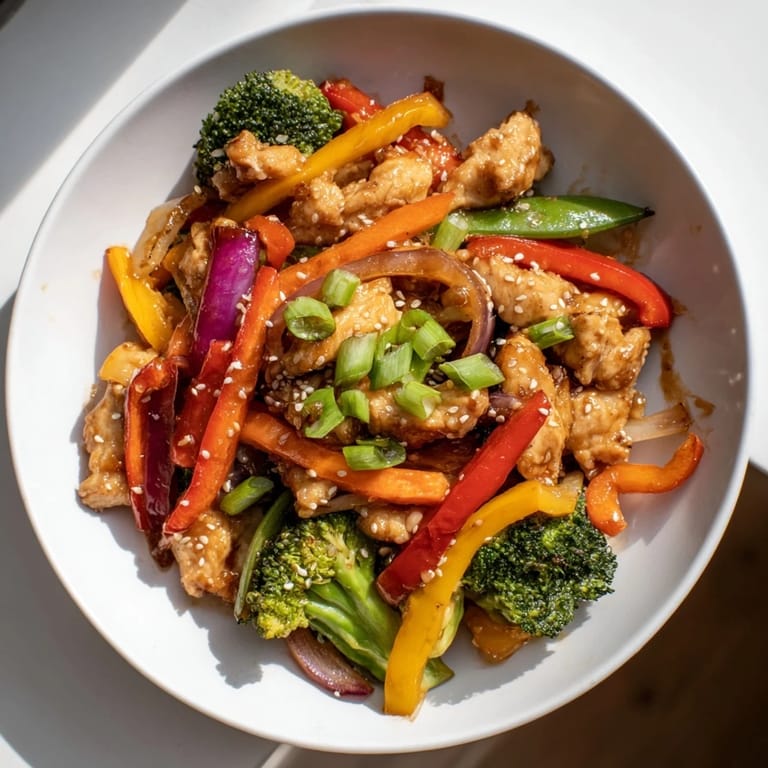
- Red and yellow bell peppers: One of each, sliced into strips. They add sweetness and those gorgeous colors that make the dish look restaurant-worthy.
- Broccoli florets: From one medium crown. They get slightly crispy at the edges, which is exactly what you want.
- Red onion: One medium onion, sliced. It softens during roasting and adds a gentle sweetness that balances the savory sauce.
- Sugar snap peas: 1 cup, trimmed. These stay wonderfully crunchy and add a fresh pop to every bite.
- Carrots: Two medium carrots, sliced on the bias. The angled cuts look elegant and cook more evenly.
- Low-sodium soy sauce: ⅓ cup. Use tamari if you need gluten-free—it makes no taste difference and your guests won't know the difference.
- Honey or maple syrup: 2 tbsp. This balances the salt and adds a subtle richness that makes people ask what your secret ingredient is.
- Rice vinegar: 2 tbsp. It brightens everything without making it taste acidic—trust this step.
- Sesame oil: 1 tbsp. Pure liquid gold. Don't skip it, and don't use regular vegetable oil as a substitute.
- Fresh garlic and ginger: 2 cloves minced garlic and 1 tbsp grated ginger. Fresh is non-negotiable here; this is where the soul of the dish lives.
- Cornstarch: 1 tbsp. This thickens the sauce into something silky that coats everything beautifully.
- Red pepper flakes: ¼ tsp optional. Add if you like heat, skip if you're cooking for people who prefer mild.
- Toasted sesame seeds and green onions: For garnish. These final touches transform the dish from good to 'where did you learn to cook like this?'
Tired of Takeout? 🥡
Get 10 meals you can make faster than delivery arrives. Seriously.
One email. No spam. Unsubscribe anytime.
Instructions
- Set the stage:
- Preheat your oven to 425°F and line a large rimmed baking sheet with parchment paper or foil. This is your entire cooking vessel, so choose one big enough to spread everything in a single layer without crowding.
- Arrange everything:
- Spread the chicken pieces and all your vegetables across the sheet pan in one even layer. This is crucial—if things are piled on top of each other, they'll steam instead of roast. Give them space to breathe.
- Make the sauce:
- In a small bowl, whisk together soy sauce, honey, rice vinegar, sesame oil, minced garlic, grated ginger, cornstarch, and red pepper flakes if using. Whisk until the cornstarch dissolves completely and the mixture is smooth. This is your liquid magic.
- First coat:
- Drizzle half the sauce over the chicken and vegetables, then gently toss everything together with your hands or two spoons. You want each piece kissed with sauce, not swimming in it.
- First roast:
- Pop the whole sheet into the oven for 15 minutes. Walk away. Don't peek obsessively—let the heat work. The chicken will start to turn golden and the vegetables will begin to soften.
- Toss and finish:
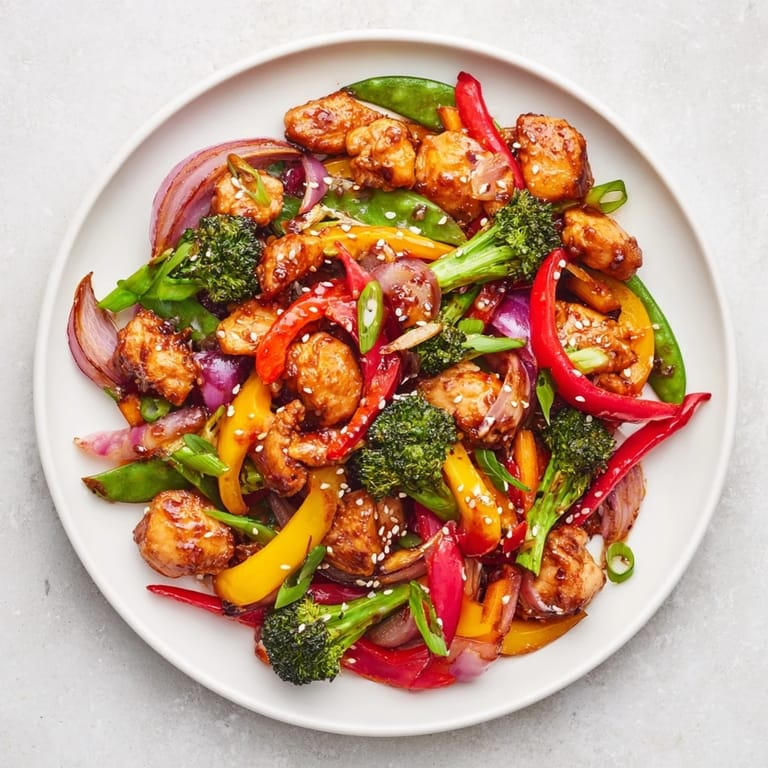
- Remove the sheet from the oven—it will be hot, so use oven mitts. Give everything one final toss, then drizzle with the remaining sauce. Return to the oven for another 5 minutes, until the chicken is cooked completely through and the vegetables have that perfect tender-crisp texture.
- Garnish and serve:
- Sprinkle sesame seeds and sliced green onions over the top. Serve immediately over steamed rice, quinoa, or even cauliflower rice. The warm sauce and hot vegetables are best enjoyed right away.
 Pin it
 The first time I served this to my partner without telling him it was homemade, he asked if I'd picked it up from that new Asian place downtown. I let him guess for a few bites before admitting I'd made it, and the look on his face—that moment of 'you made this?'—is why I keep coming back to this recipe again and again.
The Beauty of One-Pan Cooking
There's something deeply satisfying about cooking an entire dinner on a single sheet pan. It forces you to think strategically about timing and spacing, which actually makes you a better cook. The vegetables and chicken all roast together, their flavors mingling and intensifying, creating something more cohesive than if you'd cooked each component separately. Plus, cleanup is genuinely just rinsing one pan—no excuses left for ordering takeout.
Variations That Work Beautifully
While this recipe is perfect as written, I've learned that this method is forgiving enough to welcome your favorite vegetables. Zucchini adds a light, subtle sweetness; mushrooms become almost meaty when roasted; snow peas stay wonderfully delicate. The sauce works with whatever you choose, which means this recipe grows with your tastes and your pantry. I once used whatever vegetables were wilting in my crisper drawer and ended up with one of my favorite versions ever.
Making It Work for Every Diet
One of my favorite things about this dish is how easily it adapts to different dietary needs without feeling like a compromise. Swap the soy sauce for tamari and you've got gluten-free. Serve it over cauliflower rice instead of regular rice and it becomes low-carb. None of these swaps change the core deliciousness—they just make it accessible to more people at your table. I've learned that the best recipes aren't the ones that force everyone to eat the same thing; they're the ones flexible enough to become different things for different people.
- Marinating the chicken in half the sauce for 20 minutes before cooking deepens the flavor dramatically, if you have the time
- Pair this with a crisp white wine like Sauvignon Blanc if you're eating with others—it cuts through the richness beautifully
- Leftover stir-fry is excellent the next day, either reheated gently in the oven or eaten cold as a salad
 Pin it
 This sheet pan stir-fry has become my answer to the question 'what should we have for dinner?' on nights when time is short but the desire for something delicious is strong. It's proof that weeknight cooking can be both fast and impressive, and that the best meals are often the simplest ones.
Recipe FAQs
- → Can I use chicken thighs instead of breasts?
Yes, both boneless, skinless chicken thighs and breasts work well in this dish, providing tender and flavorful results.
- → What can I substitute for soy sauce for gluten-free needs?
Tamari is an excellent gluten-free alternative to soy sauce that maintains the dish’s savory depth.
- → How do I ensure the vegetables stay crisp yet cooked?
Roast the vegetables alongside the chicken just until tender-crisp, tossing halfway through to promote even cooking.
- → Can I prepare this dish ahead of time?
Marinating the chicken in half the sauce for 20 minutes before roasting can enhance flavors and save prep time.
- → What are good serving suggestions?
Serve over steamed rice, quinoa, or for a low-carb option, cauliflower rice complements this dish nicely.
- → Are there any notable allergens in this dish?
Contains soy and sesame; for gluten concerns, use tamari instead of regular soy sauce.