 Pin it
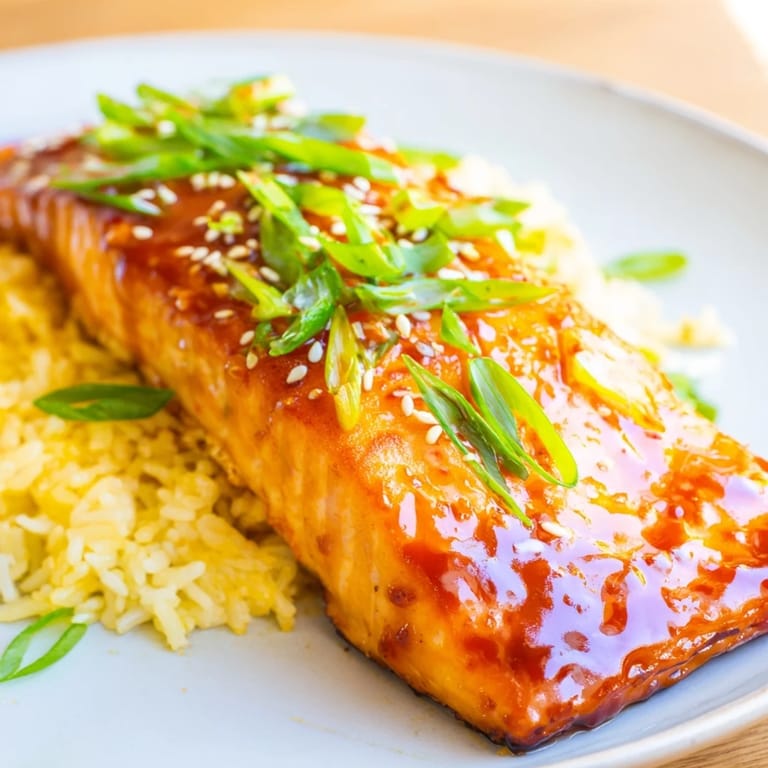
 There's this moment right before you broil salmon when the kitchen fills with the smell of ginger and citrus, and you know something really good is about to happen. I discovered this sticky orange gochujang glaze completely by accident one evening, mixing what I had on hand—leftover gochujang, fresh orange juice, and a drizzle of sesame oil—and it became the kind of thing I keep coming back to. It's vibrant, it's easy, and it makes you feel like you actually tried, even when dinner comes together in under forty minutes.
I made this for my partner on a rainy Thursday when we were both tired from work, and somehow those sticky fillets over buttery rice turned the whole evening around. It's one of those dishes where people eat quietly for the first minute, completely focused, then immediately ask for seconds.
Ingredients
- Salmon fillets (skin-on, about 150g each): Skin-on matters because it crisps beautifully under the broiler and keeps the fish moist inside; look for fillets that feel firm and smell clean, never fishy.
- Gochujang: This Korean chili paste is the backbone of everything, bringing heat, umami, and a slight funkiness that makes the glaze unforgettable.
- Fresh orange juice: Squeeze it yourself if you can; bottled changes the flavor noticeably, making it sharper and less bright.
- Soy sauce: Use regular soy sauce unless you need gluten-free, in which case tamari works perfectly.
- Honey: This balances the heat and saltiness, creating that sweet-savory magic that makes people keep eating.
- Rice vinegar: A tiny splash adds sharpness and cuts through the richness without making anything taste sour.
- Fresh ginger and garlic: Minced fine so they disappear into the glaze and perfume everything with warmth.
- Sesame oil: Just a teaspoon adds nuttiness and depth; too much and it overpowers.
- Jasmine rice: Fluffy and slightly fragrant, it absorbs the glaze beautifully; if you only have regular white rice, that works too.
- Butter: This makes the rice taste buttery and luxurious, which sounds simple but truly matters.
- Scallions: Sliced thin and scattered over the top for a fresh, sharp bite that cuts through the richness.
- Sesame seeds and orange zest: Optional, but they add a visual pop and remind you this is a dish made with care.
Tired of Takeout? 🥡
Get 10 meals you can make faster than delivery arrives. Seriously.
One email. No spam. Unsubscribe anytime.
Instructions
- Make the glaze:
- Whisk gochujang, orange juice, soy sauce, honey, rice vinegar, ginger, garlic, and sesame oil together in a bowl until smooth. It should smell incredible—if it doesn't, taste a tiny bit; the balance should feel like it's pulling you in three directions at once (spicy, salty, sweet).
- Marinate the salmon:
- Pat the fillets very dry with paper towels, then coat them with a couple tablespoons of glaze and let them sit for ten minutes. This isn't a long marinate, but it gives the glaze time to cling to the fish.
- Cook the rice:
- Rinse jasmine rice under cold running water until the water clears—this removes starch and keeps each grain separate. Combine with water, butter, and salt in a saucepan, bring to a boil, then drop the heat low, cover, and simmer for exactly fifteen minutes without peeking.
- Prep the oven:
- While the rice steams, turn your broiler to high and line a baking sheet with foil, then oil it lightly so the salmon doesn't stick.
- Broil the salmon:
- Arrange the marinated fillets skin-side down on the sheet and brush them with more glaze. Slide them under the broiler about five inches from the heat and cook for six to eight minutes, brushing once more halfway through, until the top is caramelized and the flesh is cooked through (it should be opaque and flake gently, with an internal temp around 52–54°C if you're checking).
- Finish the glaze:
- Pour any remaining glaze into a small saucepan and let it bubble over medium heat for a couple of minutes until it thickens slightly and turns glossy. This concentrates the flavors and gives you a sauce to drizzle.
- Plate and serve:
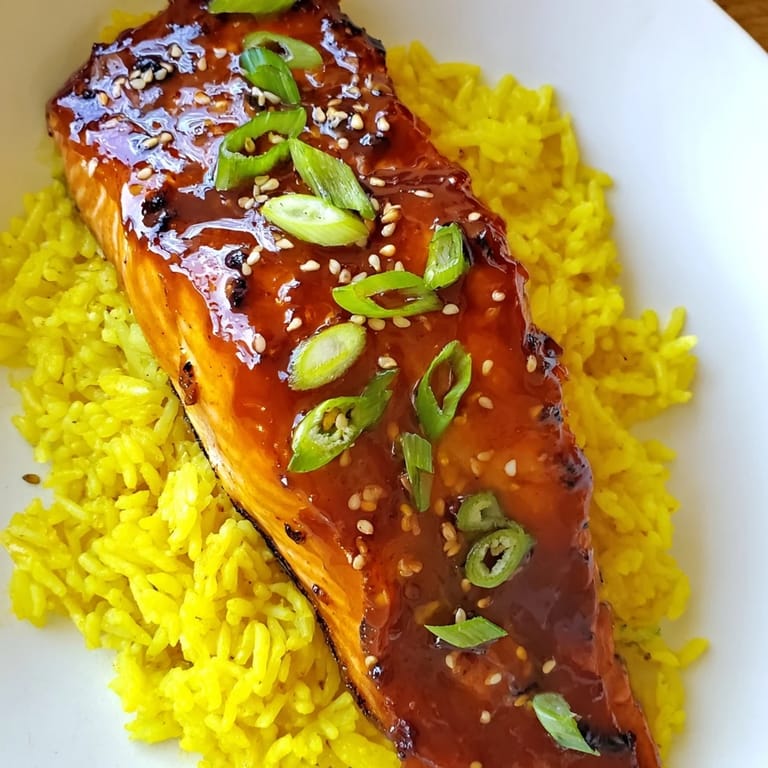
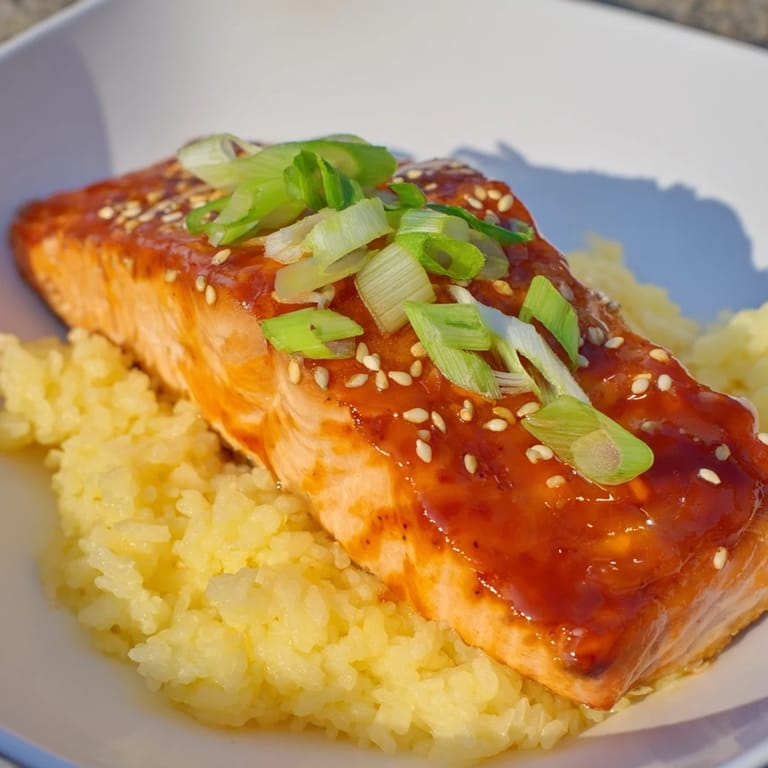
- Fluff the rice with a fork, divide it among bowls, nestle a salmon fillet on top, then drizzle with the thickened glaze and scatter scallions, sesame seeds, and orange zest over everything.
 Pin it
 What strikes me most is how this dish tastes both comforting and a little bit adventurous at the same time. The gochujang gives it this subtle heat and funkiness that feels grown-up, while the buttery rice and sweet glaze make it feel familiar and warm.
The Broiler Is Your Friend Here
I used to think broiling was some mysterious technique reserved for experienced cooks, but it's honestly just controlled heat from above. The salmon cooks fast and evenly, and the glaze gets this caramelized char that you can't achieve in a regular oven. The key is paying attention—broilers are hot and things move quickly, but that's exactly why this meal comes together so fast.
Playing With The Flavor
This glaze is flexible in the best way. One night I added a pinch of chili flakes and it took the heat from warm to genuinely spicy, which some people loved and others diluted with extra rice. Another time I swapped half the soy sauce for tamari just to see, and it made things taste slightly cleaner and less salty without ruining anything. You could also try a splash of mirin for more sweetness, or a bit of lime juice instead of orange if that's what's in your fridge.
Making It Your Own
The beauty of this recipe is that it works as written, but it's also honest enough to handle your substitutions. Brown rice or quinoa takes a few extra minutes but tastes just as good, especially if you're looking for more fiber. If you don't have sesame oil, use a touch of olive oil and maybe a bit of extra soy sauce. Some people swear by serving it with a crisp white wine like Sauvignon Blanc, while others pour an IPA and call it perfect.
- If salmon isn't available or you're avoiding it, this glaze works beautifully on halibut, cod, or even chicken thighs—just adjust the broiling time.
- Prep the glaze and marinate the fish the night before if your morning feels busy; they'll actually taste better for it.
- Toast the sesame seeds yourself in a dry pan if you have time—just two minutes makes them taste exponentially better.
 Pin it
 This is the kind of dinner that tastes like you care without making you feel stressed. Once you've made it once, you'll find yourself reaching for it again and again.
Recipe FAQs
- → What type of rice is best for this dish?
Jasmine rice is ideal due to its fragrant aroma and fluffy texture, which complements the rich glaze and salmon.
- → Can I adjust the spiciness of the glaze?
Yes, adding chili flakes or extra gochujang increases spiciness, while reducing these ingredients will mellow the heat.
- → How do I know when the salmon is perfectly cooked?
Look for a caramelized surface and cook until the internal temperature reaches 52–54°C (125–130°F) for medium doneness.
- → What can I use instead of gochujang?
For a milder option, mix miso paste with a touch of chili powder or a sweet chili sauce to mimic the glaze’s flavor profile.
- → Is it possible to prepare this dish ahead of time?
You can prepare the glaze and marinade in advance, but to maintain freshness, cook the salmon and rice just before serving.