 Pin it
 My friend Marcus brought a travel magazine to dinner one night, and we spent half the meal poring over photographs of the Blue Ridge Mountains—all those dramatic peaks and valleys rendered in blue-grey shadow. By dessert, we were plotting a trip we'd probably never take, but something about those jagged silhouettes stuck with me. A few weeks later, pulling four different blue cheeses from the market, I realized I could build those mountains right there on a platter. It felt silly and perfect at the same time.
I made this for a small dinner party last autumn, and my neighbor Elena stood in front of the platter for a solid minute, phone in hand, before anyone touched a thing. She called it "mountain porn for the palate." When her eleven-year-old daughter tried a piece of Stilton and declared it tasted like "fancy rock candy," I knew the whole concept was worth repeating.
Ingredients
- Roquefort cheese: Peppery and crumbly, this French classic is the bold peak of your range—don't skip it.
- Gorgonzola cheese: Creamier and milder than Roquefort, it adds contrast and a gentle sweetness to the arrangement.
- Stilton cheese: English and assertive, this one brings earthiness and a slightly sharper edge that keeps things interesting.
- Bleu d'Auvergne cheese: Delicate and smooth compared to the others, it's the quiet mountain in the back row.
- Artisanal whole-grain crackers: Sturdy enough to hold the weight of cheese without crumbling, and their nuttiness plays beautifully with the blue cheeses.
- Honey: A drizzle at the end wakes up the salty funk of the blues—the sweetness is a gentle counterpoint, not a mask.
- Toasted walnuts, chopped: Adds crunch and earthiness; toasting them first deepens their flavor.
- Fresh grapes or sliced figs: These are your "valley" color—juicy pockets of sweetness that give your eyes (and your palate) a little rest.
- Fresh herbs like rosemary: Optional but worth it—a sprig or two looks like tiny trees and smells like a forest.
Tired of Takeout? 🥡
Get 10 meals you can make faster than delivery arrives. Seriously.
One email. No spam. Unsubscribe anytime.
Instructions
- Slice your cheeses with intention:
- Take a sharp knife and cut each blue cheese into rough, irregular wedges—think jagged peaks, not perfect triangles. The unevenness is what makes this look alive and natural rather than fussy.
- Build your sky:
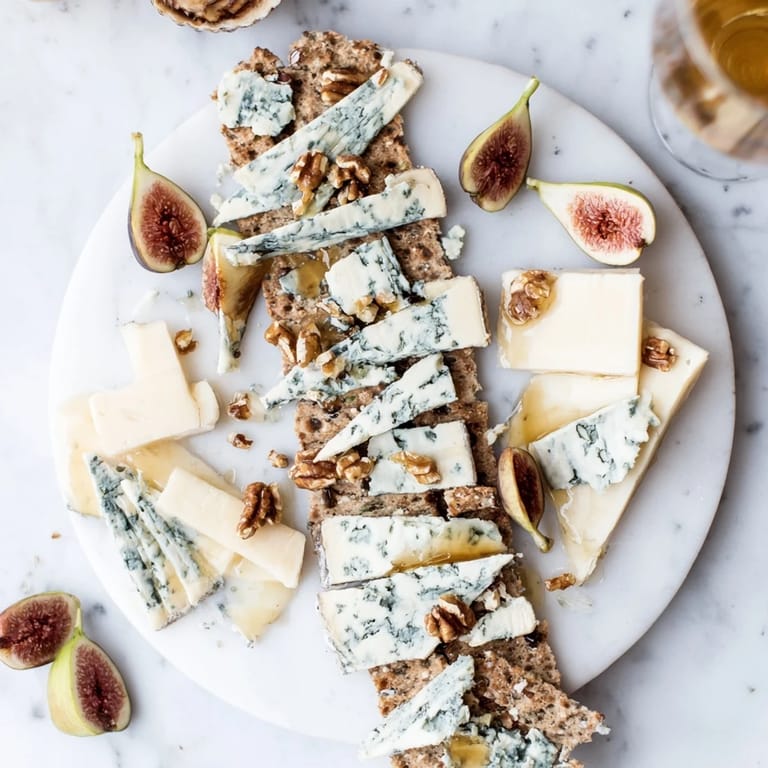
- Lay your crackers out in a single layer on a large board or platter, leaving room at the top for your mountain range. They're the canvas, the sky beneath everything.
- Arrange the range:
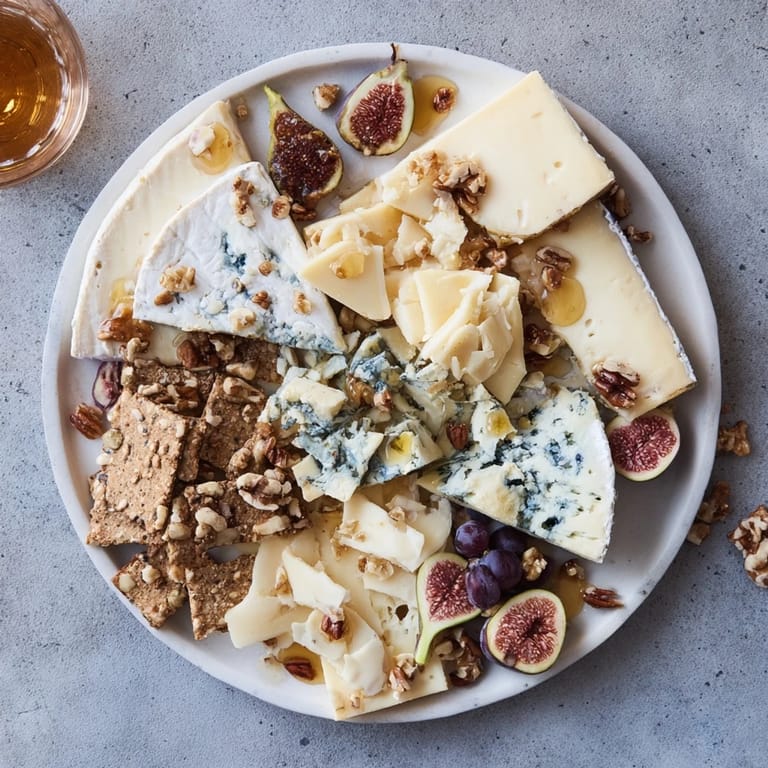
- Starting with one cheese type, place wedges in a loose row along the top edge of the crackers, varying their heights and tilting them at different angles. Mix in the other three cheeses as you go, so the colors shift and blend like a real ridge.
- Crown it with sweetness and texture:
- Drizzle honey over the cheese wedges—not a flood, just a generous thread—and scatter the toasted walnuts over everything. The honey will pool slightly in the crevices, which is exactly what you want.
- Add your valleys:
- Scatter grape halves or fig slices around the platter, tucking them between and around the cheese peaks. They brighten the whole thing and give people something cool and juicy to alternate with the rich, salty blue.
- Final garnish and serve:
- If you have fresh rosemary, lay a sprig or two near the peaks like tiny trees. Serve right away while everything is at its best—the crackers still crisp, the honey still warm.
 Pin it
 What surprised me most about this dish is how it shifted the mood of an ordinary Wednesday dinner. People lingered over it, talking and laughing, piecing together their own flavor combinations instead of just grabbing and eating. Food that makes people slow down is food worth making again.
The Blue Cheese Experience
If you've never done a proper blue cheese tasting, this platter is your invitation. Each of these four varieties has its own personality: Roquefort is the bold statement, Gorgonzola the charming middle ground, Stilton the wise elder, and Bleu d'Auvergne the quiet artist. Trying them in sequence, on the same cracker, teaches you something about your own taste buds that a recipe alone never could.
Building Your Platter with Intention
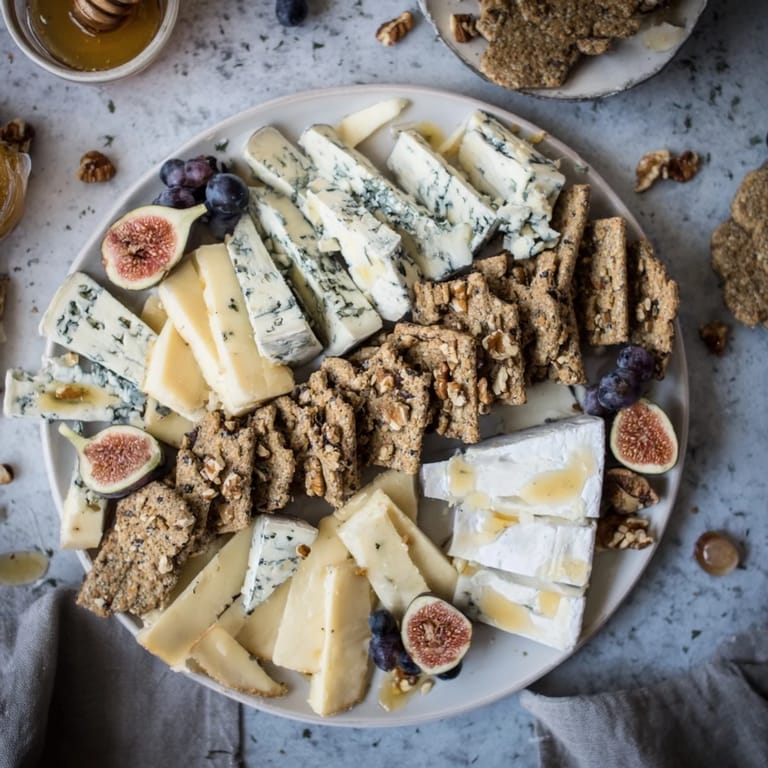
The magic of this dish lives in how you arrange it—messy and organic but still clearly intentional. I've learned that the best-looking cheese platters are the ones where you stop worrying about symmetry and start thinking about light, shadow, and negative space. Tilt your cheeses. Let them overlap. Let the heights vary wildly. That's when it stops looking like "a cheese platter" and starts looking like something someone actually created.
Pairing and Serving Wisdom
This arrangement is a showstopper on its own, but it sings with the right drink. A chilled Sauternes brings out the honey notes and softens the sharpness of the blues, while a bold red wine—something with body and tannins—creates a wonderful clash-and-harmony dynamic with the cheese's funk. Neither is wrong; it depends on the mood of your evening. If you're serving this to people with nut allergies, swap the walnuts for toasted pumpkin seeds or leave them off entirely; the platter is stunning either way. Dried apricots or dates tucked into the gaps add pops of color and sweetness without cluttering the landscape you've worked to create.
- Prep all ingredients before you arrange so you're not fumbling while your board sits waiting.
- Keep the platter at room temperature when you serve it; cold cheese tastes muted and loses the subtlety that makes these distinctions worth noticing.
- Set out small spreader knives or forks so people have a gentle way to help themselves without mangling the arrangement.
 Pin it
 This is the kind of dish that proves appetizers can be just as memorable as the main course. It's simple, clever, and tastes like someone who cares made it.
Recipe FAQs
- → How do I best arrange the blue cheeses?
Slice the blue cheeses into irregular wedges or blocks to resemble mountain peaks, then stagger them along the crackers for a natural horizon effect.
- → Can I substitute the walnuts in this platter?
Yes, for a nut-free option, replace walnuts with pumpkin seeds or omit altogether without compromising flavor balance.
- → What types of fruit complement the cheese platter?
Fresh grapes or sliced figs provide a sweet, juicy contrast and vibrant color to the savory cheeses and crackers.
- → Are there gluten-free options for this arrangement?
Using certified gluten-free crackers ensures the platter suits gluten-sensitive guests while maintaining texture and taste.
- → What wines pair well with the blue cheese platter?
A chilled Sauternes or robust red wines enhance the distinctive flavors of blue-veined cheeses and create a balanced pairing.