 Pin it
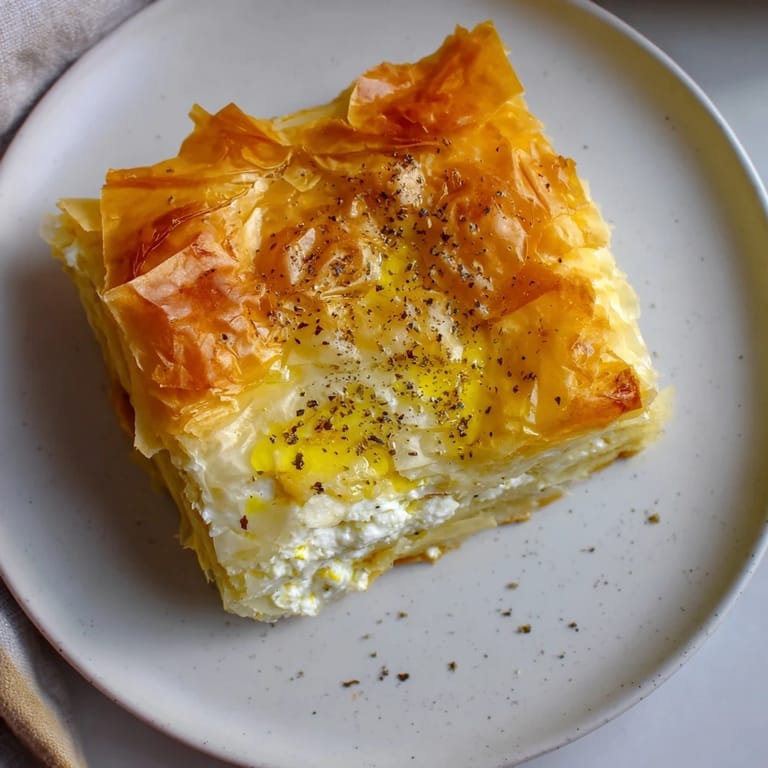
 The first time I watched my neighbor pull a golden banitsa from her oven, the entire hallway filled with the most incredible aroma of butter and cheese that I knew I had to learn how to make it myself. What struck me wasn't just the smell, but the way she cut those perfect squares with such confidence, steam rising from each piece as she pulled the knife through. She handed me a warm slice, still crackling, and I understood why this pastry had survived centuries in Bulgarian kitchens. Now whenever I make it, I'm transported back to that moment, the simplicity of phyllo and cheese transformed into something absolutely transcendent.
I made this for a Sunday breakfast gathering once, worried the phyllo would be too delicate to handle, but it held together beautifully and people came back for seconds before the first batch had even cooled. One guest asked if I'd made it professionally, and that validation made every buttered layer worth the effort. It became the dish I started making whenever I wanted to feel like I was sharing something genuinely special.
Ingredients
- Feta cheese (400g, crumbled): The heart of banitsa, and its sharpness is what makes the whole thing sing against the richness of butter and eggs.
- Plain yogurt (250ml): This isn't just filler; it adds a subtle tang that balances the saltiness of the feta and creates incredible moisture in the filling.
- Eggs (4 large): They bind everything together and create those little pockets of creaminess throughout the pastry.
- Unsalted butter (60g, melted): Use real butter here without compromise, as it's what creates those golden, crackling layers that make banitsa special.
- Whole milk (50ml): A small addition that makes the filling smoother and prevents it from drying out in the oven.
- Phyllo dough (1 package, about 400g, thawed): Always thaw this properly and keep it covered with a damp towel while you work, or it'll become brittle and tear.
- Salt (1/2 tsp) and freshly ground black pepper (1/4 tsp): Season boldly here since the cheese isn't salty enough on its own.
Tired of Takeout? 🥡
Get 10 meals you can make faster than delivery arrives. Seriously.
One email. No spam. Unsubscribe anytime.
Instructions
- Prepare your workspace:
- Preheat the oven to 180°C and butter your baking dish thoroughly so nothing sticks. Have your damp towel ready before you even open the phyllo package.
- Make the filling:
- Whisk eggs with yogurt, milk, salt, and pepper until silky smooth, then fold in the feta gently so you keep some texture. This filling is your treasure, so don't overwork it.
- Protect the phyllo:
- Unroll your dough and immediately drape that damp towel over it. Phyllo is dramatic about drying out, and even five minutes exposed will make it crack.
- Layer the base:
- Lay one sheet of phyllo in the dish, brush it with melted butter using deliberate, gentle strokes, then repeat three more times. You want a cohesive buttery base that won't get soggy.
- Fill strategically:
- Spread one-quarter of your filling over the four buttered sheets, then add three to four more phyllo sheets with butter between each one. This alternating pattern is what creates the magic.
- Keep building:
- Continue layering phyllo and butter, then spread more filling, then more phyllo and butter again. Keep going until your filling is gone, then finish with three to four final phyllo sheets, each brushed with butter.
- Cut before baking:
- Using a sharp knife, cut the whole thing into squares or diamonds while it's still uncooked. This prevents the phyllo from shattering into a million pieces when you try to cut a hot banitsa.
- Final butter pour:
- Drizzle any remaining melted butter over the top and let it soak into the cuts slightly. This is what makes the crust so impossibly golden.
- Bake to golden perfection:
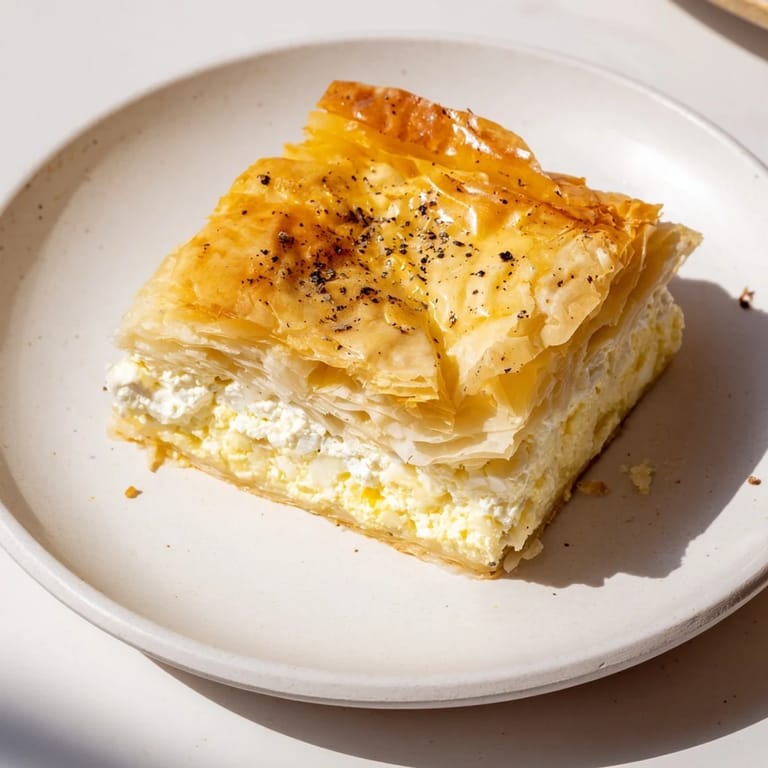
- Bake for 30 to 35 minutes until the top is deep golden brown and you hear the pastry crackling slightly. You'll know it's done when the kitchen smells like pure butter and cheese.
- Rest before serving:
- Let it cool for at least 10 minutes so the filling sets and the layers maintain their structure. Serve it warm or at room temperature, never straight from the oven when it's too soft to handle.
 Pin it
 There's something almost meditative about buttering each phyllo layer, the repetitive motion becoming a kind of cooking meditation. When you pull it from the oven and hear that crackle, you know you've done something right, and that moment of achievement tastes as good as the banitsa itself.
The Secret to Perfect Layers
The difference between a soggy banitsa and a shatteringly crisp one comes down to butter application and timing. Some people brush too much, creating greasy layers that don't crisp, while others skimp and end up with tough phyllo. The sweet spot is a light, even brush on each sheet, letting the butter soak in slightly between layers so everything stays connected and cooks evenly together.
Variations and Additions
While the classic version is perfect as is, I've learned that Bulgarian home cooks adapt banitsa in subtle ways depending on their mood and what's available. Fresh dill or parsley stirred into the filling adds brightness without overwhelming the cheese, and some families swear by adding a whisper of nutmeg for warmth. You can also split the feta with Bulgarian sirene or ricotta if you prefer something milder, though this changes the final flavor profile in ways that feel almost like making a different dish.
Serving and Pairing Ideas
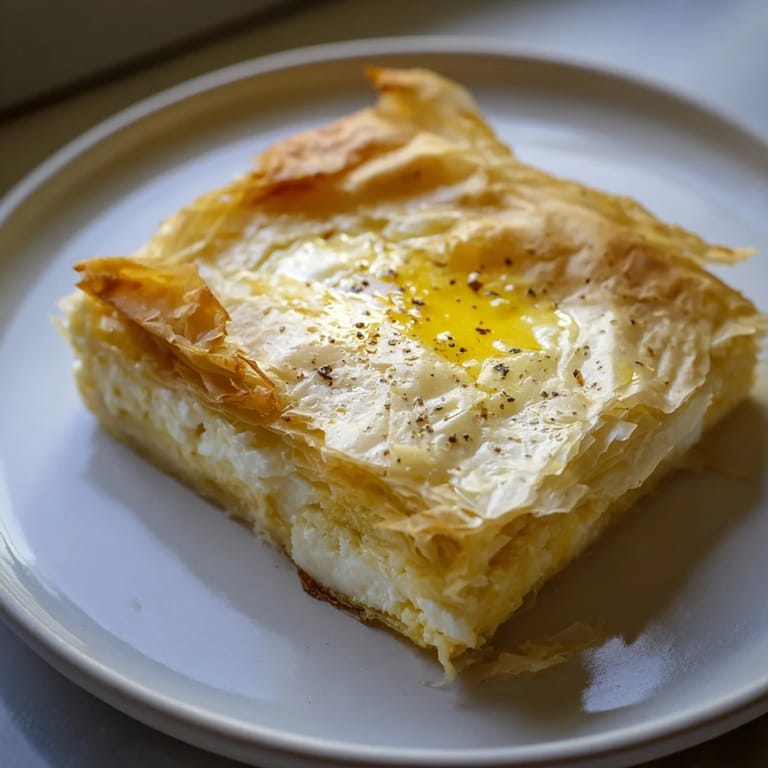
Banitsa is infinitely flexible about when and how you eat it, which is part of its genius as a dish. Serve it warm with cold ayran, that creamy yogurt drink that cuts through the richness perfectly, or pair it with a bright tomato-cucumber salad for balance. It's equally at home at breakfast as it is at midnight, and it keeps for days if you want to make it ahead.
- Cold ayran is the traditional pairing, but cold milk or even unsweetened iced tea work beautifully too.
- A simple green salad with sharp vinaigrette provides the acidity that banitsa's richness really benefits from.
- Make it for meal prep; it tastes just as good the next day at room temperature.
 Pin it
 Making banitsa is like learning any language worth speaking; it feels impossible at first, then suddenly it clicks and becomes something you make without thinking. Every time you pull it from the oven golden and crackling, you're connecting to generations of cooks who understood that simple ingredients, patience, and butter can create something transcendent.
Recipe FAQs
- → What type of cheese is used in Bulgarian Banitsa?
Traditional Banitsa uses crumbled feta cheese, which provides a rich and tangy flavor to the filling.
- → Can I add herbs to the filling?
Yes, adding fresh dill or parsley enhances the flavor and freshness of the filling without overpowering it.
- → How should I handle phyllo dough to prevent tearing?
Keep phyllo sheets covered with a damp towel while layering to prevent them from drying out and becoming brittle.
- → What is the best way to achieve a crispy top layer?
Brush each phyllo layer generously with melted butter before baking to ensure a golden and crisp finish.
- → Can I prepare Banitsa ahead of time?
Yes, you can assemble it in advance and bake just before serving to maintain freshness and crispness.