 Pin it
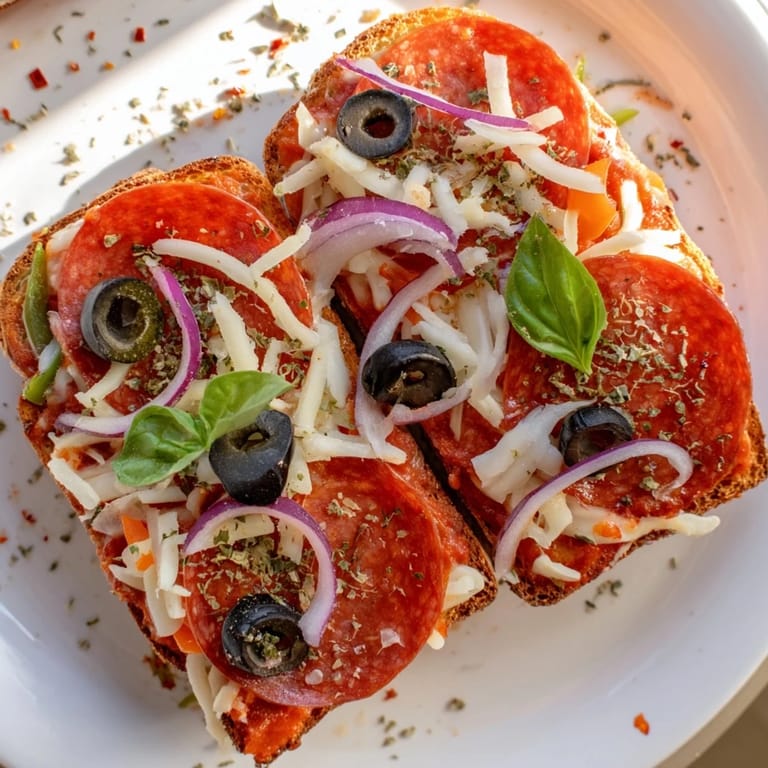
 I discovered pizza toast scrolling through TikTok at midnight, honestly just looking for anything to quiet a sudden craving. The videos made it look absurdly simple, but when I finally tried it, I realized the magic wasn't in complexity but in layering—sauce, cheese, more cheese, toppings stacked like you actually cared. That first bite, with the cheese still bubbling and the crust somehow crispy underneath all that melted goodness, made me understand why people were obsessing over this online.
I made this for my roommate on a random Thursday after work, and she actually paused her show to eat it—that's the highest compliment in our apartment. She kept asking why we'd been ordering pizza when we could make this, and honestly, I didn't have a good answer. Now it's become our emergency dinner, the thing we make when we want something that tastes indulgent but doesn't require actual cooking skills.
Ingredients
- Sourdough or country-style bread, 2 thick slices: The crust needs to be sturdy enough to hold sauce and cheese without turning into mush; anything thinner will get soggy before the cheese even melts.
- Good-quality marinara sauce, 1/2 cup: Don't cheap out here—a decent sauce tastes like someone actually made it, and it's the flavor foundation for everything else.
- Garlic clove, 1 small, minced: Raw garlic mixed into the sauce adds a sharpness that cuts through the richness of all that cheese.
- Extra-virgin olive oil, 1 tbsp: This silks out the sauce and prevents it from drying out under the broiler.
- Shredded mozzarella cheese, 1/2 cup: Mozzarella does the heavy lifting with its melting ability; it's your workhorse cheese here.
- Shredded provolone cheese, 1/4 cup: Provolone adds a sharper, slightly smoky flavor that keeps the toast from tasting one-note and bland.
- Grated Parmesan cheese, 2 tbsp: This goes on last for a salty, crispy finish that catches the broiler heat perfectly.
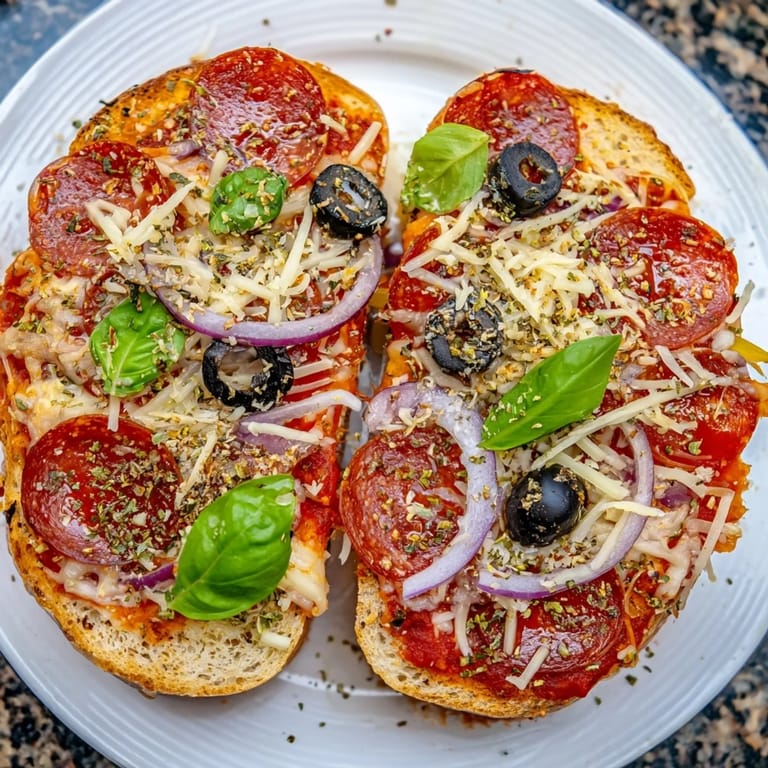
- Pepperoni or salami, 8–10 slices: Optional, but the fat renders into the cheese and makes everything taste better, so honestly, skip this only if you actually have to.
- Red onion, 1/4 small, thinly sliced: The sharpness and slight bite complement the richness; slice it thin so it actually cooks through.
- Black olives, 1/4 cup sliced: These add a briny punch that prevents the whole thing from tasting too heavy and creamy.
- Bell pepper, 1/4, thinly sliced: Use whatever color appeals to you; the flavor barely registers, but the texture contrast matters.
- Fresh basil leaves: Save this for garnish after broiling so it stays bright and doesn't turn into sad brown specks.
- Dried oregano, 1/2 tsp: Toast this with the cheese so it blooms and fills your kitchen with that pizza-shop smell.
- Black pepper and red pepper flakes: Finish generously—both add heat and complexity that ties everything together.
Tired of Takeout? 🥡
Get 10 meals you can make faster than delivery arrives. Seriously.
One email. No spam. Unsubscribe anytime.
Instructions
- Get your broiler ready:
- Preheat to high and line your baking sheet with foil or parchment so cleanup is actually painless. Trust me, you don't want to scrape burnt cheese off bare metal.
- Build the sauce:
- Stir minced garlic and olive oil into the marinara in a small bowl—this takes 30 seconds and completely changes how the sauce tastes and clings to the bread.
- Toast the bread lightly:
- Either run your slices through a toaster or place them under the broiler for just a minute or two until barely golden; this prevents them from absorbing all the sauce and turning into bread mush.
- Spread on the sauce:
- Be generous—this is your moisture and flavor layer, so don't skimp thinking it's going to drip everywhere.
- First cheese layer:
- Scatter half your mozzarella and provolone over the sauce, creating an even blanket so every bite has cheese in it.
- Add your toppings:
- Distribute pepperoni, onion, olives, peppers, or whatever you're using in an even layer; sparse toppings mean some bites are sad and naked.
- Top with remaining cheese:
- Finish with the rest of the mozzarella and provolone, then cover completely with Parmesan so you get that crispy, salty top layer.
- Season before broiling:
- Sprinkle oregano and black pepper over everything while it's still on the sheet; the broiler will toast these and make them actually taste like something.
- Broil until melted and golden:
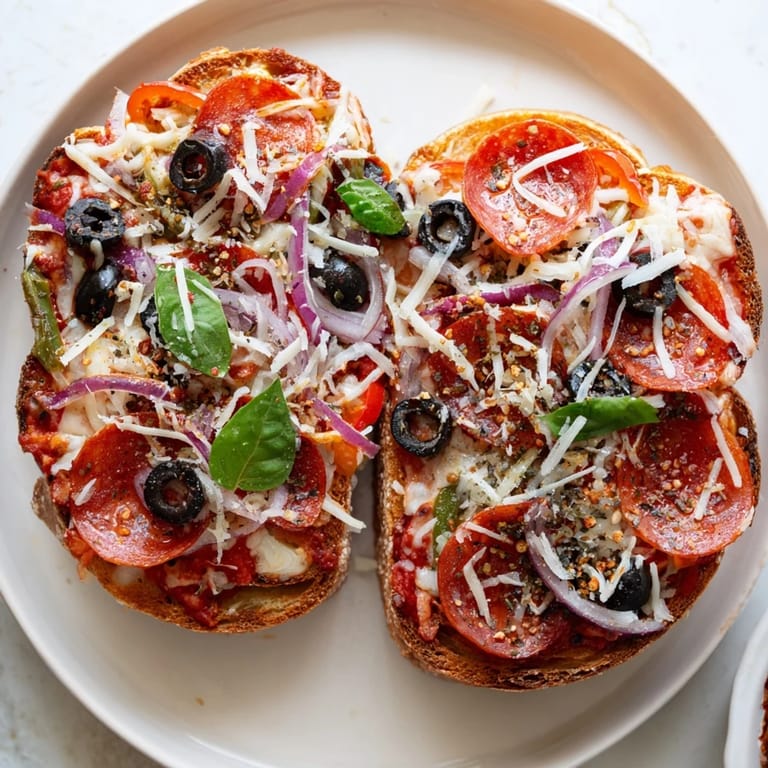
- Watch it the whole time—3 to 5 minutes is the window between perfectly melted and burnt, and it moves fast. You'll know it's ready when the cheese bubbles at the edges and the Parmesan starts catching color.
- Finish and serve:
- Pull it out, hit it with fresh basil and a pinch of red pepper flakes, and eat it while it's still dangerously hot and the cheese is at peak gooeyness.
 Pin it
 There's something deeply satisfying about watching cheese bubble under a broiler, that moment when you know whatever you're about to eat is going to be warm and melted and exactly what you needed. This toast became that thing I make when someone visits unexpectedly and I want to seem effortlessly together while barely trying.
The Cheese Layering Method That Actually Works
I used to just dump all the cheese on at once and wonder why some bites were dry, and then I realized the order matters. Mozzarella and provolone first create an insulating layer that helps everything else melt evenly, while the Parmesan on top gets the direct broiler heat and turns crispy and golden. It's a small adjustment that completely changes how the finished toast tastes, making it feel more deliberate and actually worth eating.
Why This Became My Go-To Snack
Pizza toast hits that sweet spot between snack and actual meal—it's substantial enough to quiet real hunger but fast enough that you're not standing around cooking for hours. The beauty is in how customizable it is; I've made it with sautéed mushrooms when I wanted earthiness, drizzled hot honey for sweetness against all that salt, and scattered arugula right after broiling for a peppery bite. Every version tastes different but equally satisfying, which is why I keep making it.
Building Flavors That Actually Balance Each Other
The reason this works is because you've got sweet sauce, salty cheese, sharp garlic, briny olives, and pepperoni fat all happening at once, and none of them scream louder than the others. If you skip the black pepper or the red pepper flakes, it tastes flat and one-dimensional, which taught me that finishing seasoning is where magic happens. It's also why I always keep fresh basil on the side—that herbal freshness right at the end reminds your mouth that you're eating something that tastes like actual food and not just melted cheese on bread.
- Taste a tiny corner before serving to make sure the seasoning is bold enough; broiler heat can mute flavors.
- Pair this with a simple green salad or tomato soup if you want to pretend you made a balanced meal.
- Leftover pizza toast reheats fine in a regular oven, but never in the microwave or it turns into a rubbery, sad situation.
 Pin it
 This is the kind of recipe that feels special because it tastes like you actually tried, even though you were done in 20 minutes. Make it for yourself on a random Tuesday, or make it for someone else and watch them understand why a video about cheese-covered bread can go viral.
Recipe FAQs
- → What bread works best for this dish?
Thick slices of sourdough or country-style bread provide a sturdy base that crisps nicely under the broiler while absorbing the tomato sauce.
- → Can I make it vegetarian or vegan?
Use vegetarian-friendly toppings and cheeses for a vegetarian version. Substitute dairy-free cheeses and gluten-free bread to accommodate vegan and gluten-free diets.
- → How do I achieve a perfectly melted cheese layer?
Broil the assembled toast for 3-5 minutes until the cheeses are bubbling and golden brown to get a deliciously melty texture.
- → What are some optional toppings to add?
Try sliced pepperoni, salami, red onion, black olives, bell pepper, or fresh herbs like basil to customize the flavor and texture.
- → Any tips for making this quicker?
Lightly toasting the bread before adding toppings reduces broiling time and helps prevent sogginess while enhancing crispness.
- → What seasonings complement the flavors best?
Dried oregano, freshly ground black pepper, and a sprinkle of red pepper flakes add aromatic and subtle heat notes that elevate the dish.