 Pin it
 I'll never forget the first time I made a flourless chocolate cake—it was for my sister's birthday, and I was terrified. No flour meant no safety net, no familiar texture to rely on. But the moment I pulled that dark, glossy cake from the oven and saw the center still gently trembling, I knew something magical had happened. That cake became the one I reach for whenever I need to feel like a real baker, the one that proves you don't need flour to create something unforgettable.
I served this cake to my book club once, nervous they'd judge me for something so simple. Instead, one friend asked for the recipe before finishing her slice, and another went back for seconds while everyone else was still on their first bite. That's when I realized this cake isn't about complexity—it's about respect. Respect for chocolate, respect for butter, and respect for the moment you're sharing it.
Ingredients
- High-quality dark chocolate (70% cocoa), chopped: This is where the magic lives. Choose chocolate you'd actually eat on its own—the richness carries the entire cake. I learned this the hard way with cheap baking chocolate; the difference is profound.
- Unsalted butter, cut into pieces: The pieces melt faster and more evenly with the chocolate. Unsalted lets the chocolate flavor sing without competition.
- Granulated sugar: It dissolves into the eggs, creating a silky base that gives the cake its velvety crumb.
- Large eggs, at room temperature: This matters more than you'd think. Cold eggs won't incorporate properly and can make the batter grainy. Take them out 30 minutes before you start.
- Pure vanilla extract: A whisper of vanilla deepens the chocolate flavor without announcing itself.
- Fine sea salt: This tiny pinch is the secret handshake that makes chocolate taste more like itself.
- Cocoa powder or powdered sugar, for dusting: The final flourish—choose cocoa for dramatic earthiness or powdered sugar for elegance.
Tired of Takeout? 🥡
Get 10 meals you can make faster than delivery arrives. Seriously.
One email. No spam. Unsubscribe anytime.
Instructions
- Set up your mise en place:
- Preheat your oven to 175°C (350°F). Grease your 20 cm round pan generously—I use butter and a little cocoa powder so every edge releases cleanly. Line the bottom with parchment paper; this is your insurance policy against a stuck cake.
- Create the chocolate emulsion:
- Chop your chocolate into small, eager pieces. Place them in a heatproof bowl with the butter pieces. Set this bowl over a pot of simmering water—the steam should barely touch the bottom of the bowl. Stir gently with a spatula, watching as the chocolate and butter surrender into glossy darkness. This should take 3–4 minutes. The moment it's smooth, lift the bowl away from the heat and breathe in that aroma. You've earned it.
- Build the batter with intention:
- Whisk the sugar into the warm chocolate until it's fully incorporated—this takes about 1 minute of gentle whisking. Now comes the part that feels like magic: add your room-temperature eggs one at a time, whisking vigorously after each one. With each egg, the mixture goes from glossy to mousse-like. This is emulsification happening before your eyes.
- Season with restraint:
- Stir in the vanilla extract and salt until you can't see any streaks. This is quick—about 30 seconds—but essential.
- Pour and trust:
- Transfer your batter into the waiting pan and smooth the top with a spatula. Don't overthink this; it doesn't need to be perfect. Your oven will handle the rest.
- Bake to the wobble:
- Slide the pan into your preheated oven and set the timer for 25 minutes. At 25 minutes, open the door and look. The edges should be set—they'll barely jiggle when you gently shake the pan. The center? It should move like water in a small circle. That's not underbaked; that's exactly right. It will set as it cools. Bake for up to 30 minutes if your oven runs cool, but watch carefully—every oven is different.
- Cool with patience:
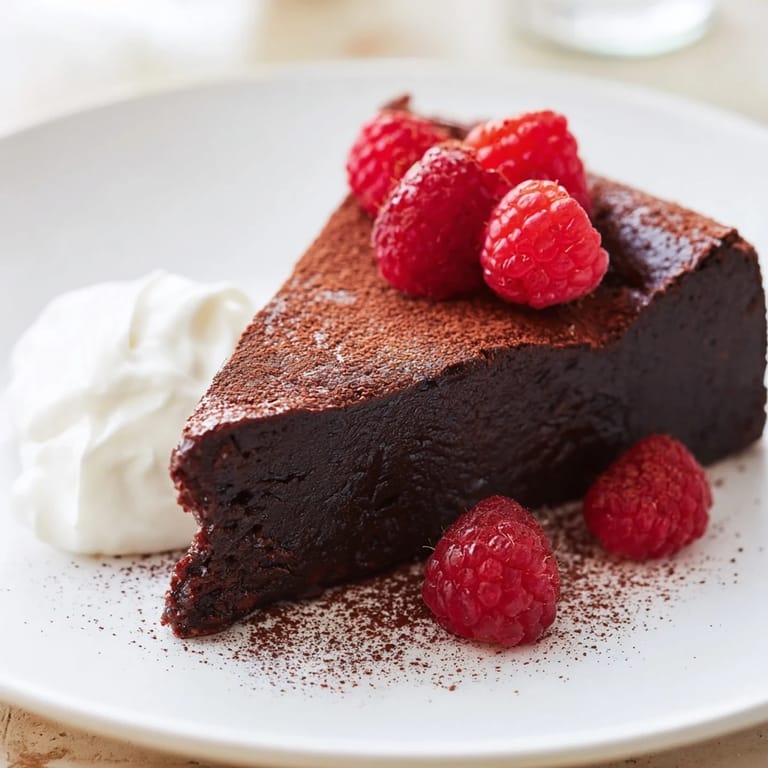
- Remove the cake from the oven and let it rest in its pan for exactly 10 minutes. You can feel it setting, firming up just enough. Run a thin knife around the edge, then place your serving plate on top and flip with confident hands. Peel away the parchment paper slowly and carefully.
 Pin it
 My grandmother tasted this cake and didn't say anything for a long moment. Then she asked if I'd added coffee to it—I hadn't. She said it tasted like pure chocolate memory, like the most expensive truffles she'd ever had, but warm and alive on the plate. That's the moment I stopped worrying about whether this cake was too simple.
The Science of Simplicity
This cake works because it's built entirely on two principles: emulsification and precise baking temperature. The eggs don't just bind the ingredients together—they trap tiny bubbles of air as you whisk them into the chocolate, creating lift without flour. The butter and chocolate meld into a silky base that carries flavor instead of fighting it. There's nowhere for weakness to hide, which is why this recipe demands your best chocolate and your attention.
Serving and Presentation
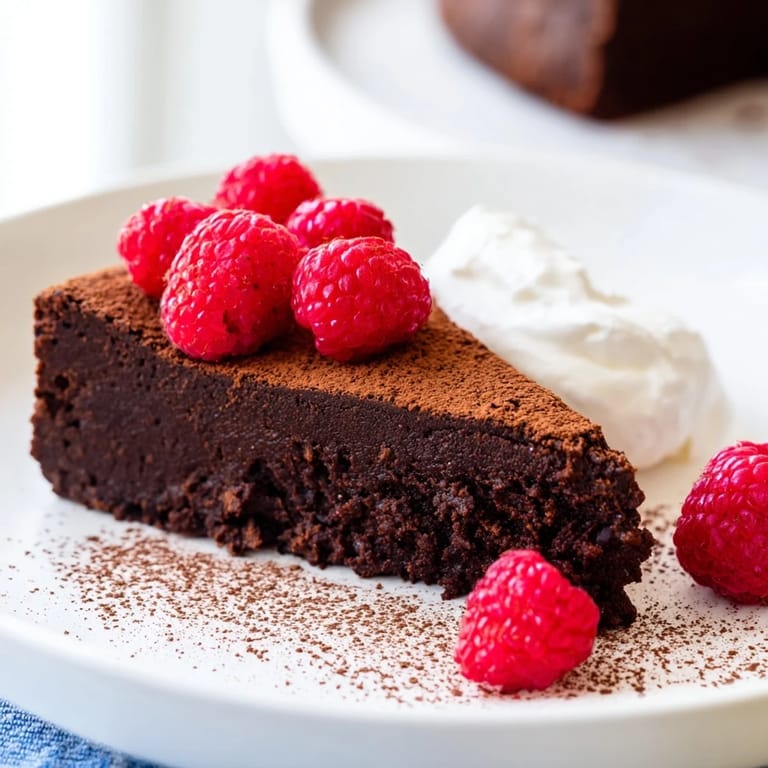
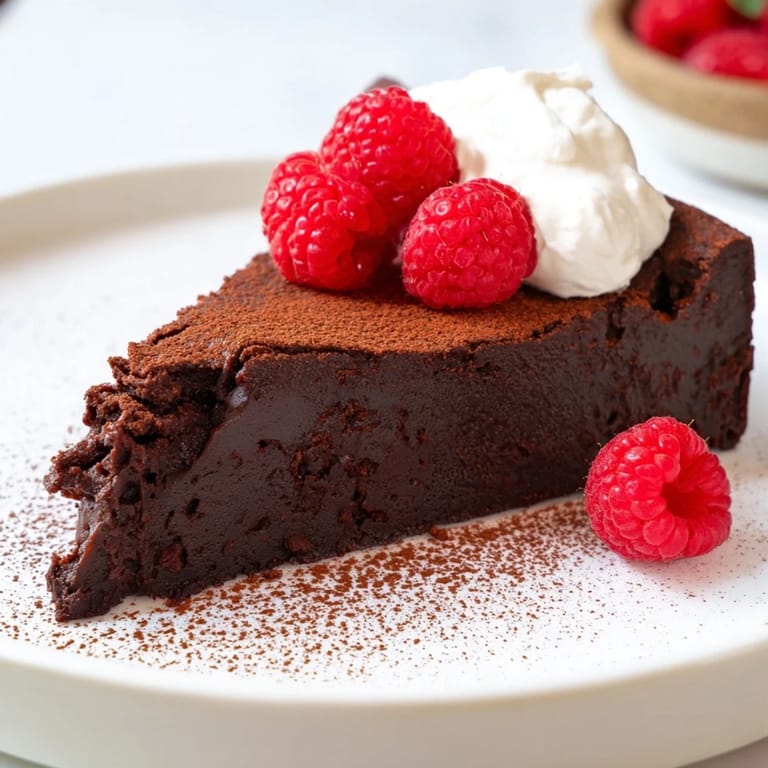
A flourless chocolate cake is bold enough to need almost nothing. A dusting of cocoa powder looks dramatic and tastes like pure chocolate intensity. Powdered sugar feels more delicate, more elegant. Fresh raspberries alongside add brightness; whipped cream adds luxury. But honestly, a simple plate and a single slice speaks loudest. The cake does all the talking.
- Serve thin slices—this cake is rich by design, and a little goes a long way in the best possible way
- Let it come to room temperature before serving for the most tender crumb and deepest flavor
- A cup of black coffee or hot tea alongside is all you really need
Storage and Make-Ahead
This cake actually improves after a day, the flavors deepening and the texture becoming even more fudgy. Cover it tightly at room temperature for up to 2 days, or refrigerate for up to 5 days. You can even freeze it for a month if you're planning ahead—just wrap it well and thaw it at room temperature before serving. I've made this cake the day before important dinners more times than I can count, which is precisely why it's become my secret weapon.
Variations and Personal Touches
Once you master this cake, it becomes a canvas. Add 1 teaspoon of instant espresso powder to the melted chocolate for a mocha version that tastes like a chocolate shop in Vienna. A tiny splash of orange extract brings warmth and sophistication. Cardamom whispers something mysterious. But my advice is to make it plain at least once, to understand what you're working with before you start improvising. That understanding changes everything.
- Espresso powder deepens chocolate without making the cake taste like coffee
- A pinch of cayenne pepper creates an unexpected warmth that lingers
- Swap the vanilla for almond extract for a completely different personality
 Pin it
 This cake taught me that sometimes the most impressive things are the simplest, made with intention and the best ingredients you can find. It's become the cake I reach for when I need to remind myself that cooking is an act of love.
Recipe FAQs
- → What makes this chocolate cake flourless?
It uses no flour, relying on eggs and melted chocolate to provide structure and a fudgy texture.
- → Can I add coffee flavor to enhance the chocolate?
Yes, adding a teaspoon of instant espresso powder to the melted chocolate mixture intensifies the chocolate notes.
- → How can I tell when the cake is perfectly baked?
The edges will be set while the center remains slightly wobbly, ensuring a moist, fudgy consistency.
- → What are good serving suggestions for this cake?
Dust with cocoa powder or powdered sugar and serve with fresh berries or whipped cream for added freshness and texture contrast.
- → How should leftovers be stored?
Store tightly covered at room temperature for up to 2 days, or refrigerate and consume within 5 days for best freshness.