 Pin it
 My cousin brought a pink velvet cupcake to a bridal shower, and I ended up staring at it longer than I probably should have. The color was soft and confident at the same time, and when I finally took a bite, the texture stopped me cold—it was so tender it almost dissolved. I spent the next week recreating it in my kitchen, tweaking the tang and the crumb until I had something that tasted like a celebration even on a Tuesday. Now I bake these whenever I need a reason to smile, or when someone I care about needs one too.
I made these for my neighbors daughter when she turned seven, and she insisted on carrying the platter to the table herself. One cupcake tipped over, frosting side down, and she just scooped it back up and ate it with her hands, grinning the whole time. Her mom laughed so hard she had to sit down, and I realized then that recipes like this aren't just about taste—they hold space for joy, even the messy kind. I've baked them dozens of times since, and I still think about that little girl every time I pipe the frosting.
Ingredients
- Cake flour: This is what gives the cupcakes their cloud-like crumb, if you only have all-purpose, the cornstarch trick works beautifully.
- Baking powder and baking soda: Together they create a gentle lift without making the cupcakes dense or rubbery.
- Unsalted butter: Room temperature is non-negotiable here, cold butter won't cream properly and your texture will suffer.
- Granulated sugar: It sweetens and helps aerate the batter when you beat it with the butter.
- Egg: One large egg binds everything and adds richness, make sure its at room temp so it blends smoothly.
- Buttermilk: The secret to tenderness and that subtle tang that keeps these from tasting flat.
- Vanilla extract: Pure vanilla makes all the difference, the fake stuff just tastes like a memory of vanilla.
- White vinegar: It reacts with the baking soda for extra lift and helps the pink color stay vibrant.
- Pink gel food coloring: Gel is more concentrated than liquid, so you get true color without watering down the batter.
- Powdered sugar: Sifting it prevents lumps in your frosting and makes it impossibly smooth.
- Heavy cream: Just a splash loosens the buttercream to the perfect pipeable consistency.
Tired of Takeout? 🥡
Get 10 meals you can make faster than delivery arrives. Seriously.
One email. No spam. Unsubscribe anytime.
Instructions
- Prep your oven and pan:
- Set your oven to 350°F and tuck paper liners into each cup of your muffin tin. This step feels small, but it sets the rhythm for everything that follows.
- Sift the dry ingredients:
- Combine the flour, baking powder, baking soda, and salt in a bowl and whisk them together until they look like one unified thing. Sifting makes the cupcakes lighter, and whisking ensures no rogue pockets of leavening.
- Cream the butter and sugar:
- Beat the butter until its smooth, then add the sugar gradually and keep beating for two to three minutes. You want it pale and fluffy, almost like whipped clouds—this is where the tenderness begins.
- Add the egg and vanilla:
- Lightly beat the egg first, then drizzle it in slowly with the mixer on low so it doesn't scramble. Blend in the vanilla and scrape down the bowl.
- Alternate the dry and wet:
- Add a third of the flour mixture, then half the buttermilk, then another third of flour, the rest of the buttermilk, and finish with the last of the flour. Mix just until combined after each addition—overmixing makes tough cupcakes.
- Tint the batter:
- Stir the vinegar and pink gel coloring together in a small cup, then pour it into the batter with the mixer on low. Watch the batter turn into that signature blush pink.
- Fill the liners:
- Divide the batter evenly, filling each liner about two-thirds full, then tap the pan on the counter a few times to pop any air bubbles. This helps them bake flat and even.
- Bake:
- Slide the pan into the oven and bake for 18 to 22 minutes, checking with a toothpick. It should come out clean or with just a few moist crumbs clinging to it.
- Cool completely:
- Let the cupcakes rest in the pan for five minutes, then move them to a wire rack. If you frost them while theyre warm, the buttercream will melt into a sweet puddle.
- Make the buttercream:
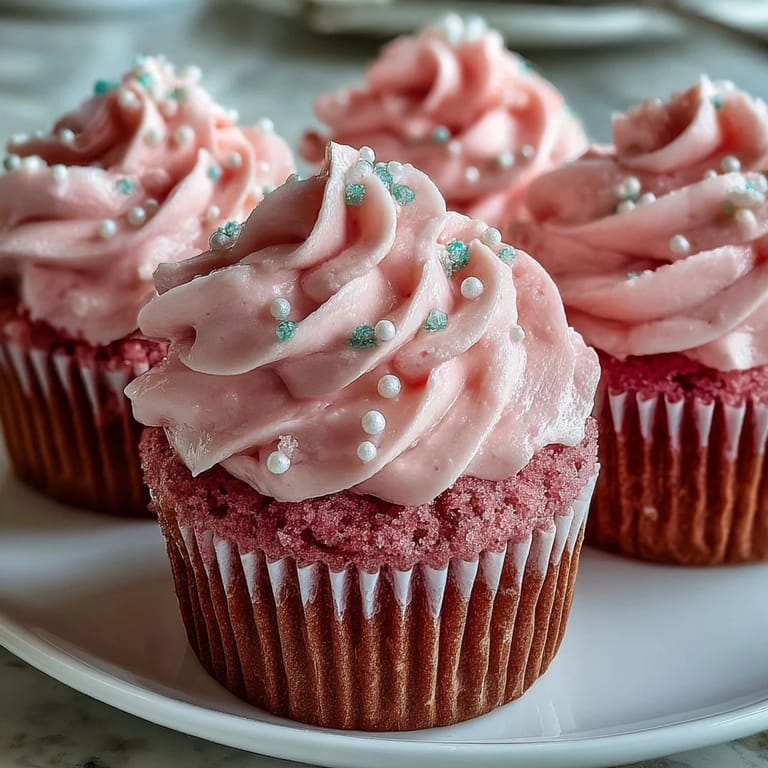
- Beat the butter until creamy, then add powdered sugar slowly and beat until smooth. Add vanilla, cream, and a pinch of salt, then whip on medium-high until the frosting is light and fluffy.
- Frost and decorate:
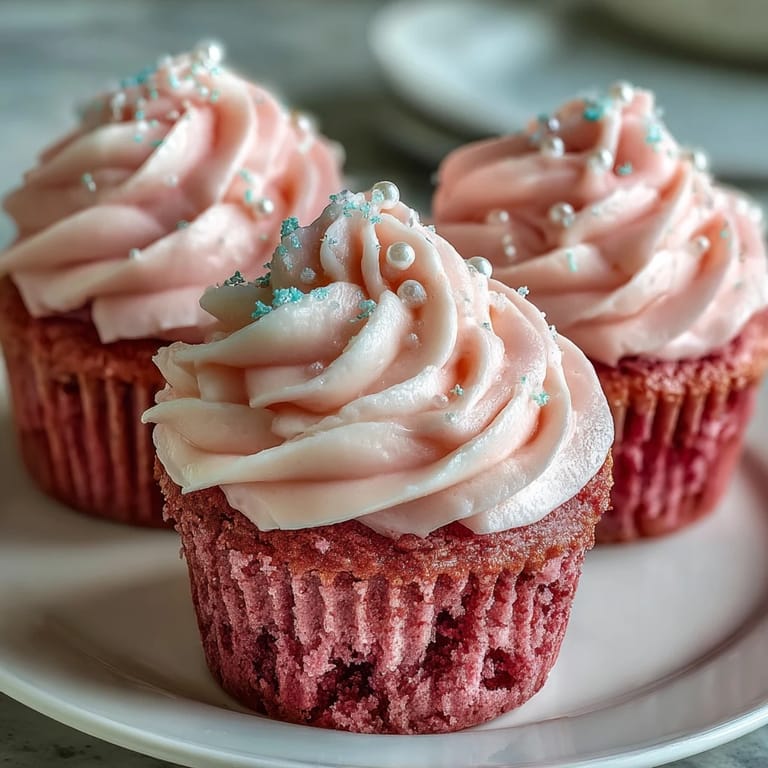
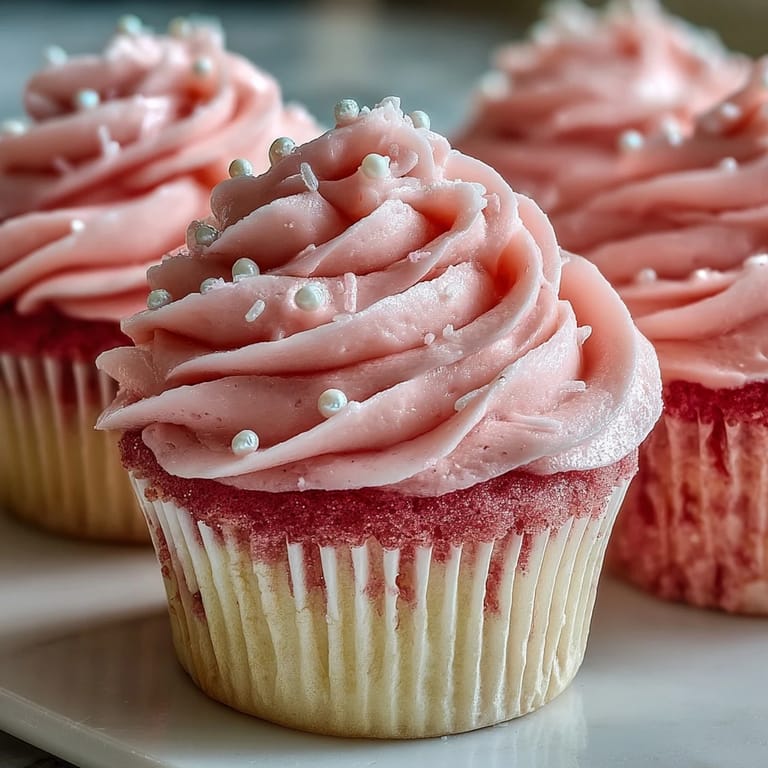
- Pipe or spread the buttercream onto each cooled cupcake. If you want, dust them with sprinkles or edible pearls—they deserve a little sparkle.
 Pin it
 A friend once told me these cupcakes reminded her of her grandmothers house, even though her grandmother never baked them. She said it was the color, the sweetness, the way they felt like a hug you could hold in your hand. I think about that a lot—how food can unlock feelings we didn't know we were carrying. These cupcakes have become that for me, a small edible reminder that softness and sweetness still matter, even when the world feels sharp.
Storage and Make-Ahead Tips
Frosted cupcakes keep well in an airtight container at cool room temperature for up to two days, though they rarely last that long in my house. If you need to make them ahead, bake and cool the cupcakes completely, then wrap them tightly and freeze for up to a month—thaw at room temp and frost fresh. The buttercream can be made a day in advance and kept in the fridge, just bring it back to room temperature and rewhip it before piping. I've also frozen frosted cupcakes in a single layer, then transferred them to a container once solid, and they defrost beautifully on the counter.
Customizing Your Cupcakes
These are endlessly adaptable, and I love playing with them depending on the season or occasion. You can swap the pink for any color you love, or leave them plain for a classic vanilla cupcake with a slight tang. I've folded in mini chocolate chips, used lemon extract instead of vanilla, and even brushed the tops with a little rosewater syrup before frosting. For a natural pink, beet powder works surprisingly well and adds a faint earthy sweetness that I actually love. If you want to make them gluten-free, a good one-to-one baking flour usually works, though the texture will be slightly different.
Troubleshooting and Final Thoughts
If your cupcakes sink in the middle, your oven might be running too hot or you overmixed the batter, both create a weak structure that collapses. Dry cupcakes usually mean overbaking, so start checking at 18 minutes and pull them as soon as that toothpick comes out mostly clean. If the frosting looks curdled, keep beating—it almost always comes together after a minute or two of patience.
- Use a kitchen scale for the most consistent results, especially with flour and powdered sugar.
- Let the cupcakes cool completely on a rack, not in the pan, or the bottoms will steam and turn gummy.
- Pipe the frosting right before serving for the cleanest look, or refrigerate frosted cupcakes and let them come to room temp before serving.
 Pin it
 These cupcakes have a way of making ordinary days feel a little more special, and I hope they do the same for you. Bake them with someone you love, or bake them just for yourself—either way, theyre worth it.
Recipe FAQs
- → What makes these cupcakes pink?
These blush-pink treats get their color from gel food coloring. For a natural alternative, beet powder creates a soft pink hue without artificial dyes.
- → Can I make these ahead of time?
Yes! Bake the cupcakes up to 24 hours in advance. Store unfrosted ones in an airtight container, then frost just before serving for the freshest taste and texture.
- → What's the secret to the velvet texture?
The combination of cake flour, buttermilk, and white vinegar creates that signature tender crumb. Room-temperature ingredients and gentle mixing prevent toughness.
- → How should I store frosted cupcakes?
Keep them in an airtight container at cool room temperature for up to 2 days. Avoid refrigerating, as this can dry out the crumb and make the buttercream hard.
- → Can I make mini versions?
Absolutely! Fill mini liners halfway and reduce baking time to 10–12 minutes. You'll get about 24–30 bite-sized treats perfect for parties and dessert tables.